February 11, 2012

GILLIAN AYRES RA: KAĞIT ÜZERİNDE ÇALIŞMALAR


GILLIAN AYRES RA: KAĞIT ÜZERİNDE ÇALIŞMALAR

Gillian Ayres RA: works on paper
VICTORIA ART GALLERY
11 February – 21 March

SANAT HAFTASINDA: PICASSO BRITANYA’DA VE LUCIAN FREUD


SANAT HAFTASINDA: PICASSO BRITANYA’DA VE LUCIAN FREUD

Tate Britain gözü kara bir hareket yapıyor, Avrupa sanatının belirleyicisi dahilerini İngiliz sanatçılarının (örneğin, Henry Moore - resimdeki heykeli / ö.d.) bordasında sergiliyor ve Lucian Freud (1922-2011 /ö.d.), National Portrait Galerisinde gösterisine devam ediyor.

Picasso in Britain and Lucian Freud – the week in art
Tate Britain makes a rash move, exhibiting the defining genius of European art alongside British artists, and Lucian Freud goes on show at the National Portrait Gallery

DUSTPAN -AS- FUNNEL IS HOW MACGYVER WOULD FILL A BUCKET


NOTE DESIGN STUDIO - STOCKHOLM SWEDEN


LACOSTE 2012


Lacoste 2012 Sonbahar- Kış Defilesini Facebook'tan Canlı İzlemeye Davet Ediyor...

BEN WILSON


read and see more >>


ALEXANDER DERLAMONT


read and see more >>


SHUTTERSTOCK


17.992.084 ADET TESCİL GEREKTİRMEYEN FOTOĞRAF, İLLUSTRASYON VE VEKTÖR DRAWING STOKU.

17.992.084 ROYALTY - FREE STOCK PHOTOS, ILLUSTRATIONS AND VECTORS.


FLEABAGS


D'STRICT


OVERVIEW

We design diverse emerging media product & solutions to create revolutionary products and services for global advertising, entertainment, education and marketing industries.


GOOGLE APPLE'A KARŞI: ÇITALAR YÜKSELİYOR


Şirketin planlarına ilişkin bir bilgilendirme (brifing) veren kişiye göre Google Inc. tüm ev içinde müziği kablosuz olarka yayacak ve şirketin kendi adını taşıyan markasıyla pazarlanacak olan bir ev eğlence sistemini geliştirmekte.

APPLE VS. GOOGLE: THE STAKES ARE RISING
Google Inc. is developing a home-entertainment system that streams music wirelessly throughout the home and would be marketed under the company's own brand, according to people briefed on the company's plans.

read and see more >>

NORTH KOREAN CHILDREN COVER A-HA'S "TAKE ON ME"


It is hard to learn about what daily life in North Korea is like. Every once in a while we stumble upon a curious video...


GIORGIO ARMANI


GETTY IMAGES


While quick online access to images, videos and music may be second nature to us now, just a decade ago it was almost unimaginable. We were the first company to license imaginery online -and continue to drive the industry forward. Our goal is to inspire communicators - and give them the tools to create inspiring work of their own.

ANTONIO BARROS


Antonio Barros (Moda Fotoğrafçısı)

Born in 1970 in Sao Paulo, Brazil. Started to photography professionaly for Brazilian newspaper and magazines in 2004. Antonio's pictures started to be published all over the world in magazines like Vogue, Elle, Cosmopolitan, Glamour...

INDIAN FASHION DESIGNERS


SHE WEARS FASHION


My name is Kavita and I am an 19 year oldgirl from the North of England. I like cups of tea, vintage bustiers and bright red lipstick. I also have an ever growing shoe collection.

ASTON MARTIN V12 ZAGATO


With the final design signed-off engineering development work progressing apace, Aston Martin today reveals the first images of the new V12 Zagato (road car) scheduled for production later this year.

read and see more >>

LAURENMO MOFFATT


Philadelphia native Lauren Moffatt graduated from Chesnut Hill College with a Fine Arts degree. Driven by her knack for prints and love for all-things vintage, she always knew she wanted to pursue fashion design.

FLUKE SKATEBOARD DECK BY KARIM RASHID


LUCIAN FREUD @ NATIONAL PORTRAIT GALLERY


LUCIAN FREUD AT THE NATIONAL PORTRAIT GALLERY - IN PICTURES

read and see more >>

TAŞLARIN KALBİ


Eileen MacDonagh  (Visual in Carlow Art Center)

HEARTS OF STONE...

read and see more >>

TAKASHI MURAKAMI'S "EGO" EXHIBITION AT AL RIWAQ EXHIBITION HALL IN DOHA, QATAR


TAKASHI MURAKAMI'NİN EGO İSİMLİ SERGİSİ KATAR-DOHA "AL RIWAG" SERGİ SALONUNDA

Takashi Murakami'nin en son sergisi, "Ego" ismi ile bugün Doha-Katar'da açılıyor. Sanatçı kendi tarifi ile "otaku" veya fanatik çizgi film ve renk dolu sanat işleri, Japon karton işlerine, şirin pop kültür ikonograflarına referanslarla doludur.

TAKASHI MURAKAMI'S "EGO" EXHIBITION AT AL RIWAQ EXHIBITION HALL IN DOHA, QATAR

Takashı Mırakami's latest exhibition, aptly titled "ego" opens today in Doha, Qatar. The artist is a self-described "otaku" or anime fanatic and his colorful artworks is imbued with references to Japanese cartoons and cute pop culture iconography.

February 10, 2012

BÜTÜN ZAMANLARIN EN ESKİ SANAT İŞİ


THE OLDEST WORK OF ART EVER 42.000 YEAR OLD PAINTINGS OF SEALS FOUND IN SPANISH CAVE

İspanya'da bir mağarada 42.000 yıllık su geçirmez resimler bulundu. Cordoba Üniversitesi'nden profösör Luis Sanchidrian bu keşfi, bütün eski sanat işleri homo sapienslere mal ediliyorken "akademik bir bomba etkisi" olarak tarif etti.

HENR MOORE'S RECLINING FIGURE 19£M RECORD PRICE FOR BRITISH SCULPTURE


HENRY MOORE'UN BOYLU BOYUNCA UZANMIŞ FÜGÜRÜ, İNGİLİZ HEYKELİ İÇİN REKOR BİR FİYATA; 19£ MÜŞTERİ BULDU.

Heykel bir dirseği üzerine sırt üstü yatmış, rahatlamış bir kadın şeklini betimliyor.
(It depicts a laid-back female figure resting on one elbow.)

2013 SHELBY GT500 CONVERTIBLE


The 5.8 liter supercharged V8 with 650 horsepower

GUISEPPE ZANOTTI DESIGN


GUISEPPE ZANOTTI DESIGN / Spring-Summer 2012

"THE MITHOS" KONSEPT OTOMOBIL


Tiago Miguel Inacio isminde Portekiz'li bir tasarımcı tarafından çizilmiş bir konsept araba. Bir elektrik motoru ile hareket ettiğini varsaymış, 1.5 megawatt gücünde ki 2.011 beygir gücüne eşit bir güçtür. Mitos, seri üretilsin diye amaçlanmış bir konsept değil.

read and see more >>

February 9, 2012

Breakthrough in designing cheaper, more efficient catalysts for fuel cells


(February 9, 2012)  University of California, Berkeley, chemists are reimagining catalysts in ways that could have a profound impact on the chemical industry as well as on the growing market for hydrogen fuel cell vehicles.

Catalysts are materials ‑ typically metals ‑ that speed up chemical reactions and are widely used in the synthesis of chemicals and drugs. They also are employed in automobile catalytic converters to change combustion chemicals into less-polluting emissions and in fuel cells to convert water into hydrogen.

The problem with catalysts, however, is that chemical reactions occur only at edges of or defects in the material, while the bulk of the metal – often expensive platinum – is inactive and wasted.

In an article appearing this week in the journal Science, UC Berkeley chemists show how to construct a catalyst composed only of edges and demonstrate that it can catalyze the production of hydrogen from water as readily as the edges and defects in regular catalysts.

read entire press release >>

Two Genes for Sealing In Memories Identified


(February 9, 2012)  Inside the teensy brains of fruit flies lies the blueprint for how memories form — information that likely carries over to our bulky noggins — and researchers have just identified two genes that are key to forming long-term memories.

"The research could help us tremendously in understanding our own brain and how it forms long-term memories," said lead researcher Ann-Shyn Chiang, a neuroscientist at the National Tsing Hua University in Taiwan.

Fruit flies (Drosophila melanogaster) have long been used as models to understand how memory works in other species, humans included. Most scientists thought that fruit fly memory consolidation — the conversion of short-term memories to long-term memories — happened entirely in a brain region called the mushroom body, which is the adult learning and memory center and is analogous to the human hippocampus.

But, using new genetic tools, Chiang and his colleagues found that two specific neurons located outside of the mushroom body are the primary workhorses in the formation of new long-term memories. Moreover, they've identified two genes that are essential to the formation of proteins that enable memories to be locked in.

read entire press news

WHO NEEDS COFFE?


KİMİN KAHVEYE İHTİYACI VAR?

Marketlerde beğeni kazanan yeni bir atımlık kafeini içine çekerek zaman kazan.
Kahve ve Red Bull'u değiştir.

Bir Harward profesörü insanların, dudak ölçüsündeki tüplerden kafeinlerini emerek içlerine çekmelerinin geleceğin en büyük şeyi olacağını düşünüyor fakat eleştirmenler yeni çıkmış ürün, risklerinden arındırılmış değil diyorlar.

WHO NEEDS COFFE? 

Save time by inhaling it instead as new shot of caffeine hits the market.
More over, Caffe and Red Bull

A Harward professor thinks the next big thing will be people inhaling their coffeine from a lipstick-size tube but critics say the novel product is not without its risks.

ARE DOGS CLEVERER THAN CHIMPS? MAN'S BEST FRIEND IS SWIFTER ON THE UPTAKE, SAYS STUDY


KÖPEKLER ŞEMPANZELERDEN DAHA MI AKILLI? 

ARAŞTIRMAYA GÖRE İNSANIN EN İYİ ARKADAŞI ANLAMAKTA ÇOK DAHA HIZLI

Şempanzeler hayvan krallığının beyni olarak biliniyor olabilirler. Fakat bazı zamanlarda sadece köpekler puan alıyor. Bilim insanları iki nesneden birine işaret koydu, kendilerine getirilmesini istediler. Ve emirlerine kaç kere itaat edildiğini saydılar.
Çalışmada, şempanzenin beyni insana çok daha fazla benzese de köpekler şempanzelerden daha iyisini yaptılar.


Chimps may be known as the brains of the animal kingdom. But sometimes only dogs get the point. Scientists pointed at one of two onjects, asked for it to be brought to them, and counted up how mant times their orders were obeyed.
In the study, the dogs did better than the chimps, despite the chimpanzee's brain being the more similarto our own.

The "Roots de Luxe accessory designer has explored mens desires terms of bags and small leather goods


read and see more >>

February 8, 2012

BEYAZ NOKIA N9 HANDS-ON


read and see more >>

Pinterest Hits 10 Million U.S Monthly Uniques Faster Than Any Standalone Site Ever - com Score

PINTEREST, BİRLEŞİK DEVLETLERDE AYLIK 10 MİLYON BİREYSEL KULLANIMA ULAŞTI! 

BÜTÜN ZAMANLARDA BÜTÜN BAĞIMSIZ SİTELERDEN DAHA FAZLA  -COM SAYISI.


White, Minimalist Planter Of Spheric Shape


BEYAZ, MİNİMALİST, KÜRESEL BİÇİMLİ SAKSI


THE UNDERWATER PROJECT BY MARC TIPPLE


watch video >>

read and see more >>

THE SONY WORLD PHOTOGRAPHY AWARDS 2012 SHORTLIST - IN PICTURES


SONY 2012 DÜNYA FOTOĞRAF YARIŞMASI ÖDÜLLERİ - RESİMLER


KRISJANIS KAKTINS - GORSLINE

read and see more >>


YAYOI KUSAMA BRINGS COLOUR TO TATE MODERN

read and see more >>


PETER ROOT 'EPHEMICROPOLIS' ZIMBA TELLERİNDEN YAPILMIŞ ŞEHİR


read and see more >>


February 3, 2012

2 Billion Jobs to Disappear by 2030


A picture of me speaking at yesterday's TEDxReset in Istanbul.

(February 3, 2012)  Yesterday I was honored to be one of the featured speakers at the TEDxReset Conference in Istanbul, Turkey where I predicted that over 2 billion jobs will disappear by 2030. Since my 18-minute talk was about the rapidly shifting nature of colleges and higher education, I didn’t have time to explain how and why so many jobs would be going away. Because of all of the questions I received afterwards, I will do that here.

If you haven’t been to a TEDx event, it is hard to confer the life-changing nature of something like this. Ali Ustundag and his team pulled off a wonderful event.

The day was filled with an energizing mix of musicians, inspiration, and big thinkers. During the breaks, audience members were eager to hear more and peppered the speakers with countless questions. They were also extremely eager to hear more about the future.

When I brought up the idea of 2 billion jobs disappearing (roughly 50% of all the jobs on the planet) it wasn’t intended as a doom and gloom outlook. Rather, it was intended as a wakeup call, letting the world know how quickly things are about to change, and letting academia know that much of the battle ahead will be taking place at their doorstep.

Here is a brief overview of five industries - where the jobs will be going away and the jobs that will likely replace at least some of them - over the coming decades.

read entire news >>

January 31, 2012

Scientists decode brain waves to eavesdrop on what we hear


(January 31, 2012)  Neuroscientists may one day be able to hear the imagined speech of a patient unable to speak due to stroke or paralysis, according to University of California, Berkeley, researchers.

These scientists have succeeded in decoding electrical activity in the brain’s temporal lobe – the seat of the auditory system – as a person listens to normal conversation. Based on this correlation between sound and brain activity, they then were able to predict the words the person had heard solely from the temporal lobe activity.

“This research is based on sounds a person actually hears, but to use it for reconstructing imagined conversations, these principles would have to apply to someone’s internal verbalizations,” cautioned first author Brian N. Pasley, a post-doctoral researcher in the center. “There is some evidence that hearing the sound and imagining the sound activate similar areas of the brain. If you can understand the relationship well enough between the brain recordings and sound, you could either synthesize the actual sound a person is thinking, or just write out the words with a type of interface device.”

read entire press release >>

journal reference >>

December 22, 2011

MIND READING: ENGINEERS HELP REVEAL MEANING IN BRAIN SCANS


(December 22, 2011)  Princeton engineers are working closely with neuroscientists to understand how visual information and words are encoded in the brain.

In a five-year collaboration, a team led by Princeton’s Peter Ramadge, chair and the Gordon Y.S. Wu Professor of electrical engineering, and James Haxby, a neuroscientist at Dartmouth College, have found common patterns in data from brain scans, called fMRI, that reveal brain activity as people perform tasks. The researchers are solving a long-standing challenge of comparing one person’s brain activity to another, which until now has been difficult because both the anatomy and functional processes of each person’s brain are different.

In one recent result, published in the journal Neuron, the researchers had subjects watch the entire movie “Raiders of the Lost Ark” while undergoing fMRI scans and used the data to derive a “common neural code” for how the brain recognizes complex visual images. Based on data from the first half of the movie, the researchers were able to predict, using only a person’s fMRI results, what scene he or she was watching in the second half of the movie.


December 19, 2011

IBM 5 in 5: Mind Reading is no longer science fiction


(December 19, 2011)  One of the many great things about working with the Emerging Technology Services team is that I am always focused on “what’s next.”  For a long time speech recognition fitted into this category as the computing industry looked to make technology more pervasive to free our finger tips from typing and to help us become more productive.

We are benefitting from this today with voice recognition for our cars, smartphones and even automated phone services for banks and travel reservations.

Now that speech recognition is becoming mainstream, and many other forms of human computer interaction have come along, like touch, gesture recognition, etc., we are thinking about what’s next - or in the case of the IBM 5 in 5 - what's next by 2017. In my view there will be huge leaps made in bioinformatics - this is a large topic, so I am more specifically referring to the use of sensors to understand our thoughts.

read entire news release >>

IBM Reveals Five Innovations That Will Change Our Lives within Five Years


(December 19, 2011)  Today IBM formally unveiled the sixth annual “IBM 5 in 5" (#ibm5in5) – a list of innovations that have the potential to change the way people work, live and interact during the next five years:

*  People power will come to life
*  You will never need a password again
*  Mind reading is no longer science fiction
*  The digital divide will cease to exist
*  Junk mail will become priority mail

The next IBM 5 in 5 is based on market and societal trends as well as emerging technologies from IBM’s research labs around the world that can make these transformations possible. 
At IBM, we’re bridging the gap between science fiction and science fact on a daily basis. Here are how five technologies will define the future:

read entire press release

December 7, 2011

Brain Energy Metabolism: Focus on Astrocyte-Neuron Metabolic Cooperation


(December 7, 2011)  The energy requirements of the brain are very high, and tight regulatory mechanisms operate to ensure adequate spatial and temporal delivery of energy substrates in register with neuronal activity. Astrocytes—a type of glial cell—have emerged as active players in brain energy delivery, production, utilization, and storage. Our understanding of neuroenergetics is rapidly evolving from a “neurocentric” view to a more integrated picture involving an intense cooperativity between astrocytes and neurons. This review focuses on the cellular aspects of brain energy metabolism, with a particular emphasis on the metabolic interactions between neurons and astrocytes.

read entire article (OPEN ACCESS) >>

December 2, 2011

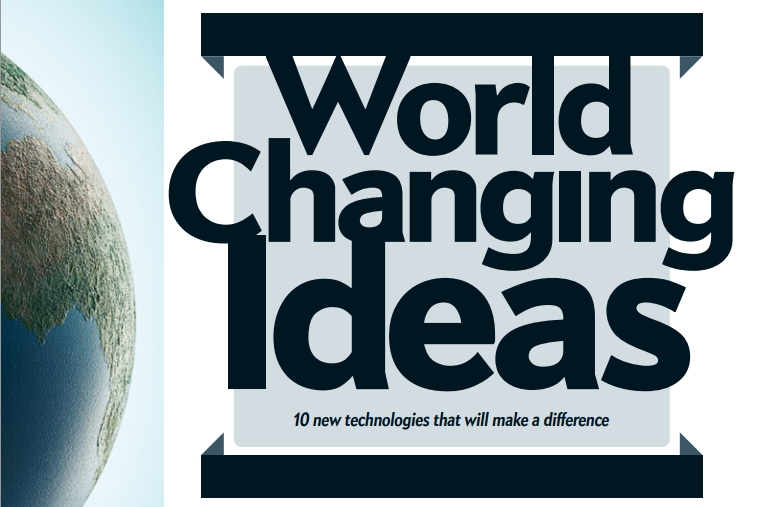
Changing Ideas


10 new technologies that will make a difference

(December 2, 2011)  Revolutions often spring from the simplest of ideas. When a young inventor named Steve Jobs wanted to provide computing power to “people who have no computer experience and don’t particularly care to gain any,” he ushered us from the cumbersome technology of mainframes and command-line
prompts to the breezy advances of the Macintosh and iPhone. His idea helped to forever change our relationship with technology. What other simple but revolutionary ideas are out there in the labs, waiting for the right moment to make it big? We have found 10, and in the following pages we explain what they are and how they might shake things up: Computers that work like minds. Batteries you can top off at the pump. A crystal ball made from data (the focus of a feature on page 52). Consider
this collection our salute to the power of a simple idea.

read entire technology special report (pdf) >>

November 15, 2011

Mimicking the brain, in silicon


New computer chip models how neurons communicate with each other at synapses.

(November 15, 2011)  For decades, scientists have dreamed of building computer systems that could replicate the human brain’s talent for learning new tasks.

MIT researchers have now taken a major step toward that goal by designing a computer chip that mimics how the brain’s neurons adapt in response to new information. This phenomenon, known as plasticity, is believed to underlie many brain functions, including learning and memory.

With about 400 transistors, the silicon chip can simulate the activity of a single brain synapse — a connection between two neurons that allows information to flow from one to the other. The researchers anticipate this chip will help neuroscientists learn much more about how the brain works, and could also be used in neural prosthetic devices such as artificial retinas, says Chi-Sang Poon, a principal research scientist in the Harvard-MIT Division of Health Sciences and Technology.

read entire press release >>

November 2, 2011

The Mind Reader


How Frank Guenther turns thoughts into words

(November 2, 2011)  For thousands of years humans have spoken. Noam Chomsky and many other linguists argue that speech is what sets Homo sapiens apart in the animal kingdom. “Speech,” wrote Aristotle, “is the representation of the mind.”

It is a complex process, the series of lightning-quick steps by which your thoughts form themselves into words and travel from your brain, via the tongue, lips, vocal folds, and jaw (together known as the articulators), to your listeners’ ears—and into their own brains.

Complex, but mappable. Over the course of two decades and countless experiments using functional magnetic resonance imaging (fMRI) and other methods of data collection, neuroscientist Frank Guenther has built a computer model describing just how your brain pulls off the trick of speaking.

And the information isn’t merely fascinating. Guenther (GRS’93), a Sargent College professor of speech, language and hearing sciences, believes his model will help patients suffering from apraxia (where the desire to speak is intact, but speech production is damaged), stuttering, Lou Gehrig’s disease, throat cancer, even paralysis.

read entire press release >>