July 4, 2013

Robots inspect cables


The bearer cables and tethers of bridges, elevators, and cable cars are exposed to high levels of stress. For this reason, their functional reliability must be monitored on a regular basis. A new robot recognizes fissures before they pose a danger.

Slowly, very slowly, the robot climbs up the wire cable. As it crawls upward with caterpillar-like movements, it scans the steel surface and detects whether it has any defects. Researchers at the Fraunhofer Institute for Nondestructive Testing IZFP have named the system FluxCrawler. It is designed to monitor the quality of stay cables and wire ropes on a regular basis. Such cables are common features of bridges, elevators, cranes, cable cars, and ski lifts. And these checks are vital, as the tension-induced strain, wear, and corrosion that affect these steel cables mean that they are under enormous stress.


Pickling tape for local pre-treatment of aluminum


A new self-adhesive tape simplifies the process of pickling aluminum surfaces. It is safer than existing treatment methods involving pickling pastes, sprays or baths, because there is no rinsing stage and hence no need for complicated wastewater disposal.

Aluminum is a light metal used wherever low weight is a prime consideration. Traditionally used in aircraft construction, it is increasingly employed in other sectors such as automotive engineering. But as a base metal, aluminum requires protection against corrosion, which is usually achieved by a special paint or other surface coating. Adhesive bonding is becoming increasingly popular as a means of joining lightweight metal components. But aluminum cannot be coated or bonded without an appropriate pre-treatment to remove undefined deposits of oxides, hydroxides or other contaminations that are almost always found on technical aluminum surfaces. Pickling is one of the most common techniques employed for this purpose. It involves immersion of the components in a solution of chemicals that dissolves the contaminants and provides a perfectly clean metal surface.


Using RFID for fiber composites


Antennas that are capable of transmitting radio waves turn components into intelligent objects. Researchers have now found a way to embed these antennas in fiber composites. As a result, the technology also works with carbon and glass fibers.

It is barely visible to the naked eye: the work pieces in the production hall look normal. But the first impression is deceiving. The airplane components are “intelligent” and can communicate with the skilled workers in their vicinity. Not only can they tell them what they are, they can also provide information on who has worked on them as well as on the next work step. A radio frequency identification chip (RFID) transmits the information. It measures just a few square millimeters and transmits details about the component quickly, efficiently, and consistently to a receiver via radio waves. Until now, only a handful of companies use the technology for documentation purposes in production processes. Most often, RFID is used for access control purposes, or to record time, for instance on employee smart cards.


Farewell greeting from a dying star – Scientists suggest explanation for mysterious radio flashes


Mysterious bright radio flashes that appear for only a brief moment on the sky and do not repeat could be the final farewell greetings of a massive star collapsing into a black hole, astronomers from Nijmegen and Potsdam argue.

Radio telescopes have picked up some bright radio flashes that appear for only a brief moment on the sky and do not repeat. Scientists have since wondered what causes these unusual radio signals. An article in this week’s issue of Science suggests that the source of the flashes lies deep in the early cosmos, and that the short radio burst are extremely bright. However, the question of which cosmic event could produce such a bright radio emission in such a short time remained unanswered. The astrophysicists Heino Falcke from Radboud University Nijmegen and Luciano Rezzolla from the Max Planck Institute for Gravitational Physics in Potsdam provide a solution for the riddle. They propose that the radio bursts could be the final farewell greetings of a supramassive rotating neutron star collapsing into a black hole.


Mainz laser system allows determination of atomic binding energy of the rarest element on earth


Ionization potential of radioactive element astatine measured

The radioactive element astatine, the name of which is derived from the Greek word for 'instability,' is so rare on earth that it has not yet been investigated to any greater extent and, as a consequence, very little is known about it. Using artificially generated astatine, the Mainz-based physicist Sebastian Rothe has now managed for the first time to experimentally explore one of its fundamental parameters, the ionization potential, and thus determine one of the most important properties of the rare element. The ionization potential is the binding energy, i.e., the amount of energy required to remove an electron from an atom's outer shell. It determines the entire chemical binding characteristics of that element. The measurements were undertaken at the laboratory of the CERN European Organization for Nuclear Research near Geneva using special lasers developed by the LARISSA working group at the Institute of Physics at Johannes Gutenberg University Mainz (JGU). The online journal Nature Communications recently published the findings.


Farming Started in Several Places at Once


Researchers from Tübingen document origins of agriculture in the Zagros foothills of Iran

For decades archaeologists have been searching for the origins of agriculture. Their findings indicated that early plant domestication took place in the western and northern Fertile Crescent. In the July 5 edition of the journal Science, researchers from the University of Tübingen, the Tübingen Senckenberg Center for Human Evolution and Paleoenvironment, and the Iranian Center for Archaeological Research demonstrate that the foothills of the Zagros Mountains of Iran in the eastern Fertile Crescent also served as a key center for early domestication.


Flashes in the sky: Cosmic radio bursts point to cataclysmic origins in the distant universe


An international team of researchers including scientists from the Max Planck Institute for Radio Astronomy in Bonn have detected burst of radio waves that appear to have originated billions of light years away - when the Universe was just 6 to 9 billion years old. The researchers are still baffled about the origins of these emissions. In the future, they intend to use these flashes to probe the intergalactic space.

Four Fast Radio Bursts or FRBs with durations of only a few milliseconds were detected at high Galactic latitudes in the southern sky. The extremely short duration of the bursts and the inferred great distance imply that they have been caused by some cataclysmic cosmological event, such as two merging neutron stars or a star dying or being swallowed by a black hole.


Spider webs more effective at snaring electrically charged insects


Flapping insects build up an electrical charge that may make them more easily snared by spider webs, according to a new study by University of California, Berkeley, biologists.

The positive charge on an insect such as a bee or fly attracts the web, which is normally negatively or neutrally charged, increasing the chances that an insect flying by will contact and stick to the web, said UC Berkeley post-doctoral fellow Victor Manuel Ortega-Jimenez.


MOLECULAR CHAINS HYPERSENSITIVE TO MAGNETIC FIELDS


Researchers of MESA+, the research institute for nanotechnology of the University of Twente, in cooperation with researchers of the University of Strasbourg and Eindhoven University of Technology, are the first to successfully create perfect one-dimensional molecular wires of which the electrical conductivity can almost entirely be suppressed by a weak magnetic field at room temperature. The underlying mechanism is possibly closely related to the biological compass used by some migratory birds to find their bearings in the geomagnetic field. This spectacular discovery may lead to radically new magnetic field sensors, for smartphones for example. The leading scientific journal Science publishes the research results on 4 July.


Student team unveils world’s first solar-powered family car


The Solar Team Eindhoven (STE) of TU/e presented the world’s first solar-powered family car today. ‘Stella’ is the first ‘energy-positive car’ with room for four people, a trunk, intuitive steering and a range of 600 kilometers. This is the car being entered by the student team in the Cruiser class of the World Solar Challenge that starts in Australia in October 2013.

A car that produces electricity

The solar cells of ‘Stella’ - Latin for star – generate more electricity on average than the car uses and that means the surplus electricity can be returned to the power grid, thereby making the car ‘energy-positive’.


Long-lived mice are less active


Female mice with a high life expectancy are less active and less explorative. They also eat less than their fellow females with a lower life expectancy. Behavioral biologists from the University of Zurich reveal that there is a correlation between longevity and personality for female house mice, and a minimum amount of boldness is necessary for them to survive.


Space study opens up new opportunities to explore exotic energy


Answering the ultimate question to Life, Universe and Everything? Not quite, but an international team of scientists have conducted research that opens up new possibilities for exploring what have previously only been theories of physics. Using the Hubble Space Telescope, the astronomers have tested whether the strength of the electromagnetic force is altered in the strong gravitational field of a white dwarf star. Team member Professor Martin Barstow of the University of Leicester will present the new work at the RAS National Astronomy Meeting in St Andrews, Scotland.


Dodging antibiotic side effects


New insights into how antibiotics damage human cells suggest novel strategies for making long-term antibiotic use safer

A team of scientists at the Wyss Institute for Biologically Inspired Engineering at Harvard University has discovered why long-term treatment with many common antibiotics can cause harmful side effects -- and they have uncovered two easy strategies that could help prevent these dangerous responses. They reported the results in the July 3rd issue of Science Translational Medicine.


Future of broadband going down to the wire


OPINION: With the departure of senator Stephen Conroy after Labor's recent switch to Kevin Rudd, it is opportune to consider what might now happen to the national broadband network.

There is no doubt the NBN was Conroy's ''baby'' with the Victorian politician having nurtured, protected and driven the project with the zeal of a religious leader determined to recruit as many new followers as possible. For Conroy, the NBN was a vision to be pursued at seemingly any cost.

Conroy's line was simple. We were asked repeatedly: How could anyone doubt the superiority of fibre to the premises?


Archaeologists unearth carved head of Roman god in ancient rubbish dump


An 1,800-year-old carved stone head of what is believed to be a Roman god has been unearthed in an ancient rubbish dump.

Archaeologists made the discovery at Binchester Roman Fort, near Bishop Auckland, in County Durham.

First year Durham University archaeology student Alex Kirton found the artefact, which measures about 20cm by 10cm, in buried late Roman rubbish within what was probably a bath house.

The sandstone head, which dates from the 2nd or 3rd century AD, has been likened to the Celtic deity Antenociticus, thought to have been worshipped as a source of inspiration and intercession in military affairs.


New research suggests economic stagnation is no excuse for climate inaction


Policymakers should be paying more, rather than less, attention to tackling climate change in economically tough times, a new study suggests. As economies have stagnated major emitters of CO2 seem unwilling to accept binding emissions reduction targets. But findings, published this week in Nature Climate Change, show the social cost of carbon dioxide is higher in a low economic growth world.


Antifreeze, cheap materials may lead to low-cost solar energy


A process combining some comparatively cheap materials and the same antifreeze that keeps an automobile radiator from freezing in cold weather may be the key to making solar cells that cost less and avoid toxic compounds, while further expanding the use of solar energy.

And when perfected, this approach might also cook up the solar cells in a microwave oven similar to the one in most kitchens.


July 3, 2013

UF researcher shows hawkmoths use ultrasound to combat bats


For years, pilots flying into combat have jammed enemy radar to get the drop on their opponents. It turns out that moths can do it, too.

A new study co-authored by a University of Florida researcher shows hawkmoths use sonic pulses from their genitals to respond to bats producing the high-frequency sounds, possibly as a self-defense mechanism to jam the echolocation ability of their predators.


Limiting global warming is not enough


So far, international climate targets have been restricted to limiting the increase in temperature. But if we are to stop the rising sea levels, ocean acidification and the loss of production from agriculture, CO2 emissions will have to fall even more sharply. This is demonstrated by a study published in «Nature» that has been carried out at the University of Bern.

The ultimate objective of international climate policy is to prevent dangerous anthropogenic interference with the climate system. To do this, greenhouse gases are to be stabilised at a level that is acceptable for humans and for the environment. This climate goal is commonly expressed as an increase in the global mean temperature by a maximum of two degrees since pre-industrial times. This general direction is recognised by the majority of the world’s governments.

image


Identifying climate impact hotspots across sectors


One out of ten people on Earth is likely to live in a climate impact hotspot by the end of this century, if greenhouse gas emissions continue unabated. Many more are put at risk in a worst-case scenario of the combined impacts on crop yields, water availability, ecosystems, and health, according to a study now published online by the Proceedings of the National Academy of Sciences (PNAS). It identifies the Amazon region, the Mediterranean and East Africa as regions that might experience severe change in multiple sectors. The article is part of the outcome of the Intersectoral Impact Model Intercomparison Project (ISI-MIP) that will be featured in a special issue of PNAS later this year.


EARTH: The energy-water nexus: Managing water in an energy-constrained world


Of all the water on Earth, less than 3 percent is available for human use, and as climates change and populations boom, the strategies used to extract it will become increasingly complex. With increasing demand, policymakers, scientists and leaders must recognize the energy-water nexus. The energy-water nexus describes an interdependent relationship that exists between availability of water resources and the energy required to obtain, distribute and utilize them. The way we manage the delicate relationship between energy and water will have major implications for the future of both critical resources, as EARTH explores in the July issue.


Exercise reorganizes the brain to be more resilient to stress


Physical activity reorganizes the brain so that its response to stress is reduced and anxiety is less likely to interfere with normal brain function, according to a research team based at Princeton University.

The researchers report in the Journal of Neuroscience that when mice allowed to exercise regularly experienced a stressor — exposure to cold water — their brains exhibited a spike in the activity of neurons that shut off excitement in the ventral hippocampus, a brain region shown to regulate anxiety.


Powerful Animal Tracking System Helps Research Take Flight


Call it a bird’s eye view of migration. Scientists are taking a fresh look at animal movement with a big data approach that combines GPS tracking data with satellite weather and terrain information.

The new Environmental-Data Automated Track Annotation (Env-DATA) system, featured in the journal Movement Ecology, can handle millions of data points and serve a hundred scientists simultaneously, said co-founder Dr. Roland Kays, a zoologist with North Carolina State University and the North Carolina Museum of Natural Sciences.


Study Reports on Declines in Ecosystem Productivity Fueled by Nitrogen-Induced Species Loss


Humans have been affecting their environment since the ancestors of Homo sapiens first walked upright, but never has their impact been more detrimental than in the 21st century. "The loss of biodiversity has much greater and more profound ecosystem impacts than had ever been imagined," said David Tilman, professor of ecology, biodiversity and ecosystem functioning at UC Santa Barbara's Bren School of Environmental Science & Management.

Human-driven environmental disturbances, such as increasing levels of reactive nitrogen and carbon dioxide (CO2), have multiple effects, including changes in biodiversity, species composition, and ecosystem functioning. Pieces of this puzzle have been widely examined but this new study puts it all together by examining multiple elements. The results were published July 1 in the Proceedings of the National Academy of Science.


Great ape genetic diversity catalog frames primate evolution and future conservation


A model of great ape history during the past 15 million years has been fashioned through the study of genetic variation in a large panel of humans, chimpanzees, gorillas and orangutans.  The catalog of great ape genetic diversity, the most comprehensive ever, elucidates the evolution and population histories of great apes from Africa and Indonesia. The resource will likely also aid in current and future conservation efforts which strive to preserve natural genetic diversity in populations.

More than 75 scientists and wildlife conservationists from around the world assisted the genetic analysis of 79 wild and captive-born great apes. They represent all six great ape species: chimpanzee, bonobo, Sumatran orangutan, Bornean orangutan, eastern gorilla, and western lowland gorilla, and seven subspecies.  Nine human genomes were included in the sampling.


World record in silicon integrated nanophotonics


Researchers of the Institute of Electrical and Optical Communications Engineering (INT) at the University of Stuttgart and the Institut für Mikroelektronik Stuttgart (IMS CHIPS) achieved a new world record in the energy efficient integration in silicon. This is an important step to decrease the energy consumption of data transfer in internet and telecommunication. The researchers optimized aperiodic grating couplers in the nanometer range with a new developed backside metal mirror. Through this new method a record coupling efficiency of 87 percent between optical fibers and photonic integrated waveguides on silicon wafers has been achieved.


Making robots more trustworthy


Robots as active “helpers”

Robots are increasingly being developed to serve as active "helpers" in situations where humans require assistance to undertake certain tasks – tasks such as being home companions for older people or personal care robots to help patients during their recovery. This means that the humans involved must be fully confident in robot behaviour if human-robot teamwork is to become viable and productive.


Computer programs improve fingerprint grading


Subjectivity is problematic when evaluating fingerprints, and quality is in the eye of the examiner. But three computer programs used together can give fingerprint grading unprecedented consistency and objectivity, according to Penn State researchers.

"People leave behind all kinds of fingerprints, and the job of a forensic examiner is then to look at a fingerprint and identify a person who could have left it," said Akhlesh Lakhtakia, Charles Godfrey Binder Professor of Engineering Science and Mechanics, Penn State. "Various scenarios can be envisioned where a fingerprint can be seriously altered. Once it is altered, it can conceivably lead the examiner to a false conclusion."


Military Sonar Can Alter Blue Whale Behavior


Some blue whales off the coast of California change their behavior when exposed to the sort of underwater sounds used during U.S. military exercises. The whales may alter diving behavior or temporarily avoid important feeding areas, according to new research.

The Southern California Behavioral Response Study exposed tagged blue whales in the California Bight to simulated mid-frequency (3.5-4 kHz) sonar sounds significantly less intense than the military uses.


Graphene provides efficient electronics cooling


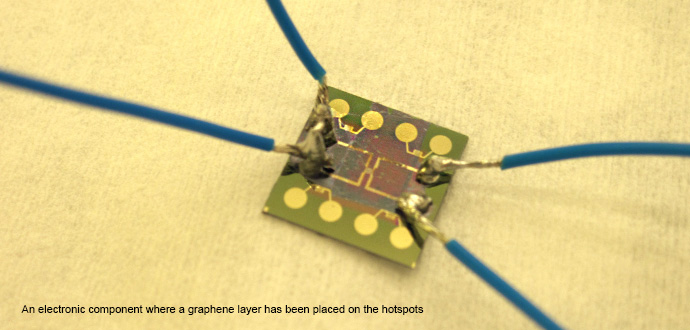
A layer of graphene can reduce the working temperature in hotspots inside a processor by up to 25 percent – which can significantly extend the working life of computers and other electronics. An international group of researchers, headed by Chalmers University of Technology in Sweden, are the first in the world to show that graphene has a heat dissipating effect on silicon based electronics.

​“This discovery opens the door to increased functionality and continues to push the boundaries when it comes to miniaturising electronics,” said Chalmers Professor Johan Liu who heads the international research project.


OU Physicists Develop Rationale for the Next-Generation Particle Collider


A University of Oklahoma-developed theory provides the rationale for the next-generation particle accelerator—the International Linear Collider. The discovery of the Higgs boson at the CERN Large Hadron Collider in Geneva Switzerland this past year prompted particle physicists to look ahead to the development of the ILC, an electron-positron collider designed to measure in detail all the properties of the newly discovered Higgs particle.

Howard Baer, professor in the OU Homer L. Dodge Department of Physics and Astronomy, was one of the lead authors of the five-volume ILC Technical Design Report published on June 12. The report, which presents the latest and most technologically advanced blueprint for construction of the ILC, was celebrated recently by the global particle physics community in three consecutive events in Asia, Europe and the Americas.


New Catalyst replaceable platinum for electric-automobiles

Structures of Li-ion battery and Zn-air battery

Diagram of synthesis of new catalyst

Affordable and scalable process of a carbon nanotube-based catalyst outperforming platinum for electric-automobiles

Korean researchers from Ulsan National Institute of Science and Technology (UNIST), S. Korea, developed a novel bio-inspired composite electrocatalyst outperforming platinum.


July 2, 2013

Smart bear phone: Information on brown bears available on mobile phones in the future


Bears have captured our imagination throughout centuries. Ancient Finnish and Lappish myths and legends are probably one reason why these powerful animals are still held in great respect today and referred to as the King of the Forests. It is often believed that bears behave in an unpredictable way. However, as with all mammals, bears’ behavior is governed by a combination of genetic programming and social and environmental factors. Once we understand bears’ behavior and communication, it will not look haphazard for us anymore.


New system to harness energy from ocean currents


Researchers at the UPM, within the framework of PROCODAC-GESMEY project, have participated in the construction and testing of the prototype of a device to harness energy from ocean currents able to work in deep water.

In collaboration with the Astilleros Balenciaga company and the Fundación Centro Tecnológico Soermar, researchers at the Group of R&D GITERM, assigned to the Higher Technical School of Naval Architecture and Ocean Engineering of the Universidad Politécnica de Madrid, are participating at the PROCODAC project, focused on the design, construction and testing on a marine environment of an experimentation prototype at a ten to one scale of what would be an industrial unit able to provide a 1MW of electricity (GESMEY project). This prototype is complemented by an underwater buoy that was designed to operate in areas of 40 metres of depth.


Solar dynamic loops reveal a simultaneous explosion and implosion, plus evidence for magnetic reconnection


Movies of giant loops projecting from the surface of the Sun are giving new insights into the complex mechanisms that drive solar flares and Coronal Mass Ejections (CMEs).  These eruptions release vast energy and electrically charged particles that can affect the Earth through space weather.  Imagery from NASA's Solar Dynamics Observatory (SDO), used in two separate studies, shows the dynamics of loops before, during and after eruptions. Results have been presented at the National Astronomy Meeting in St Andrews.


Predicting novel trophic interactions in a non-native world


Researchers at Cornell University (United States) and Eawag (Switzerland) discovered a general and flexible method to understand how insects may use non-native plants in their diet. The method could accurately predict the use of >400 non-native plants as larval hostplants by 900 different herbivorous butterfly and moth species native to Europe. The results may make the forecasting of novel herbivore communities feasible in order to better understand the fate and impact of introduced plants.


Cluster spacecraft detects elusive space wind


A new study provides the first conclusive proof of the existence of a space wind first proposed theoretically over 20 years ago. By analysing data from the European Space Agency’s Cluster spacecraft, researcher Iannis Dandouras detected this plasmaspheric wind, so-called because it contributes to the loss of material from the plasmasphere, a donut-shaped region extending above the Earth’s atmosphere. The results are published today in Annales Geophysicae, a journal of the European Geosciences Union (EGU).

“After long scrutiny of the data, there it was, a slow but steady wind, releasing about 1 kg of plasma every second into the outer magnetosphere: this corresponds to almost 90 tonnes every day. It was definitely one of the nicest surprises I’ve ever had!” said Dandouras of the Research Institute in Astrophysics and Planetology in Toulouse, France.


Solving electron transfer


EPFL scientists have shown how a solvent can interfere with electron transfer by using unprecedented time resolution in ultrafast fluorescence spectroscopy.

Electron transfer is a process by which an atom donates an electron to another atom. It is the foundation of all chemical reactions, and is a subject of intense research because of the implications it has for chemistry and biology. When two molecules interact, electron transfer takes place in a few quadrillionths (10-15) of a second, or femtoseconds (fsec), meaning that studying this event requires very time-sensitive techniques like ultrafast spectroscopy. However, the transfer itself is often influenced by the solution in which the molecules are studied (e.g. water), and this must be taken into account when such experiments are designed. In a recent Nature Communications paper, EPFL scientists have visualized for the first time how electron transfer takes place in one of the most common solvents, water.


Genome Institute of Singapore scientists discover molecular communication network in human stem cells


Scientists at A*STAR’s Genome Institute of Singapore (GIS) and the Max Planck Institute for Molecular Genetics (MPIMG) in Berlin (Germany) have discovered a molecular network in human embryonic stem cells (hESCs) that integrates cell communication signals to keep the cell in its stem cell state. These findings were reported in the June 2013 issue of Molecular Cell.

Human embryonic stem cells have the remarkable property that they can form all human cell types. Scientists around the world study these cells to be able to use them for medical applications in the future. Many factors are required for stem cells to keep their special state, amongst others the use of cell communication pathways.


Companies Look at Wrong Things When Using Facebook to Screen Job Applicants


Employers are increasingly using Facebook to screen job applicants and weed out candidates they think have undesirable traits. But a new study from North Carolina State University shows that those companies may have a fundamental misunderstanding of online behavior and, as a result, may be eliminating desirable job candidates.


Protecting data in the cloud


A new hardware design makes data encryption more secure by disguising cloud servers’ memory-access patterns.

Cloud computing — outsourcing computational tasks over the Internet — could give home-computer users unprecedented processing power and let small companies launch sophisticated Web services without building massive server farms.


Greenhouse gas likely altering ocean food chain


Climate change may be weeding out the bacteria that form the base of the ocean’s food chain, selecting certain strains for survival, according to a new USC study.

In climate change, as in everything, there are winners and losers. As atmospheric carbon dioxide levels and temperature rise globally, scientists increasingly want to know which organisms will thrive and which will perish in the environment of tomorrow.


NEW CATALYST COULD CUT COST OF MAKING HYDROGEN FUEL


A discovery at the University of Wisconsin-Madison may represent a significant advance in the quest to create a "hydrogen economy" that would use this abundant element to store and transfer energy.

Theoretically, hydrogen is the ultimate non-carbon, non-polluting fuel for storing intermittent energy from the wind or sun. When burned for energy, hydrogen produces water but no carbon dioxide. Practically speaking, producing hydrogen from water, and then storing and using the gas, have proven difficult.

The new study, now published online at the Journal of the American Chemical Society, introduces a new catalyst structure that can facilitate the use of electricity to produce hydrogen gas from water.


GPM Spreads Its Wings in Solar Array Deployment Test


NASA successfully completed two pre-vibration solar array deployment tests of the Global Precipitation Measurement satellite on June 6 and June 15, 2013.

“Cross your fingers. Cross your toes,” said Art Azarbarzin, GPM project manager, as he watched engineers take their places around the GPM Core satellite, set up on its end in the middle of the clean room.
A loud hiss filled the room as engineers turned on air hoses. The hoses pumped air through tubes attached to the solar panels’ supports and out of hockey puck-shaped coasters. Azarbarzin explained that the support system and air cushion is designed to reduce friction and best mimic how the solar array would float in space.


Most Sustainable Office in the World


In Munich, a newly erected office building, called the NuOffice, has been awarded an internationally recognised green design certification in platinum, called the Leadership in Energy and Environmental Design (LEED) certificate.

Much effort has been put into its planning and construction to reach this high-level of sustainability, which makes it the most sustainable newly erected office building worldwide, according to LEEDS standards.


July 1, 2013

UCSB Astronomer Uncovers The Hidden Identity Of An Exoplanet


Hovering about 70 light-years from Earth –– that's "next door" by astronomical standards –– is a star astronomers call HD 97658, which is almost bright enough to see with the naked eye. But the real "star" is the planet HD 97658b, not much more than twice the Earth's diameter and a little less than eight times its mass. HD 97658b is a super-Earth, a class of planet for which there is no example in our home solar system.

While the discovery of this particular exoplanet is not new, determining its true size and mass is, thanks to Diana Dragomir, a postdoctoral astronomer with UC Santa Barbara's Las Cumbres Observatory Global Telescope (LCOGT). As part of her research, Dragomir looked for transits of this exoplanet with Canada's Microvariability & Oscillations of Stars (MOST) space telescope. The telescope was launched in 2003 to a pole-over-pole orbit about 510 miles high. Dragomir analyzed the data using code written by LCOGT postdoctoral fellow Jason Eastman. The results were published online today in the Astrophysical Journal Letters.


ECOLOGISTS MAP THE BENEFITS OF OUR ECOSYSTEMS


We rely on our physical environment for many things - clean water, land for crops or pastures, storm water absorption, and recreation, among others. Yet it has been challenging to figure out how to sustain the many benefits people obtain from nature - so-called "ecosystem services" - in any given landscape because an improvement in one may come at the cost of another.

Two ecologists at the University of Wisconsin-Madison report this week (July 1) in the Proceedings of the National Academy of Sciences a novel approach to analyzing the production and location of 10 different ecosystem services across a landscape, opening the door to being able to identify factors governing their synergies and tradeoffs.


Teaching a Computer to Play ‘Concentration’ Advances Security, Understanding of the Human Mind


Computer science researchers have programmed a computer to play the game Concentration (also known as Memory). The work could help improve computer security – and improve our understanding of how the human mind works.

The researchers developed a program to get the software system called ACT-R, a computer simulation that attempts to replicate human thought processes, to play Concentration. In the game, multiple matching pairs of cards are placed face down in a random order, and players are asked to flip over two cards, one at a time, to find the matching pairs. If a player flips over two cards that do not match, the cards are placed back face down. The player succeeds by remembering where the matching cards are located.


DISEQUILIBRIUM VEGETATION DYNAMICS UNDER FUTURE CLIMATE CHANGE


* Premise of the study: Near-future climate changes are likely to elicit major vegetation changes. Disequilibrium dynamics, which occur when vegetation comes out of equilibrium with climate, are potentially a key facet of these. Understanding these dynamics is crucial for making accurate predictions, informing conservation planning, and understanding likely changes in ecosystem function on time scales relevant to society. However, many predictive studies have instead focused on equilibrium end-points with little consideration of the transient trajectories.

*  Methods: We review what we should expect in terms of disequilibrium vegetation dynamics over the next 50–200 yr, covering a broad range of research fi elds including paleoecology, macroecology, landscape ecology, vegetation science, plant ecology, invasion biology, global change biology, and ecosystem ecology.

*  Key results: The expected climate changes are likely to induce marked vegetation disequilibrium with climate at both leading and trailing edges, with leading-edge disequilibrium dynamics due to lags in migration at continental to landscape scales, in local population build-up and succession, in local evolutionary responses, and in ecosystem development, and trailing-edge disequilibrium dynamics involving delayed local extinctions and slow losses of ecosystem structural components. Interactions
with habitat loss and invasive pests and pathogens are likely to further contribute to disequilibrium dynamics. Predictive modeling and climate-change experiments are increasingly representing disequilibrium dynamics, but with scope for improvement.