August 5, 2015

Sardines, Anchovies and Other Fast-Growing Fish Species Vulnerable to Dramatic Population Plunges


Overfishing, climate variability appear to be culprits, says Rutgers marine biologist

(August 5, 2015)  A Rutgers marine biologist studying the rise and fall of fish populations worldwide recently made a counterintuitive discovery: ocean species that grow quickly and reproduce frequently, such as sardines, anchovies and flounder, are more likely to experience dramatic plunges in population than larger, slower growing fish such as sharks or tuna.

Why is this counterintuitive? Because for life on land, the situation is in stark contrast.

“Rabbits are doing pretty well compared to rhinos,” said Malin Pinsky, assistant professor of ecology and evolution in the School of Environmental and Biological Sciences. “Mice thrive while lions, tigers and elephants are endangered.”

After studying population changes in 154 species of fish worldwide over 60 years, Pinsky was surprised to see marine equivalents of rabbits and mice collapsing to low levels – still shy of extinction but serious enough to disrupt ocean food chains or fishing-based societies.
In his research, published this week in the journal Proceedings of the Royal Society B, Pinsky sought an answer to this riddle. In nearly all of the cases, overfishing was the culprit.

Photo: Shonda Foster
Malin Pinsky, assistant professor of ecology and evolution in
the School of Environmental and Biological Sciences.

Climate variations or natural boom-and-bust cycles contribute to population fluctuation in small fast-growing fish,” he noted, “but when they are not overfished, our data showed that their populations didn’t have any more tendency to collapse than other fish.”

For example, this effect is apparent in sardines off the coast of southern California, whose populations have fluctuated naturally for thousands of years. But these fluctuations are not enough to explain why so many fast-growing fish species have collapsed in recent decades – meaning a drop to less than 10 percent of historical levels. With the advent of efficient fishing vessels and techniques after World War II, population collapses started to occur much more frequently in sardines and anchovies, which are valued for pet food and fish oil.

read entire press  release >>

Keeping Algae from Stressing Out


Identifying pathways in algae that produce oil without killing them

(August 5, 2015)  While most people might know some algae as “pond scum,” to the U.S. Department of Energy (DOE), they are tiny organisms that could provide a source of sustainable fuels. Like plants, they can convert light into energy-rich chemical compounds; unlike plants, they require less space and don’t need arable soil to grow.

Some algae like Chlamydomonas reinhardtii (or “Chlamy,” as it’s known to its large research community) produce energy-dense oils or lipids when stressed, and these lipids can then be converted into fuels. However, researchers walk a fine line in not killing the goose that lays the golden eggs, in this case, stressing the algae just enough to produce lipids, but not enough to kill them. Published ahead online July 27, 2015 in the journal Nature Plants, a team led by scientists from the U.S. Department of Energy Joint Genome Institute (DOE JGI), a DOE Office of Science User Facility, analyzed the genes that are being activated during algal lipid production, and in particular the molecular machinery that orchestrates these gene activities inside the cell when it produces lipids.

“We know how to stress the algae,” said the study’s first author Chew Yee Ngan of the DOE JGI. “What we don’t know is how to keep the algae alive at the same time, until now.”


Stressful searches

As part of the DOE Office of Science’s efforts to study algae for energy and environmental applications, the DOE JGI has published over 75 percent of all publicly available algal genomes. One of these is the Chlamy reference genome, which was released back in 2007. Until now, very little is known about the protein factor that can regulate lipid production. To find more of them, the team cultured Chlamy cells and starved them of nitrogen or sulfur, both of which are stress conditions to which Chlamy responds by producing lipids. They then analyzed the complex of DNA and proteins known as chromatin that define what genes are being activated, as well as the expression profiles or transcriptome, and compared these to non-stressed Chlamy cells.

“We’re looking for changes in starved cells vs. cells that are happily growing,” Ngan explained. Through careful analysis of genome-wide data sets, they narrowed down their search to identify two transcription factors that appeared to play a pivotal role in lipid accumulation, and then studied one of them, PSR1, in detail. “In studying the chromatin modifications, we can read out changes in the proteins bound to DNA on a genome-wide scale and then specifically target those genes whose regulation profiles are changed under lipid-producing conditions.”

read entire press  release >>

World’s quietest gas lets physicists hear faint quantum effects


(August 5, 2015)  UC Berkeley physicists have cooled a gas to the quietest state ever achieved, hoping to detect faint quantum effects lost in the din of colder but noisier fluids.

While the ultracold gas’s temperature – a billionth of a degree above absolute zero – is twice as hot as the record cold, the gas has the lowest entropy ever measured. Entropy is a measure of disorder or noise in a system; a record low temperature gas isn’t necessarily the least noisy.

“This ‘lowest entropy’ or ‘lowest noise’ condition means that the quantum gas can be used to bring forth subtle quantum mechanical effects which are a main target for modern research on materials and on many-body physics,” said co-author Dan Stamper-Kurn, a UC Berkeley professor of physics. “When all is quiet and all is still, one might discern the subtle music of many-body quantum mechanics.”

The quantum gas, a so-called Bose-Einstein condensate, consisted of about a million rubidium atoms trapped by a beam of light, isolated in a vacuum and cooled to their lowest energy state. The entropy and temperature were so low that the researchers had to develop a new type of thermometer to measure them.


While achieving extremely low temperatures may make the record books, UC Berkeley graduate student Ryan Olf said, what scientists aim for today are low-entropy states they can study to understand more interesting but difficult-to-study materials.

The UC Berkeley team’s ability to manipulate ultracold, low-entropy gases will allow them to study these quantum systems, including quantum magnets – potentially useful in quantum computers – and high-temperature superconductors. High-temperature superconductors are experimental materials that display superconductivity – electrical flow without resistance – at relatively high temperatures compared to the 3 or 4 degrees Celsius above absolute zero typical of today’s conventional superconductors.


“One of the holy grails of modern physics is to understand these exotic materials well enough to design one that is superconducting without requiring any cooling at all,” Olf said. “By studying the properties of low-entropy gases in various configurations, our community of researchers hope to learn what makes these fascinating materials work the way they do.”

Olf said that the entropy per particle, rather than the temperature, is the pertinent parameter when comparing systems, and the ultracold gases that had been produced until now struggled to reach the low entropies that would be required to test models of these materials.

read entire press  release >>

Feed supplement greatly reduces dairy cow methane emissions


(August 5, 2015)  A supplement added to the feed of high-producing dairy cows reduced methane emissions by 30 percent and could have ramifications for global climate change, according to an international team of researchers.

In addition, over the course of the 12-week study conducted at Penn State's dairy barns, cows that consumed a feed regimen supplemented by the novel methane inhibitor 3-nitrooxypropanol -- or 3NOP -- gained 80 percent more body weight than cows in a control group. Significantly, feed intake, fiber digestibility and milk production by cows that consumed the supplement did not decrease.

The findings are noteworthy because methane is a potent greenhouse gas. The U.S. Environmental Protection Agency estimates that methane from livestock makes up 25 percent of the total methane emissions in the United States. Globally, according to the United Nations' Food and Agriculture Organization, animal agriculture emits 44 percent of the methane produced by human activity.

Fermentation in the rumen -- one of the four stomach chambers of livestock such as cattle, sheep and goats -- generates the methane, as a result of microorganisms that aid in the process of digestion. The animals must expel the gas to survive. The 3NOP supplement blocks an enzyme necessary to catalyze the last step of methane creation by the microbes in the rumen.

It was important to conduct the study under industry-relevant conditions, said lead researcher Alexander Hristov, professor of dairy nutrition. The researchers published their results in a recent issue of the Proceedings of the National Academy of Science.

read entire press  release >>

August 4, 2015

The Parasol Mogambo


EDIDA CHINA AWARD 2015

(August 04, 2015) Move wins in the Best Outdoor Furniture Design category

Tokyo, May 2015. The parasol Mogambo, designed by CRS Paola Lenti, is among the winners of the Chinese edition of the EDIDA Award 2015. The prize awarded by Elle Deco China is part of  the 23 annual international awards set up by the magazine Elle Décor


Porro Nel Mondo Armchair


(August 04, 2015)    Porro takes part with the Ghiaccio armchair by Piero Lissoni in 120 Top Lots, the first online lifestyle charity auction organized by the magazine Gentleman for Dynamo Camp: 120 lots donated by the most important Italian and international brands, icons of style, design and fashion, but also travel and unique experiences. Its round cylinder feet in natural ash, the light bending of the back and the upholstered seat in plum woolen fabric make it slender, intimate and welcoming.


Globe Project


A light object shaped by fire

The sun is not just the source of all energy and life on planet earth; it also ensures that planets keep revolving on their orbital path. The positions of the axes influence the properties of each unique planet. The sun, this gigantic and influential designer, is the source of inspiration for the Globe Project.

Studio Floris Wubben designed an installation inspired by a globe with which unique textures can be created in sequence. Within this installation, a gas burner’s flame etches a texture onto an unbaked porcelain object. The porcelain reacts to the high temperature, causing various layers to burst from the globe.

As the fire burns off more and more of the globe’s layers, a translucent porcelain object emerges. The distance between the porcelain and the flame, as well as the speed at which the porcelain object revolves in the installation, affects its final texture. The variation in layers and the glazing process make each object unique.

Globe Project is a collaboration with Cor Unum ceramics studio.


COIN ARMRESTS


(August 04, 2015)  COIN is a project chair designed primarily to public places (lobbies, waiting rooms, foyer). The wooden base with characteristic falling armrests refers to the projects of the 60's and 70's. Large, spacious seat provides the user comfort and convenience.


Material: base made of solid wood, seat made of belts and polyurethane foam upholstered with fabric.

source >>

PUFFI SEATS


(August 04, 2015) PUFFi is a family of lightweight seats designed for residential interiors. The project is an extension of the very popular among young audiences SACCO bags. In the seats PUFFi was used a clever solution to eliminate the problem that occurs in bags filled with Styrofoam granulate. Additional, breakaway pad prevents the collapse of the granular inside. Pad is attached to the bag by the zipper.

source >>

New biosensors for managing microbial ‘workers’


Researchers at Harvard’s Wyss Institute have unveiled new biosensors that enable scientists to more effectively control and 'communicate with' engineered bacteria.

(August 4, 2015)  Super productive factories of the future could employ fleets of genetically engineered bacterial cells, such as common E. coli, to produce valuable chemical commodities in an environmentally friendly way. By leveraging their natural metabolic processes, bacteria could be re–programmed to convert readily available sources of natural energy into pharmaceuticals, plastics and fuel products.

"The basic idea is that we want to accelerate evolution to make awesome amounts of valuable chemicals," said Wyss Core Faculty member George Church, Ph.D., who is a pioneer in the converging fields of synthetic biology, metabolic engineering, and genetics. Church is the Robert Winthrop Professor of Genetics at Harvard Medical School and Professor of Health Sciences and Technology at Harvard and MIT.

Critical to this process of metabolically engineering microbes is the use of biosensors. Made of a biological component — such as a fluorescent protein — and a 'detector' that responds to the presence of a specific chemical, biosensors act as the switches and levers that turn programmed functions on and off inside the engineered cells. They also can be used to detect which microbial 'workers' are producing the most voluminous amounts of a desired chemical. In this way, they can be thought of as the medium for two–way communication between humans and cells.

read entire press  release >>

Can memories be lost and found?


University scientists believe memories are more robust than previously thought

(August 4, 2015)  A team of University scientists believe they have shown that memories are more robust than we thought and have identified the process in the brain, which could help rescue lost memories or bury bad memories, and pave the way for new drugs and treatment for people with memory problems.

Published in the journal Nature Communications a team of scientists from the University’s School of Biosciences and Neuroscience and Mental Health Research Institute found that reminders could reverse the amnesia caused by methods previously thought to produce total memory loss in rats.  

“Previous research in this area found that when you recall a memory it is sensitive to interference to other information and in some cases is completely wiped out. Our research challenges this view and we believe proves this not the case,” according to Dr Kerrie Thomas, who led the research.

“Our research found that despite using a technique in the brain thought to produce total amnesia we’ve been able to show that with strong reminders, these memories can be recovered.”

Whilst the results were found in rats, the team hope it can be translated into humans and new drugs and treatments could be developed for people suffering with memory disorders.

read entire press  release >>

Cybathlon practice session a success


The various challenges are designed to resemble daily tasks as closely as possible.
(Copyright all photos: ETH Zurich/Alessandro Della Bella)

(August 4, 2015)  Zurich will host the first Cybathlon in autumn 2016, bringing together physically impaired people from all over the world to compete against each other using the latest assistive technologies. ETH Zurich welcomed 30 of the participating teams from 15 countries to complete a practice session at the Swiss Arena in Kloten.

Slicing bread in the morning, pouring a cup of coffee and sitting down at the kitchen table are a part of everyday life for most people. But for people with physical impairments such as amputated limbs, the tasks so many of us take for granted are anything but a matter of course – and they are often difficult to accomplish without help. According to the World Health Organisation (WHO), around 15% of the world's population is physically impaired to some degree. In order to overcome the hurdles of everyday life, many disabled people use assistive technologies. This is where the Cybathlon comes in: it aims to drive forward the development of these technologies in a fun and competitive environment.

In the FES discipline, pilots with complete spinal cord injuries take part
in a bike race with the help of functional electrical stimulation.

Day-to-day hurdles the measure of success
Unlike events such as the Paralympics, the Cybathlon is aimed at non-athletes with physical impairments. The various courses are deliberately designed around day-to-day tasks.

“These technologies are already highly advanced in some areas,” explains Robert Riener, professor at ETH Zurich and founder of the Cybathlon. “But if we judge them according to their suitability for everyday life, it becomes apparent that research and development still have a long way to go.”

Challenging teams while engaging spectators
The practice session was a great success both for the participating groups and the Cybathlon organisers, as it helped them to see what works well and what changes still need be made before 2016. They paid particular attention to the course design: the tasks need to be relevant to participants' daily lives, pose a challenge for the participating teams and create a competition that will engage spectators. During the practice session, there were significant differences between the five different disciplines: for example, participants were able to complete the obstacle course for motorised arm and leg prostheses with relative ease and speed. The competitors, known as pilots, successfully completed the balance beam challenge and set the table for breakfast. However, there were some difficulties with the electric wheelchairs: none of the four participating teams was able to complete all of the hurdles, and only one wheelchair was able to climb steps. Several prototypes exhibited a sort of “savant syndrome” – in other words, they were able to complete one of the six course challenges particularly well, but have room for improvement in the other challenges.

read entire press  release >>

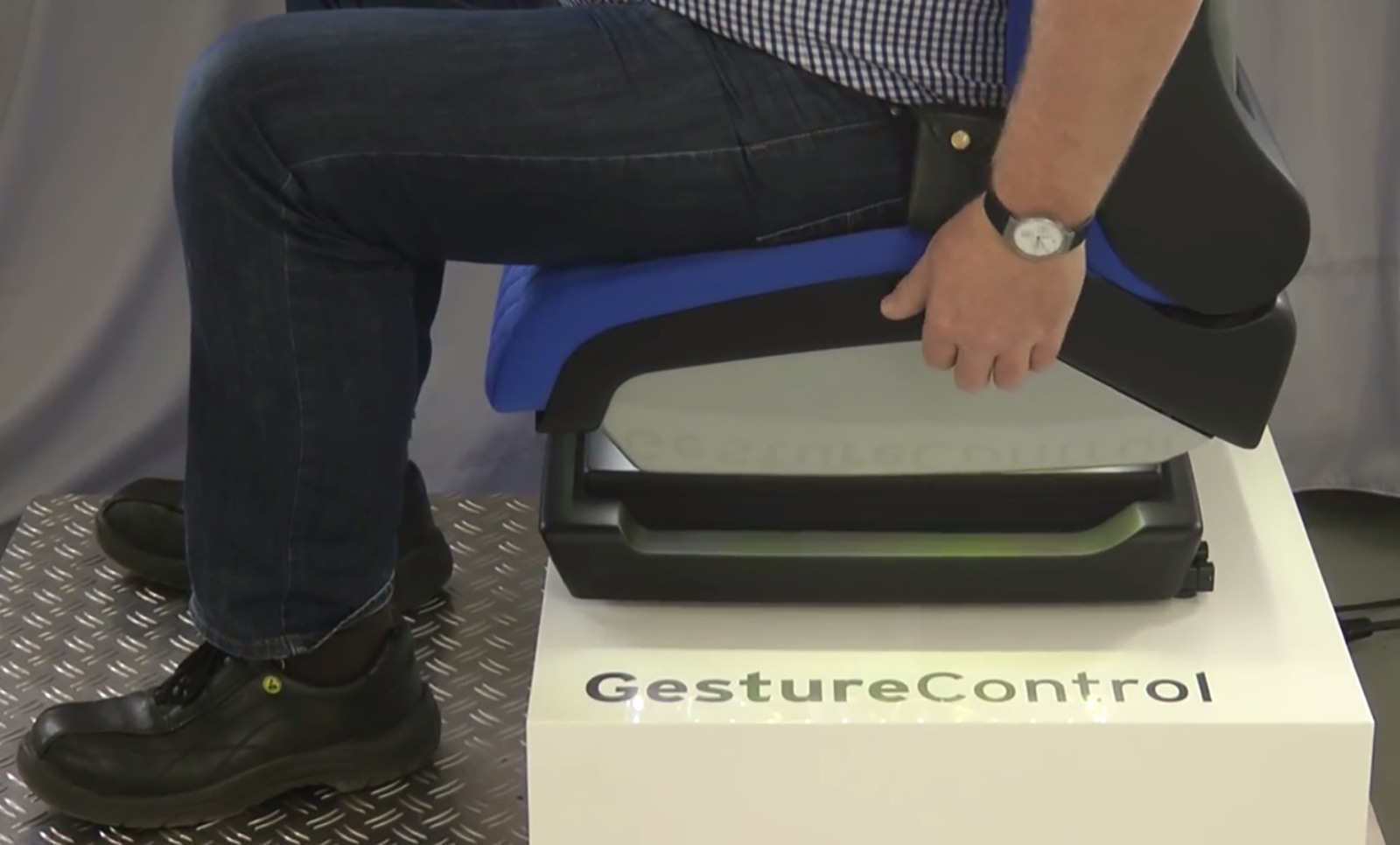
Smart driver seat that responds to gestures


Ease into the correct seat position: with the new seat model, a few hand gestures
at the side panel are all you need. © Isringhausen GmbH

(August 4, 2015)  A multitude of professional drivers suffer from back problems. One cause: driver seats that are inadequately adjusted to each driver‘s ergonomic needs. Fraunhofer‘s researchers, in joint collaboration with Isringhausen GmbH & Co. KG, engineered a driver‘s seat whose shape and position can be adjusted by using simple hand gestures.

Sitting for hours on end with little movement: it‘s part of everyday working life for the professional driver. On average, they spend nine hours a day in the vehicle cabin. As a result, at some point a number of drivers develop problems with their back. In study after study, statutory health insurance was able to demonstrate that a driver‘s seat that is adjusted to the person at the wheel in terms of shape and position, can be an effective countermeasure to back pain. Certainly the majority of truck seats possess a wide selection of seat position options – yet the majority of drivers use them only sporadically, since operation is complicated and there often is not enough time for a correct setting.

A new, intuitive operating design should change all this. Researchers at the Fraunhofer Institute for Silicate Research ISC, in collaboration with Isringhausen GmbH & Co. KG., have engineered a driver‘s seat that can be calibrated intuitively through gestures. „To accomplish this, we use a sensor-based gesture control system in the driver‘s seat,“ explains Johannes Ehrlich of the Center for Smart Materials (CeSMa) at Fraunhofer ISC. „With the aid of simple hand gestures, the driver can move the seat forward and back, as well as up and down. In addition, he or she can also custom-set the incline of the thigh support and back rest in the same manner.“

read entire press  release >>

Space probes: sterile launch into outer space


Scientists are regularly preparing instruments for space missions at their cleanroom laboratories.
Here, “star attraction” on center stage is the preliminary cleaning of a satellite component.
© Fraunhofer IPA

(August 4, 2015)  Components used on a space mission must be cleaned meticulously. Fraunhofer researchers designed a cleanroom for the ESA (European Space Agency) in which the most infinitesimal contaminants can be removed. These experts, together with partners, are sterilizing ESA’s “ExoMars” Mars rover, scheduled for launch in 2018.

Space missions are inextricably linked to tremendous costs and great risks. The numerous aborted projects lend proof to this fact. Since an unmanned space probe, once started, can no longer be repaired, it is imperative that no part or assembly fail. All the effort would otherwise be for naught, and scientists would have to wait several years for a replacement mission. Contaminants play an important role. Because dirt can block mechanisms, cause a short or disrupt the electronics. Things start getting especially tricky when a probe is supposed to look for traces of life on a distant planet − which is precisely the agenda for the “ExoMars” European Mars Mission, scheduled to launch in 2018. A Mars lander will set down on our neighbor planet and then launch a rover about the size of a car by automaker smart. To ensure its sensors operate reliably as they search for signs of life, the mission must avoid introducing any organic material from earth.

Cleanroom designed for the ESA

On behalf of the European Space Agency, ESA, the research team at the Fraunhofer Institute for Manufacturing Engineering and Automation IPA is working assiduously to ensure all components are utterly and perfectly sterile, removing even nano-sized contaminants. For its design, the scientists could fall back on the collective expertise at Fraunhofer; indeed, one of the best-equipped cleanrooms in the world is located at Fraunhofer IPA in Stuttgart. To ensure they can sterilize the Mars rover reliably, the experts at ESA drafted the plans for a cleanroom and installed it in the Dutch town of Noordwijk, at the headquarters for the European Space Research and Technology Center (ESTEC). The roughly 70 square meter, sterile-controlled area is sufficient to meet the toughest purity standards, including ISO Class 1. This means that a cubic meter of air may not contain more than ten particles of 0.1 micrometers in size. The ultrasterile section is about one billion times cleaner than the air in the surrounding environment.

read entire press  release >>

Small tilt in magnets makes them viable memory chips


This image taken from a computer simulation shows nanomagnets tilted
at various angles, with the white regions indicating greater angles of tilt.
Researchers have found that even a small tilt of 2 degrees will facilitate
magnetic switching. (Image by Samuel Smith, UC Berkeley)

(August 4, 2015)  UC Berkeley researchers have discovered a new way to switch the polarization of nanomagnets, paving the way for high-density storage to move from hard disks onto integrated circuits.

The advance, to be reported Monday, Aug. 3, in the Proceedings of the National Academy of Sciences, could lead to computers that turn on in an instant, operate with far greater speed and use significantly less power.

A research team led by Sayeef Salahuddin, an associate professor of electrical engineering and computer sciences, has found that tilting magnets slightly makes them easy to switch without an external magnetic field. This opens the door to a memory system that can be packed onto a microprocessor, a major step toward the goal of reducing energy dissipation in modern electronics.

“To reduce the power draw and increase the speed, we want to be able to manufacture a computer chip that includes memory so that it is close to the computational action,” said Salahuddin. “However, the physics needed to create long-term storage are not compatible with integrated circuits.”

Creating and switching polarity in magnets without an external magnetic field has been a key focus in the field of spintronics. Generating a magnetic field takes power and space, which is why magnets have not yet been integrated onto computer chips.

Instead, there are separate systems for long-term magnetic memory. These include a computer’s hard disk drive where data are stored, and the various kinds of random-access memory, or RAM, on the integrated circuits of the central processing unit, or CPU, where calculations and logic operations are performed.

read entire press  release >>

Better Together: Graphene-Nanotube Hybrid Switches


(August 4, 2015)  Graphene has been called a wonder material, capable of performing great and unusual material acrobatics. Boron nitride nanotubes are no slackers in the materials realm either, and can be engineered for physical and biological applications. However, on their own, these materials are terrible for use in the electronics world. As a conductor, graphene lets electrons zip too fast—there’s no controlling or stopping them—while boron nitride nanotubes are so insulating that electrons are rebuffed like an overeager dog hitting the patio door.

But together, these two materials make a workable digital switch, which is the basis for controlling electrons in computers, phones, medical equipment and other electronics.

Yoke Khin Yap, a professor of physics at Michigan Technological University, has worked with a research team that created these digital switches by combining graphene and boron nitride nanotubes. The journal Scientific Reports recently published their work.

“The question is: How do you fuse these two materials together?” Yap says. The key is in maximizing their existing chemical structures and exploiting their mismatched features.


Nanoscale Tweaks
Graphene is a molecule-thick sheet of carbon atoms; the nanotubes are like straws made of boron and nitrogen. Yap and his team exfoliate graphene and modify the material’s surface with tiny pinholes. Then they can grow the nanotubes up and through the pinholes. Meshed together like this, the material looks like a flake of bark sprouting erratic, thin hairs.

“When we put these two aliens together, we create something better,” Yap says, explaining that it’s important that the materials have lopsided band gaps, or differences in how much energy it takes to excite an electron in the material. “When we put them together, you form a band gap mismatch—that creates a so-called ‘potential barrier’ that stops electrons.

read entire press  release >>

From cameras to computers, new material could change how we work and play


Serendipity has as much a place in sci­ence as in love.

(August 4, 2015)  That’s what North­eastern physi­cists Swastik Kar and Srinivas Sridhar found during their four-​​year project to modify graphene, a stronger-​​than-​​steel infin­i­tes­i­mally thin lat­tice of tightly packed carbon atoms. Pri­marily funded by the Army Research Lab­o­ra­tory and Defense Advanced Research Projects Agency, or DARPA, the researchers were charged with imbuing the decade-​​old mate­rial with thermal sen­si­tivity for use in infrared imaging devices such as night-​​vision gog­gles for the military.

What they unearthed, pub­lished Friday in the journal Sci­ence Advances, was so much more: an entirely new mate­rial spun out of boron, nitrogen, carbon, and oxygen that shows evi­dence of mag­netic, optical, and elec­trical prop­er­ties as well as DARPA’s sought-​​after thermal ones. Its poten­tial appli­ca­tions run the gamut: from 20-​​megapixel arrays for cell­phone cam­eras to photo detec­tors to atom­i­cally thin tran­sis­tors that when mul­ti­plied by the bil­lions could fuel computers.


“We had to start from scratch and build every­thing,” says Kar, an assis­tant pro­fessor of physics in the Col­lege of Sci­ence. “We were on a journey, cre­ating a new path, a new direc­tion of research.”

The pair was familiar with “alloys,” con­trolled com­bi­na­tions of ele­ments that resulted in mate­rials with prop­er­ties that sur­passed graphene’s—for example, the addi­tion of boron and nitrogen to graphene’s carbon to con­note the con­duc­tivity nec­es­sary to pro­duce an elec­trical insu­lator. But no one had ever thought of choosing oxygen to add to the mix.

read entire press  release >>

Cassiopeia's Hidden Gem: The Closest Rocky, Transiting Planet


(August 4, 2015)  Skygazers at northern latitudes are familiar with the W-shaped star pattern of Cassiopeia the Queen. This circumpolar constellation is visible year-round near the North Star. Tucked next to one leg of the W lies a modest 5th-magnitude star named HD 219134 that has been hiding a secret.

Astronomers have now teased out that secret: a planet in a 3-day orbit that transits, or crosses in front of its star. At a distance of just 21 light-years, it is by far the closest transiting planet to Earth, which makes it ideal for follow-up studies. Moreover, it is the nearest rocky planet confirmed outside our solar system. Its host star is visible to the unaided eye from dark skies, meaning anyone with a good star map can see this record-breaking system.

"Most of the known planets are hundreds of light-years away. This one is practically a next-door neighbor," said astronomer Lars A. Buchhave of the Harvard-Smithsonian Center for Astrophysics (CfA).

"Its proximity makes HD 219134 ideal for future studies. The James Webb Space Telescope and future large ground-based observatories are sure to point at it and examine it in detail," said lead author Ati Motalebi of the Geneva Observatory.

The newfound world, designated HD 219134b, was discovered using the HARPS-North instrument on the 3.6-meter Telescopio Nazionale Galileo in the Canary Islands. The CfA is a major partner with the Geneva Observatory on the HARPS-North Collaboration, which includes several other European partners.

HARPS-North detects planets using the radial velocity method, which allows astronomers to measure a planet's mass. HD 219134b weighs 4.5 times the mass of Earth, making it a super-Earth.

With such a close orbit, researchers realized that there was good possibility the planet would transit its star. In April of this year they targeted the system with NASA's Spitzer Space Telescope. At the appropriate time, the star dimmed slightly as the planet crossed the star's face. Measuring the depth of the transit gave the planet's size, which is 1.6 times Earth. As a result, the team can calculate the planet's density, which works out to about 6 g/cm3. This shows that HD 219134b is a rocky world.

read entire news release >>

Greenhouse gases’ millennia-long ocean legacy


(August 4, 2015)  Continuing current carbon dioxide (CO2) emission trends throughout this century and beyond would leave a legacy of heat and acidity in the deep ocean. These changes would linger even if the atmospheric carbon dioxide concentration were to be restored to pre-industrial levels at some point in the future, according to a new Nature Climate Change paper from an international team including Carnegie’s Ken Caldeira. This is due to the tremendous inertia of the ocean system.

Greenhouse gases emitted by human activities not only cause rapid warming of the seas, but also an unprecedented rate of ocean acidification. Ocean acidification occurs when atmospheric carbon dioxide is absorbed by the ocean and forms carbonic acid, inhibiting coral reef growth and threatening marine life.

Some experts propose that climate and chemical damage due to high levels of greenhouse gases could be avoided by removing active carbon dioxide from the atmosphere, processes broadly called CDR for carbon dioxide removal. One idea is that fast-growing trees such as poplars, which consume a great deal of carbon dioxide during growth, could be farmed and then burned in bioenergy plants where their carbon dioxide would captured and stored underground instead of released back into the atmosphere. However, none of the proposed removal-and-storage strategies have been proven at an industrial scale yet, and ideas such as poplar farming would have to be carefully balanced against land use for food production.

Using computer modeling to investigate the success of CDR strategies, the team discovered that the clock is ticking for CDR to substantially reduce risks to much marine life. If these processes are applied too late, they might as well not be applied at all, as far as ocean acidification is concerned, the team found.

read entire press  release >>

Giving robots a more nimble grasp


Engineers use the environment to give simple robotic grippers more dexterity.

(August 4, 2015)  Most robots on a factory floor are fairly ham-handed: Equipped with large pincers or claws, they are designed to perform simple maneuvers, such as grabbing an object, and placing it somewhere else in an assembly line. More complex movements, such as adjusting the grasp on an object, are still out of reach for many industrial robots.

Engineers at MIT have now hit upon a way to impart more dexterity to simple robotic grippers: using the environment as a helping hand. The team, led by Alberto Rodriguez, an assistant professor of mechanical engineering, and graduate student Nikhil Chavan-Dafle, has developed a model that predicts the force with which a robotic gripper needs to push against various fixtures in the environment in order to adjust its grasp on an object.


For instance, if a robotic gripper aims to pick up a pencil at its midpoint, but instead grabs hold of the eraser end, it could use the environment to adjust its grasp. Instead of releasing the pencil and trying again, Rodriguez’s model enables a robot to loosen its grip slightly, and push the pencil against a nearby wall, just enough to slide the robot’s gripper closer to the pencil’s midpoint.

Partnering robots with the environment to improve dexterity is an approach Rodriguez calls “extrinsic dexterity” — as opposed to the intrinsic dexterity of, say, the human hand. To adjust one’s grip on a pencil in a similar fashion, a person, using one hand, could simply spider-crawl her fingers towards the center of the pencil. But programming such intrinsic dexterity in a robotic hand is extremely tricky, significantly raising a robot’s cost.


With Rodriguez’s new approach, existing robots in manufacturing, medicine, disaster response, and other gripper-based applications may interact with the environment, in a cost-effective way, to perform more complex maneuvers.

“Chasing the human hand is still a very valid direction [in robotics],” Rodriguez says. “But if you cannot afford having a $100,000 hand that is very complex to use, this [method] brings some dexterity to very simple grippers.”

Rodriguez and Chavan-Dafle will present a paper detailing their new approach in September at the International Conference on Intelligent Robotics and Systems.

read entire press  release >>

NYU Scientists Bring Order, and Color, to Microparticles


(August 4, 2015)  A team of New York University scientists has developed a technique that prompts microparticles to form ordered structures in a variety of materials. The advance, which appears in the Journal of the American Chemical Society (JACS) as an “Editors’ Choice” article, offers a method to potentially improve the makeup and color of optical materials used in computer screens along with other consumer products.

The work is centered on enhancing the arrangement of colloids—small particles suspended within a fluid medium. Colloidal dispersions are composed of such everyday items such as paint, milk, gelatin, glass, and porcelain, but their potential to create new materials remains largely untapped.

Notably, DNA-coated colloids offer particular promise because they can be linked together, with DNA serving as the glue to form a range of new colloidal structures. However, previous attempts have produced uneven results, with these particles attaching to each other in ways that produce chaotic or inflexible configurations.

The NYU team developed a new method to apply DNA coating to colloids so that they crystallize—or form new compounds—in an orderly manner. Specifically, it employed a synthetic strategy—click chemistry—introduced more than a decade ago that is a highly efficient way of attaching DNA. Here, scientists initiated a chemical reaction that allows molecular components to stick together in a particular fashion—a process some have compared to connecting Legos.

In a previous paper, published earlier this year in the journal Nature Communications, the research team outlined the successful execution of this technique. However, the method, at that point, could manipulate only one type of particle. In the JACS study, the research team shows the procedure can handle five additional types of materials—and in different combinations.

read entire press  release >>

Crystals form through a variety of paths, with implications for biological, materials and environmental research


(August 4, 2015)  Crystals play an important role in the formation of substances from skeletons and shells to soils and semiconductor materials. But many aspects of their formation are shrouded in mystery. Scientists have long worked to understand how crystals grow into complex shapes. Now, an international group of researchers has shown how nature uses a variety of pathways to grow crystals beyond the classical, one-piece-at-a-time route.

“Because crystallization is a ubiquitous phenomenon across a wide range of scientific disciplines, a shift in the picture of how this process occurs has far-reaching consequences,” said James De Yoreo, a materials scientist and physicist at the Department of Energy’s Pacific Northwest National Laboratory and affiliate UW professor of chemistry and materials science and engineering.


These conclusions, published July 31 in Science with De Yoreo as lead author, have implications for decades-old questions in crystal formation, such as how animals and plants form minerals into shapes that have no relation to their original crystal symmetry or why some contaminants are so difficult to remove from stream sediments and groundwater.

Their findings crystalized during discussions among 15 scientists from diverse fields such as geochemistry, physics, biology and the earth and materials sciences. At their home institutions, these researchers conduct experiments, investigate animal skeletons, study soils and streams or use computer simulations to visualize how particles can form and attach. They met for a three-day workshop in Berkeley, California, that was sponsored by the Council on Geosciences from the Department of Energy’s Office of Basic Energy Sciences.

read entire press  release >>

What would the world look like to someone with a bionic eye?


(August 4, 2015)  Various sight recovery therapies are being developed by companies around the world, offering new hope for people who are blind. But little is known about what the world will look like to patients who undergo those procedures.

A new University of Washington study seeks to answer that question and offers visual simulations of what someone with restored vision might see. The study concludes that while important advancements have been made in the field, the vision provided by sight recovery technologies may be very different from what scientists and patients had previously assumed.

In a paper published Aug. 3 in the journal Philosophical Transactions B, UW researchers used simulations to create short videos that mimic what vision would be like after two different types of sight recovery therapies.


Lead author Ione Fine, a UW associate professor of psychology, said the simulations are unprecedented.

“This is the first visual simulation of restored sight in any realistic form,” she said. “Now we can actually say, ‘This is what the world might look like if you had a retinal implant.’”

Fine said the paper aims to provide information about the quality of vision people can expect if they undergo sight restoration surgery, an invasive and costly procedure.

“This is a really difficult decision to make,” she said. “These devices involve long surgeries, and they don’t restore anything close to normal vision. The more information patients have, the better.”

read entire press  release >>

Focused Laserpower Boosts Ion Acceleration


A laser beam (red, coming from the left) shines on an ultrathin diamond-like carbon foil
coated on one side with a layer of nanotubes. The impact of the laser beam ejects
high-energy ions from the uncoated side of the carbon foil. The additional focus
provided by the nanotube coating enhances the efficiency of this laser-driven
particle acceleration. Illustration: Isabella Cortrie

(August 4, 2015)  An international team of physicists has used carbon nanotubes to enhance the efficiency of laser-driven particle acceleration. This significant advance brings compact sources of ionizing radiation for medical purposes closer to reality.

The interaction of high-intensity laser light with solid targets could someday serve as the basis of table-top sources of high-energy ions for medical applications. An international team led by physicists of the LMU affiliated with the Munich-Centre for Advanced Photonics (MAP), a Cluster of Excellence based in Munich, and in cooperation with scientists from the Max Planck Institute of Quantum Optics, has taken another step towards this goal. They have done so by boosting the efficiency of a technique that uses extremely intense pulses of laser light to eject packets of high-energy ions from diamond-like carbon foils. In their experiment, the researchers coated one side of the foil with carbon nanotubes. Upon laser irradiation, the layer acts like a lens to focus and concentrate the light energy on the foil, which results in the production of much more energetic ion beams. This makes experiments with high-energy carbon ions on cells feasible for the first time, and brings light-driven generation of ionizing radiation closer to practical application. 

August 3, 2015

Saving energy among neighbours


Concepts for industrial parks

(August 3, 2015)  Using industrial waste heat rather than buying thermal heat, installing new lighting, implementing more efficient processes: RUB engineers develop energy-saving concepts for industrial parks. An online tool helps economic developers and climate-protection managers to assess saving potentials.

If a company in an industrial park generates waste heat and another one buys thermal heat, would it not be more sensible to agree on an exchange to save costs and energy? It would, believes the "GET.Min" project team headed by Prof Dr-Ing. Hermann-Josef Wagner, Chair of Energy Systems and Energy Economics (fig. 1). Commissioned by the Federal Ministry for the Environment, the researchers have developed and implemented an energy-saving concept in four industrial parks, in collaboration with "EnergieAgentur.NRW", the company "econius" and an IT-company.

It had been a long process: first, the researchers had to ascertain which industrial parks would make suitable examples. "A complete list of industrial estates does not exist, but 'EnergieAgentur.NRW' keeps close track of them and was able to assist us in our search and get us in touch with the relevant people," explains Dominik Möllenbrink from the project team. In their selection of the four parks, the researchers paid close attention that all industrial estates were quite distinct. Accordingly, the chosen examples in Waldbröl, Viersen, Siegen and Medebach vary strongly with regard to, for example, their locations and the combination of different industrial segments represented there (fig. 2). This is because the aim was to make the results gathered in the course of the project applicable for as many other industrial parks as possible.


More often than not, industrial estates house one to three large corporations that are active in the global market, plus several smaller ones. Fifty companies in total have come on board. Not all enterprises situated in the selected industrial parks take part in the project. "We contacted them via trade offices. The support which the offices provided to aid our project varied strongly," explains team member Dominik Möllenbrink. "Large enterprises often act as flagships, whereas it was more difficult to get the smaller ones on board for the project. This is because their employees don't have much time to spare for the issue of saving energy, as they are busy handling other tasks, such as quality management or manufacturing, to name a few. The day business takes priority of course.”

read entire press  release >>

Glaciers melt faster than ever


(August 3, 2015)  Glacier decline in the first decade of the 21st century has reached a historical record, since the onset of direct observations. Glacier melt is a global phenomenon and will continue even without further climate change. This is shown in the latest study by the World Glacier Monitoring Service under the lead of the University of Zurich, Switzerland.

The World Glacier Monitoring Service, domiciled at the University of Zurich, has compiled worldwide data on glacier changes for more than 120 years. Together with its National Correspondents in more than 30 countries, the international service just published a new comprehensive analysis of global glacier changes in the Journal of Glaciology. In this study, observations of the first decade of the 21st century (2001-2010) were compared to all available earlier data from in-situ, air-borne, and satellite-borne observations as well as to reconstructions from pictorial and written sources.


«The observed glaciers currently lose between half a metre and one metre of its ice thickness every year – this is two to three times more than the corresponding average of the 20th century», explains Michael Zemp, Director of the World Glacier Monitoring Service and lead author of the study. «Exact measurements of this ice loss are reported from a few hundred glaciers only. However, these results are qualitatively confirmed from field and satellite-based observations for tens of thousands of glaciers around the world.»

read entire press  release >>

August 2, 2015

Calma low tables


(August 02, 2015) Calma low tables are collaboration with Italian furniture company Meritalia. CALMA The state of being calm; peacefulness; absence of worry, anger, fear or other strong negative emotion. Stillness, peace and quietude. A period of time without wind. Clear glass as a silent and quiet surface and a warm, natural and simple looking wooden frame that holds it up. Honest, accurate and time-honored method of construction combined with a modern minimalist design gives this table a distinctive stamp. Design is inspired by the Scandinavian and northern design traditions. Something very traditional but still new and interesting, Calma combines classical and modern furniture in it's own calm way.

source >>

Kuskoa Bi - Bioplastic Chair


(August 02, 2015) Kuskoa Bi design by Jean Louis Iratzoki
The comfortable and generously-sized Kuskoa Bi is the first chair on the market to be manufactured in bioplastic. Its particularly enveloping shell, cut out in such a way as to optimize back and arm support, is delicately placed on a solid wood trestle. Different upholstered versions are also available.

Kuskoa Bi had to be a comfortable, enveloping chair and to achieve this we opted for a semi-concave shell. The material that best enables this shape to be created is plastic. However, the production of plastic is contrary to our fundamental principles on sustainable development. To find a solution to this dilemma, we carried 1 out in-depth investigative research and found a new material: bioplastic.