January 7, 2016

A ‘printing press’ for nanoparticles


Credit: Thomas Edwardson

(January 7, 2016)  New technique could facilitate use of gold nanoparticles in electronic, medical applications

Gold nanoparticles have unusual optical, electronic and chemical properties, which scientists are seeking to put to use in a range of new technologies, from nanoelectronics to cancer treatments.

Gold nanoparticles have unusual optical, electronic and chemical properties, which scientists are seeking to put to use in a range of new technologies, from nanoelectronics to cancer treatments.

Some of the most interesting properties of nanoparticles emerge when they are brought close together – either in clusters of just a few particles or in crystals made up of millions of them.  Yet particles that are just millionths of an inch in size are too small to be manipulated by conventional lab tools, so a major challenge has been finding ways to assemble these bits of gold while controlling the three-dimensional shape of their arrangement.

One approach that researchers have developed has been to use tiny structures made from synthetic strands of DNA to help organize nanoparticles. Since DNA strands are programmed to pair with other strands in certain patterns, scientists have attached individual strands of DNA to gold particle surfaces to create a variety of assemblies. But these hybrid gold-DNA nanostructures are intricate and expensive to generate, limiting their potential for use in practical materials. The process is similar, in a sense, to producing books by hand.

Enter the nanoparticle equivalent of the printing press. It’s efficient, re-usable and carries more information than previously possible. In results reported online in Nature Chemistry, researchers from McGill’s Department of Chemistry outline a procedure for making a DNA structure with a specific pattern of strands coming out of it; at the end of each strand is a chemical “sticky patch.”  When a gold nanoparticle is brought into contact to the DNA nanostructure, it sticks to the patches. The scientists then dissolve the assembly in distilled water, separating the DNA nanostructure into its component strands and leaving behind the DNA imprint on the gold nanoparticle. (See illustration.)


journal reference >>

Bug eyes: Tiny glasses confirm 3D vision in insects


Mantis modelling 3D glasses

(January 7, 2016)  Miniature glasses have proved that mantises use 3D vision - providing a new model to improve visual perception in robots.

Most knowledge about 3D vision has come from vertebrates, however, a Newcastle University team publishing today in Scientific Reports, confirm that the praying mantis, an invertebrate, does indeed use stereopsis or 3D perception for hunting.

In a specially-designed insect cinema, they have shown that it needs to be 'old school' 3D glasses for tests to work on mantises. While in humans that would be with red and blue lenses, red light is poorly visible to mantises so they have custom-made glasses with one blue and one green lens!

Better understanding of 3D vision

3D vision in mantises was originally shown in the 1980s by Samuel Rossel, but his work used prisms and occluders which meant that only a very limited set of images could be shown. The Newcastle University team has developed 3D glasses suitable for insects which means they can show the insects any images they want, opening up new avenues of research.

Study leader, Jenny Read, Professor of Vision Science who is supported by the Leverhulme Trust said: “Despite their minute brains, mantises are sophisticated visual hunters which can capture prey with terrifying efficiency. We can learn a lot by studying how they perceive the world.


journal reference >>

What the mouse eye tells the mouse brain


The retina sends information to the brain via some 40 different channels.
Image: CIN/ Tübingen University

(January 7, 2016)  Tübingen researchers have shown that image processing in the eye is more extensive than previously thought. They investigated the channels that transmit information from the eye to the brain. In the course of this investigation, they not only identified numerous new cell types: they also found that the retina seems to possess some 40 different channels into the brain, twice as many as previously assumed. The results of their study are published in the latest edition of Nature. DOI: 10.1038/nature16468

“What the frog’s eye tells the frog’s brain” was the title that cognition scientist Jerome Lettvin gave to a seminal paper published in 1959. He assumed that the eye not only sees, but also processes images – even before they are transmitted to the brain for further processing. Lettvin was able to show that the eye neither simply takes pictures like a camera, nor does it send them to the brain without filtering. Instead, the eye itself extracts valuable information from what it sees. In the case of the frog, for example, it might ‘tell’ the brain: “There is something small and dark there, possibly a fly.” For his revolutionary hypotheses, Lettvin was at first laughed off stage at conferences. In the meantime, though, his oft-quoted paper is considered a milestone. The questions raised in Lettvin’s time are still pursued by scientists today.

A Tübingen-based team of researchers has now tackled these questions anew, led by Prof. Thomas Euler and Prof. Matthias Bethge (Werner Reichardt Centre for Integrative Neuroscience, Bernstein Center for Computational Neuroscience, and Institute for Ophthalmic Research). The neuroscientists wanted to find out which kinds of information about the world the retina transmits to the brain. To this end, they undertook a study on an unheard-of scale, investigating more than 11,000 individual retinal cells in mice - far bigger than the largest similar study to date, which had been content with investigating approx. 450 individual cells.


journal reference >>

January 6, 2016

Is there a bubble in the art market?


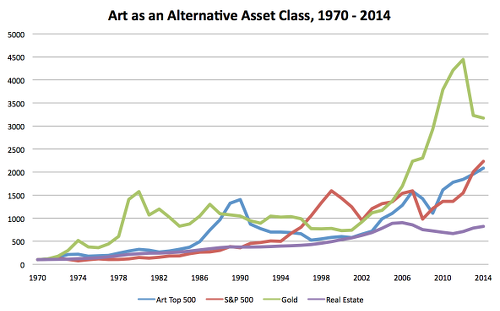
Graph showing the dip in the art market in the early 1990s as well as the striking
recovery following the 2008/09 crisis, based on the top 500 artists and compared
to the development of gold and real estate prices, as well as the Standard & Poor's
500 stock market index. © Roman Kräussl / University of Luxembourg

(January 6, 2016)  Researchers at the University of Luxembourg are warning of an overheating art market, one of the fastest-growing investment sectors of the past decade, after applying a new bubble detection method analysing millions of auction records.

About market growth in the art sector

Few sectors of the market have rebounded as robustly as art—particularly contemporary art, which has doubled in value since the beginning of the financial recovery following the 2008/09 financial market crisis.

Pundits on the side-lines have commented that such market growth is unsustainable, warning there is a bubble in the making that is sure to burst, as seen in the early 1990s and in 2008/09. Headline-grabbing sales of post-war and contemporary works for over $100 million appear to support this argument. But is a bubble really forming?

Market bubbles are generally defined as a dramatic escalation in the volume of trading in assets at prices that exceed their fundamental value, followed by a sudden collapse. Rational expectations put the fundamental value of an asset as equal to its expected discounted cash flow. For most assets it is relatively easy to project this value—for example through dividends on stocks or rent on real estate. In the case of art, however, returns can rarely be correlated to costs of production.

read entire press  release >>

HYPNOS : THE WORLD'S BEST SLEEP HOODIE


(January 6, 2016)  The Hypnos Hoodie: an everyday hoodie that inflates for sleep (and support) on the go.

The Hypnos Hoodie is a beautiful, comfortable and practical hoodie designed for creatives, travelers, commuters and anybody who has a moment to take a rest. It's more than a hoodie, it's your day-to-day (and day-to-night) essential comfort garment, and it does things other hoodies can't-- The hood inflates to form a perfectly ergonomic pillow for rest on the go.

source >>

Aluminum nanoparticles could improve electronic displays


A set of vivid red, green and blue pixels based on aluminum nanostructures
are shown in a liquid crystal display (left: schematic, right: digital photograph).
Credit: American Chemical Society

(January 6, 2016)  Whether showing off family photos on smartphones or watching TV shows on laptops, many people look at liquid crystal displays (LCDs) every day. LCDs are continually being improved, but almost all currently use color technology that fades over time. Now, a team reports in ACS Nano that using aluminum nanostructures could provide a vivid, low-cost alternative for producing digital color.

Conventional color technology used in displays is susceptible to photobleaching, or fading. So researchers have looked toward aluminum nanoparticles that can display colors in electronics, thanks to a property called “plasmon resonance.” To create plasmonic color devices, researchers group nanostructures into arrays called pixels. Color is generated by scattering light onto the pixels, with different arrangements creating different colors. Aluminum plasmonic pixels are advantageous for use in electronic displays because they are inexpensive and can be made in an ultrasmall size, which can increase image resolution. But these pixels create muted and dull colors. In a recent publication, Stephan Link and colleagues developed a method that allows the red end of the color spectrum to be more vibrant. Now, the same team reports another approach that makes the blue end of the spectrum much more brilliant, too.


journal reference >>

Renewable Energy for State Renewable Portfolio Standards Yielded Sizable Benefits and Other Impacts in 2013


(January 6, 2016)  A new study estimates that $2.2 billion in benefits came from reduced greenhouse gas emissions and $5.2 billion from reductions in other air pollution for state renewable portfolio standard (RPS) policies operating in 2013. The report also shows national water withdrawals and consumption were reduced by 830 billion gallons and 27 billion gallons in 2013, respectively. The report, entitled A Retrospective Analysis of the Benefits and Impacts of U.S. Renewable Portfolio Standards, was conducted by researchers from the U.S. Department of Energy’s Lawrence Berkeley National Laboratory (Berkeley Lab) and National Renewable Energy Laboratory (NREL) and evaluates the benefits and other impacts of RPS policies.

RPS policies require utilities or other electricity providers to meet a minimum portion of their load with eligible forms of renewable electricity. They currently exist in 29 U.S. states plus Washington, D.C., and have been a driver for renewable electricity generation in the United States over the past decade. Many states are currently considering whether to extend, eliminate, or otherwise revise existing RPS policies. “This work is intended to inform these ongoing discussions by helping states evaluate RPS programs,” said Berkeley Lab’s Ryan Wiser, one of the report authors.


report >>

Nanowalls for smartphones


(January 6, 2015)  Researchers at ETH Zurich have manufactured transparent electrodes for use in touchscreens using a novel nanoprinting process. The new electrodes are some of the most transparent and conductive that have ever been developed.

From smartphones to the operating interfaces of ticket machines and cash dispensers, every touchscreen we use requires transparent electrodes: The devices’ glass surface is coated with a barely visible pattern made of conductive material. It is because of this that the devices recognise whether and where exactly a finger is touching the surface.
Researchers under the direction of Dimos Poulikakos, Professor of Thermodynamics, have now used 3D print technology to create a new type of transparent electrode, which takes the form of a grid made of gold or silver “nanowalls” on a glass surface. The walls are so thin that they can hardly be seen with the naked eye. It is the first time that scientists have created nanowalls like these using 3D printing. The new electrodes have a higher conductivity and are more transparent than those made of indium tin oxide, the standard material used in smartphones and tablets today. This is a clear advantage: The more transparent the electrodes, the better the screen quality. And the more conductive they are, the more quickly and precisely the touchscreen will work.


This grid printed in gold has walls only 300 nanometres thick.
(Photo: Schneider J et al. Advanced Functional Materials 2015)

Third dimension

“Indium tin oxide is used because the material has a relatively high degree of transparency and the production of thin layers has been well researched, but it is only moderately conductive,” says Patrik Rohner, a PhD student in Poulikakos’ team. In order to produce more conductive electrodes, the ETH researchers opted for gold and silver, which conduct electricity much better. But because these metals are not transparent, the scientists had to make use of the third dimension. ETH professor Poulikakos explains: “If you want to achieve both high conductivity and transparency in wires made from these metals, you have a conflict of objectives. As the cross-sectional area of gold and silver wires grows, the conductivity increases, but the grid’s transparency decreases.”


journal reference >>

Leaf-mimicking device harnesses light to purify water


Contaminated water can be cleaned up to varying levels of purity
with a new artificial leaf. Credit: American Chemical Society

(January 6, 2015)  For years, scientists have been pursuing ways to imitate a leaf’s photosynthetic power to make hydrogen fuel from water and sunlight. In a new twist, a team has come up with another kind of device that mimics two of a leaf’s processes — photosynthesis and transpiration — to harness solar energy to purify water. Their development, reported in the journal ACS Applied Materials & Interfaces, could help address issues of water scarcity.

More than 1 billion people around the world live in areas where clean water is hard to come by, and that number will likely rise as the population grows. One possible solution to the shortage is to clean up wastewater or other water sources that would otherwise not be drinkable or usable for agriculture. But methods to scrub contaminants from water mostly rely on conventional energy sources. To address the water problem without adding to the dependence on fossil fuels, Peng Tao, Wen Shang and colleagues developed a way to purify water by copying the way green leaves work.


journal reference >>

Intelligent machine tool prototype operates like a 3D printer


(January 6, 2016)  A research group led by Professor SHIRASE Keiichi of the Kobe University Graduate School of Engineering has developed a prototype machine tool that can manufacture metal components and operates like a 3D printer. The prototype was exhibited at Emo Milano 2015, one of the three largest international machine tool trade shows. This development could speed up the manufacture of custom-made products such as dental implants and artificial bones, potentially shortening production times and reducing costs.

The machine tool prototype is a product of Kobe University’s ongoing research into intelligent machine tools. This is one of three Kobe University projects in the category of “Innovative design and manufacturing technologies” selected for the Strategic Innovation Promotion Program (SIP), a project headed by the Japanese Cabinet Office’s Council for Science, Technology and Innovation. In June 2015 Kobe University used funding from this program to establish the 3D Smart Manufacturing Center, which will be used to pursue interdisciplinary research and business-academia collaborations.

read entire press  release >>

New Internet of Things Research Hub announced


(January 6, 2015)  Ed Vaizey, Minister of State for Culture and the Digital Economy, has today confirmed a new interdisciplinary Research Hub to drive forward UK research in the Internet of Things (IoT). The PETRAS consortium of nine leading UK universities will work together over the next three years to explore critical issues in privacy, ethics, trust, reliability, acceptability, and security.

Funding for the Hub includes a £9.8 million grant from the Engineering and Physical Sciences Research Council (EPSRC) which will be boosted by partner contributions to approximately £23 million in total.

The project is part of IoTUK, an integrated £40 million, three-year, Government programme that seeks to advance the UK's global leadership in IoT and increase the adoption of high quality IoT technologies and services throughout businesses and the public sector.

The Hub is a consortium of nine leading universities led by UCL with Imperial College London, University of Oxford, University of Warwick, Lancaster University, University of Southampton, University of Surrey, University of Edinburgh and Cardiff University. The Hub will draw in substantial support and leverage from over 47 partners from industry and the public sector.

Ed Vaizey, Digital Economy Minister, said: UK universities are renowned for their creativity, and pioneering research and development. We want the UK to be a world leader in the adoption of Internet of Things technologies, and I know that bringing these universities together with partners from the UK's thriving tech industry will be instrumental in making this a reality.

read entire press  release >>

SPOOKY INTERFERENCE AT A DISTANCE


Figure: Schematic representation of the nonlocal electron interference experiment.
A dc current is driven from the upper left to the lower left contact. A nonlocal, oscillating
voltage is measured between the upper and lower right contacts due the magnetic-field
induced single-electron interference in the 500 nanometer ring in the middle.

(January 6, 2015)  Nanotechnologists at the University of Twente research institute MESA+ have discovered a new fundamental property of electrical currents in very small metal circuits. They show how electrons can spread out over the circuit like waves and cause interference effects at places where no electrical current is driven. The geometry of the circuit plays a key role in this so called nonlocal effect. The interference is a direct consequence of the quantum mechanical wave character of electrons and the specific geometry of the circuit. For designers of quantum computers it is an effect to take account of. The results are published in the British journal Scientific Reports.

Interference is a common phenomenon in nature and occurs when one or more propagating waves interact coherently. Interference of sound, light or water waves is well known, but also the carriers of electrical current – electrons – can interfere. It shows that electrons need to be considered as waves as well, at least in nanoscale circuits at extremely low temperatures: a canonical example of the quantum mechanical wave-particle duality. 

GOLD RING
The researchers from the University of Twente have demonstrated electron interference in a gold ring with a diameter of only 500 nanometers (a nanometer is a million times smaller than a millimeter). One side of the ring was connected to a miniature wire through which an electrical current can be driven. On the other side, the ring was connected to a wire with a voltmeter attached to it. When a current was applied, and a varying magnetic field was sent through the ring, the researchers detected electron interference at the other side of the ring, even though no net current flowed through the ring.


journal reference (Open Access) >>

January 5, 2016

Fighting Fire with FireFOAM


Stacking commodities on wood pallets (left image) slows horizontal
fire spread, versus absence of pallets (right image).

(January 5, 2015)  Insurance company FM Global uses Titan to simulate warehouse fires in unparalleled resolution

Roughly 40 percent of all industrial property loss in the United States comes from fire, and fire is the leading cause of commercial property damage. For insurance companies, understanding how fires spread can help save their industrial clients from massive property and business interruption losses, ultimately saving both insurer and insured millions of dollars. Businesses with large warehouses are at particular risk, because as storage warehouses get bigger, providing adequate protection using traditional ceiling-mounted sprinkler systems is becoming more challenging.

FM Global is one of the world’s largest commercial and industrial insurance companies. Providing insurance to one in three Fortune 1000 companies, FM Global attributes its success to offering not only comprehensive property insurance products but also world-class loss prevention research and engineering services that help clients better understand steps they can take to prevent fires and minimize loss if a fire does start. However, for FM Global research scientist Yi Wang, fire suppression research affects far more than his business’s bottom line.

“The goal of our research is to make protection standards and solutions better,” Wang said. “We believe that the majority of property loss is preventable. We develop solutions to prevent losses, share these solutions, and promote improvement of protection standards.” Some of these solutions Wang described came from research performed on the Titan supercomputer at the Oak Ridge Leadership Computing Facility (OLCF), a US Department of Energy Office of Science User Facility located at Oak Ridge National Laboratory.

read entire press  release >>

Thor’s hammer to crush materials at 1 million atmospheres


MAKE READY FOR THOR — Sandia National Laboratories technician Eric Breden
installs a transmission cable on the silver disk that is the new pulsed-power machine’s
central powerflow assembly. (Photo by Randy Montoya)

(January 5, 2015)  Sophisticated features may influence eventual Z-machine rebuild

A new Sandia National Laboratories accelerator called Thor is expected to be 40 times more efficient than Sandia’s Z machine, the world’s largest and most powerful pulsed-power accelerator, in generating pressures to study materials under extreme conditions.

“Thor’s magnetic field will reach about one million atmospheres, about the pressures at Earth’s core,” said David Reisman,  lead theoretical physicist of the project.

Though unable to match Z’s 5 million atmospheres, the completed Thor will be smaller — 2,000 rather than 10,000 square feet — and will be considerably more efficient due to design improvements that use hundreds of small capacitors instead of Z’s few large ones.

Remarkable structural transformation

This change resembles the transformation of computer architecture in which a single extremely powerful computer chip was replaced with many relatively simple chips working in unison, or to the evolution from several high-voltage vacuum tubes to computers powered by a much larger number of low-voltage solid-state switches.

Sandia National Laboratories technician Tommy Mulville installs a gas exhaust line for a
switch at Thor’s brick tower racks. In the background, beyond the intermediate support towers,
technician Eric Breden makes ready an electrical cable for insertion in the central power
flow assembly. (Photo by Randy Montoya)

A major benefit in efficiency is that while Z’s elephant-sized capacitors require large switches to shorten the machine’s electrical pulse from a microsecond to 100 nanoseconds, with its attendant greater impact, the small switches that service Thor’s capacitors discharge current in a 100-nanosecond pulse immediately, obviating energy losses inevitable when compressing a long pulse.

read entire press  release >>

Remote-controlled robot inspects suitcase bombs


© Photo: North Rhine-Westphalia State Office of Criminal Investigation
Police emergency personnel defuse a suitcase bomb.

(January 5, 2015)  Abandoned items of luggage are frequently found at airports and train stations. This is a case for the emergency services, who have to assume that these items might contain bombs. They must assess the potential threat quickly, avert any possible danger, and preserve evidence for criminal proceedings. In the future, police will have the support of a remote-controlled sensor system as they go about their duties. Fraunhofer researchers are developing this sensor suite in cooperation with industry partners and criminal investigation authorities.

© Photo: German Federal Armed Forces / Bienert
Inspecting a suspicious vest for explosives.

Anyone who forgets their luggage in public places, airports or train stations will spark off a large-scale police operation. Time and again, suitcases, bags or backpacks left lying around unsupervised cause a bomb alert. Admittedly, most abandoned luggage items turn out to be harmless. But in the first instance the emergency services have to proceed on the assumption of possible danger and check whether they are dealing with an improvised explosive device (IED) that might blow up at any time. This involves getting up close to the luggage to inspect it. A system that makes it possible to assess the danger of the situation quickly – and also records 3D images of the contents and shape of the luggage as well as of the surrounding area – would make the specialists’ work considerably easier, speed up the reconnaissance process, and minimize the risk for the emergency personnel. 

read entire press  release >>

Less Jitter, More Bits: New Material for Detecting Photons Captures More Quantum Information


Colorized micrograph of a NIST single-photon detector made of
superconducting nanowires patterned on molybdenum silicide.
Photo Credit: Verma/NIST

(January 5, 2015)  Detecting individual particles of light just got a bit more precise—by 74 picoseconds to be exact—thanks to advances in materials by National Institute of Standards and Technology (NIST) researchers and their colleagues in fabricating superconducting nanowires.

Although 74 picoseconds may not sound like much—a picosecond is a trillionth of a second—it is a big deal in the quantum world, where light particles, or photons, can carry valuable information. In this case it means that much less “jitter,” or uncertainty in the arrival time of a photon. Less jitter means that photons can be spaced more closely together but still be correctly detected. This enables communications at a higher bit rate, with more information transmitted in the same period. 

Every little bit helps when trying to receive faint signals reliably. It helped, for example, in NIST’s recent quantum teleportation record and difficult tests of physics theories. In such experiments, researchers want to decode as much information as possible from the quantum properties of billions of photons, or determine if “entangled” photons have properties that are linked before—or only after—being measured. 

read entire press  release >>

Put the cellphone away! Fragmented baby care can affect brain development


UCI’s Dr. Tallie Z. Baram and colleagues discovered that erratic maternal care
of infants can increase the likelihood of risky behaviors, drug seeking and
depression in adolescence and adult life. Steve Zylius / UC Irvine Communication

(January 5, 2016)  UCI study shows maternal infant-rearing link to adolescent depression

Mothers, put down your smartphones when caring for your babies! That’s the message from University of California, Irvine researchers, who have found that fragmented and chaotic maternal care can disrupt proper brain development, which can lead to emotional disorders later in life.

While the study was conducted with rodents, its findings imply that when mothers are nurturing their infants, numerous everyday interruptions – even those as seemingly harmless as phone calls and text messages – can have a long-lasting impact.

Dr. Tallie Z. Baram and her colleagues at UCI’s Conte Center on Brain Programming in Adolescent Vulnerabilities show that consistent rhythms and patterns of maternal care seem to be crucially important for the developing brain, which needs predictable and continuous stimuli to ensure the growth of robust neuron networks. Study results appear today in Translational Psychiatry.

The UCI researchers discovered that erratic maternal care of infants can increase the likelihood of risky behaviors, drug seeking and depression in adolescence and adult life. Because cellphones have become so ubiquitous and users have become so accustomed to frequently checking and utilizing them, the findings of this study are highly relevant to today’s mothers and babies … and tomorrow’s adolescents and adults.

“It is known that vulnerability to emotional disorders, such as depression, derives from interactions between our genes and the environment, especially during sensitive developmental periods,” said Baram, the Danette “Dee Dee” Shepard Chair in Neurological Studies.

read entire press  release >>

Berlin researchers test mechanisms involved in decision-making


Duel against the computer: a participant during the Experiment,
Copyright: Charité, Carsten Bogler

(January 5, 2015)  Our choices seem to be freer than previously thought. Using computer-based brain experiments, researchers from Charité – Universitätsmedizin Berlin studied the decision-making processes involved in voluntary movements. The question was: Is it possible for people to cancel a movement once the brain has started preparing it? The conclusion the researchers reached was: Yes, up to a certain point – the 'point of no return'. The results of this study have been published in the journal PNAS.

The background to this new set of experiments lies in the debate regarding conscious will and determinism in human decision-making, which has attracted researchers, psychologists, philosophers and the general public, and which has been ongoing since at least the 1980s. Back then, the American researcher Benjamin Libet studied the nature of cerebral processes of study participants during conscious decision-making. He demonstrated that conscious decisions were initiated by unconscious brain processes, and that a wave of brain activity referred to as a 'readiness potential' could be recorded even before the subject had made a conscious decision.

How can the unconscious brain processes possibly know in advance what decision a person is going to make at a time when they are not yet sure themselves? Until now, the existence of such preparatory brain processes has been regarded as evidence of 'determinism', according to which free will is nothing but an illusion, meaning our decisions are initiated by unconscious brain processes, and not by our 'conscious self'. In conjunction with Prof. Dr. Benjamin Blankertz and Matthias Schultze-Kraft from Technische Universität Berlin, a team of researchers from Charité's Bernstein Center for Computational Neuroscience, led by Prof. Dr. John-Dylan Haynes, has now taken a fresh look at this issue. Using state-of-the-art measurement techniques, the researchers tested whether people are able to stop planned movements once the readiness potential for a movement has been triggered.


journal reference >>

Pioneering Artificial Pancreas, Developed at UVA, to Undergo Final Tests


The artificial pancreas system, developed at UVA, uses smartphone technology
to monitor and stabilize insulin levels.

(January 5, 2016)  A device developed by University of Virginia School of Medicine researchers to automatically monitor and regulate blood-sugar levels in people with type 1 diabetes will undergo final testing in two clinical trials beginning early this year.

Favorable results from these long-term clinical trials examining how the artificial pancreas works in real-life settings could lead the U.S. Food and Drug Administration and other international regulatory groups to approve the device for use by people with type 1 diabetes, whose bodies do not produce enough insulin. Approximately 1.25 million Americans have type 1 diabetes, according to the U.S. Centers for Disease Control and Prevention.

The trials will be conducted at nine locations in the U.S. and Europe, supported by a grant of more than $12.6 million from the National Institute of Diabetes and Digestive and Kidney Diseases of the National Institutes of Health. The first study – the International Diabetes Closed-Loop trial – will test technology developed at UVA by a research team led by Boris Kovatchev, director of the UVA Center for Diabetes Technology. That technology has been further refined for clinical use by TypeZero Technologies, a startup company in Charlottesville that has licensed the UVA system.

Boris Kovatchev has worked with researchers at UVA and elsewhere
to develop and refine the artificial pancreas, which will soon undergo human trials.

The second trial will also examine a new control algorithm developed by the team of Dr. Francis Doyle III at the Harvard John A. Paulson School of Engineering and Applied Sciences to test whether it further improves control of blood-sugar levels. “To be ultimately successful as an optimal treatment for diabetes, the artificial pancreas needs to prove its safety and efficacy in long-term pivotal trials in the patient’s natural environment,” Kovatchev said. “Our foremost goal is to establish a new diabetes treatment paradigm: the artificial pancreas is not a single-function device; it is an adaptable, wearable network surrounding the patient in a digital treatment ecosystem.”


Instead, the artificial pancreas is designed to oversee and adjust insulin delivery as needed. At the center of the artificial pancreas platform – known as InControl – is a reconfigured smartphone running advanced algorithms that is linked wirelessly to a blood-sugar monitor and an insulin pump that the patient wears, as well as a remote-monitoring site. People with the artificial pancreas can also access assistance via telemedicine.

read entire press  release >>

IU scientists create 'nano-reactor' for the production of hydrogen biofuel


An artist's rendering of P22-Hyd, a new biomaterial created by encapsulating a
hydrogen-producing enzyme within a virus shell. | Photo by Trevor Douglas

(January 5, 2015)  Combining bacterial genes and virus shell creates a highly efficient, renewable material used in generating power from water

Scientists at Indiana University have created a highly efficient biomaterial that catalyzes the formation of hydrogen -- one half of the "holy grail" of splitting H2O to make hydrogen and oxygen for fueling cheap and efficient cars that run on water.

A modified enzyme that gains strength from being protected within the protein shell -- or "capsid" -- of a bacterial virus, this new material is 150 times more efficient than the unaltered form of the enzyme.

Illustration showing the release of NiFe-hydrogenase from inside the virus shell,
or "capsid," of bacteriophage P22. | Photo by Trevor Douglas

The process of creating the material was recently reported in "Self-assembling biomolecular catalysts for hydrogen production" in the journal Nature Chemistry.

"Essentially, we've taken a virus's ability to self-assemble myriad genetic building blocks and incorporated a very fragile and sensitive enzyme with the remarkable property of taking in protons and spitting out hydrogen gas," said Trevor Douglas, the Earl Blough Professor of Chemistry in the IU Bloomington College of Arts and Sciences' Department of Chemistry, who led the study. "The end result is a virus-like particle that behaves the same as a highly sophisticated material that catalyzes the production of hydrogen."

Trevor Douglas | Photo by Montana State University

Other IU scientists who contributed to the research were Megan C. Thielges, an assistant professor of chemistry; Ethan J. Edwards, a Ph.D. student; and Paul C. Jordan, a postdoctoral researcher at Alios BioPharma, who was an IU Ph.D. student at the time of the study.

The genetic material used to create the enzyme, hydrogenase, is produced by two genes from the common bacteria Escherichia coli, inserted inside the protective capsid using methods previously developed by these IU scientists. The genes, hyaA and hyaB, are two genes in E. coli that encode key subunits of the hydrogenase enzyme. The capsid comes from the bacterial virus known as bacteriophage P22.

The resulting biomaterial, called "P22-Hyd," is not only more efficient than the unaltered enzyme but also is produced through a simple fermentation process at room temperature.

The material is potentially far less expensive and more environmentally friendly to produce than other materials currently used to create fuel cells. The costly and rare metal platinum, for example, is commonly used to catalyze hydrogen as fuel in products such as high-end concept cars.

read entire press  release >>

How to Train Your Bacterium


The bacterium Moorella thermoacetica is being used to perform photosynthesis
in a hybrid artificial photosynthesis system for converting sunlight into valuable chemical products.

(January 5, 2015)  Berkeley Lab Scientists Teach Bacterium a New Trick for Artificial Photosynthesis

Trainers of dogs, horses, and other animal performers take note: a bacterium named Moorella thermoacetica has been induced to perform only a single trick, but it’s a doozy. Berkeley Lab researchers are using M. thermoacetica to perform photosynthesis – despite being non-photosynthetic – and also to synthesize semiconductor nanoparticles in a hybrid artificial photosynthesis system for converting sunlight into valuable chemical products.

“We’ve demonstrated the first self-photosensitization of a non-photosynthetic bacterium, M. thermoacetica, with cadmium sulfide nanoparticles to produce acetic acid from carbon dioxide at efficiencies and yield that are comparable to or may even exceed the capabilities of natural photosynthesis,” says Peidong Yang, a chemist with Berkeley Lab’s Materials Sciences Division, who led this work.

Nanoscience expert Peidong Yang holds appointments with
Berkeley Lab, UC Berkeley and the Kavli Energy NanoSciences
Institute at Berkeley. (Photo by Roy Kaltschmidt)

“The bacteria/inorganic-semiconductor hybrid artificial photosynthesis system we’ve created is self-replicating through the bio-precipitation of cadmium sulfide nanoparticles, which serve as the light harvester to sustain cellular metabolism,” Yang says. “Demonstrating this cyborgian ability to self-augment the functionality of biological systems through inorganic chemistry opens up the integration of biotic and abiotic components for the next generation of advanced solar-to-chemical conversion technologies.”

read entire press  release >>

Emotions Change The Way Musicians' Brains Work


Used as Visual Stimuli (a) Schematic showing fMRI stimulus and instruction presentation paradigm
and (b) Photographs representing positive, ambiguous and negative emotions. Photographs were shot
indoors in black and white with a 50 mm lens at f16 using a Nikon D700 digital SLR camera.

(January 5, 2016)  Abstract

Emotion is a primary motivator for creative behaviors, yet the interaction between the neural systems involved in creativity and those involved in emotion has not been studied. In the current study, we addressed this gap by using fMRI to examine piano improvisation in response to emotional cues. We showed twelve professional jazz pianists photographs of an actress representing a positive, negative or ambiguous emotion. Using a non-ferromagnetic thirty-five key keyboard, the pianists improvised music that they felt represented the emotion expressed in the photographs. Here we show that activity in prefrontal and other brain networks involved in creativity is highly modulated by emotional context. Furthermore, emotional intent directly modulated functional connectivity of limbic and paralimbic areas such as the amygdala and insula. These findings suggest that emotion and creativity are tightly linked, and that the neural mechanisms underlying creativity may depend on emotional state.

journal reference (Open Access)  >>

January 3, 2016

Lagoon Tables Created By Merging Resin With Cut Travertine Marble


(January3, 2016) Designer Alexandre Chapelin of LA Table designed this intriguing series of three tables he refers to as Lagoon Tables. Each table is formed from a carved travertine base to which he adheres a special resin that forms volumes of water that appear to slice through each piece. The tables are undoubtedly influenced by Chapelin’s immediate surroundings on the small Caribbean island of Saint Martin where his studio is based.

source >>

January 1, 2016

BREAKTHROUGH ACHIEVED IN CERAMICS 3D PRINTING TECHNOLOGY


© 2015 HRL Laboratories. Photo by Dan Little Photography.

(January 1, 2016)  Researchers at HRL Laboratories, LLC, have achieved a new milestone in 3D printing technology by developing a process that overcomes the limits of traditional ceramic parts and enables the development of high temperature, high strength ceramic components. According to HRL Sensors and Materials Laboratory Senior Scientist Dr. Tobias Schaedler, "Our team surmounted the challenges inherent in ceramics to develop an innovative material that has myriad applications in a variety of industries."

Schaedler credited HRL’s Senior Chemical Engineer Zak Eckel and Senior Chemist Dr. Chaoyin Zhou with inventing a resin formulation that can be 3D printed into parts of virtually any shape and size. The printed resin can then be fired, converting it into a high strength, fully dense ceramic. "The resulting material can withstand ultrahigh temperatures in excess of 1700°C and exhibits strength ten times higher than similar materials," said Schaedler.

This innovative process enables additive manufacturing of complex shaped ceramic parts. "Ceramics are much more difficult to process than polymers or metals because they cannot be cast or machined easily," said Schaedler. Traditionally, ceramic parts are consolidated from powders by sintering, which introduces porosity and limits both achievable shapes and final strength. "With our new 3D printing process, we can take full advantage of the many desirable properties of this silicon oxycarbide ceramic, including high hardness, strength and temperature capability, as well as resistance to abrasion and corrosion," said Schaedler.

According to Schaedler, the novel process and material have the potential to be used in a wide range of applications. "Everything from large components in jet engines and hypersonic vehicles to intricate parts in microelectromechanical systems and electronic device packaging could be fabricated," he said.


journal reference >>

Melting, Coating, and All-Solid-State Lithium Batteries


The team melted methanol in Li4SnS4. Melting and coating around the
active materials for making high-performance all-solid-state batteries.

January 1, 2016)  A new type of solid electrolyte was introduced on Advanced Materials.
Prof. Yoon Seok Jung's team discovered the solution-process to develop all-solid-state-lithium batteries.

The joint research team of Prof. Yoon Seok Jung (UNIST, School of Energy and Chemical Engineering) and Prof. Seng M. Oh (Seoul National University) discovered a new way to develop all-solid-state lithium batteries without a risk of conflagration or explosion. It is the method of melting the solid electrolyte and coating that melted electrolyte around the electrodes. This research outcome was introduced on Advanced Materials on December 22, 2015.


The organic liquid electrolyte, mainly used in existing lithium-ion batteries, has a characteristic of easily getting gasified or burned. Therefore, all-solid-sate lithium batteries are now getting an attention as the alternative option since they are non-flammable.

However, the powder type of solid electrolyte does not permeate, compared to the liquid electrolyte. If the contact between electrolytes and electrode active materials is not active, it would be more difficult to move lithium-ion to the electrode. Furthermore, it will not be simple to elevate the performance revelation of batteries.

To solve these problems, Prof. Jung’s research team developed a way to coat the active materials with the solid electrolyte. This process called the solution-process works by diffusing the powder type of active material in the liquid from melted solid electrolyte and vaporizing the solvent. After the solution-process, it became more possible to coat the layers of solid electrolyte on the active materials.


The research team also developed a material for the solid electrolyte by adding the iodized lithium (LiI) to the methanol liquid which is the compound (Li4SnS4) based on tin (Sn). The compound’s ionic conductivity was originally low, but it got increased by getting mixed with LiI. Consequently, by combining two materials together, it became possible to develop the solid electrolyte with high ion conductivity and air stability.