Researchers at the Université Laval Faculty of Medicine, the
Quebec Heart and Lung Institute Research Center, and the Institute of Nutrition
and Functional Foods have discovered a natural molecule that could be used to
treat insulin resistance and type 2 diabetes. The molecule, a derivative of
omega-3 fatty acids, mimics some of the effects of physical exercise on blood
glucose regulation. The details of the discovery made by Professor André
Marette and his team are published today in Nature Medicine.
May 12, 2014
Plastics to dust -- a dream about to come true
Wolfgang Glasser says he was hesitant at first when a
start-up company asked him to be their chief scientific officer. But then the
professor emeritus of sustainable biomaterials realized that cycleWood
Solutions Inc. could make his dream — biodegradable plastics from a plentiful
natural resource — a reality.
During his three decades with Virginia Tech’s College of
Natural Resources and Environment, Glasser worked with many students as they
advanced the field of natural polymers. But the most recent breakthroughs came
in partnership with two University of Arkansas MBA graduates.
Nanostructures to facilitate the process to eliminate organic contaminants in water
In her PhD thesis, Silvia Larumbe-Abuin has developed
nanostructures that assist in the process to decontaminate water. The
nanostructures (particles of a microscopic size of between 1 and 100
nanometres) are coated in titanium oxide to which nitrogen has been added. This
allows sunlight, rather than ultraviolet radiation, to trigger the process
involving the chemical reaction and destruction of contaminants. What is more,
thanks to the magnetic nucleus of the particles, once the process has been
carried out, they can be retrieved and reused. Silvia Larumbe’s thesis is
entitled: “Síntesis, caracterización y aplicaciones de nanoestructuras basadas
en óxidos de metales de transición” [Synthesis, characterisation and
applications of nanostructures based on transition metal oxides].
How the brain builds on prior knowledge
It is easier to learn something new if you can link it to
something you already know. A specific part of the brain appears to be involved
in this process: the medial prefrontal cortex. The Journal of Cognitive
Neuroscience has published these findings, from research by neuroscientists at
Radboud university medical center and Radboud University, as an Early Access
paper. The findings further enhance our understanding of the brain mechanisms
that underlie effective learning.
Artificial magnetic bacteria “turn” food into natural drugs
Scientists from the University of Granada are the first to
develop magnetic bacteria that, as part of food intake, help to diagnose
digestive diseases like stomach cancer
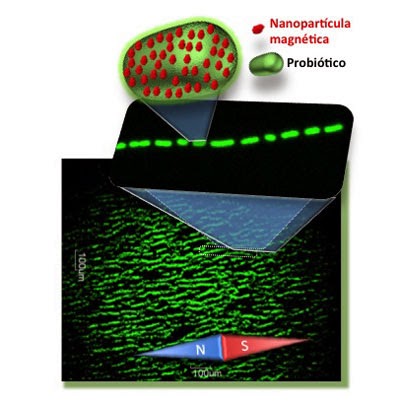
Researchers have
incorporated magnetic particles into probiotic bacteria like those found in
many foodstuffs. These “magnetic probiotics” behave like some natural magnetic
bacteria but are difficult to obtain in large quantities and have never been
used in humans.
Ultra-fast, the robotic arm can catch objects on the fly
With its palm open, the robot is completely motionless. A
split second later, it suddenly unwinds and catches all sorts of flying objects
thrown in its direction -a tennis racket, a ball, a bottle-. This arm measures
about 1.5 meters long and keeps an upright position. It has three joints and a
sophisticated hand with four fingers. It was programmed at the Learning
Algorithms and Systems Laboratory at EPFL (LASA) and designed to test robotic
solutions for capturing moving objects. It is unique, as it has the ability to
catch projectiles of various irregular shapes in less than five hundredths of a
second.
May 10, 2014
New species of metal-eating plant discovered in the Philippines
Scientists from the University of the Philippines, Los Baños
have discovered a new plant species with an unusual lifestyle — it eats nickel
for a living — accumulating up to 18,000 ppm of the metal in its leaves without
itself being poisoned, says Professor Edwino Fernando, lead author of the
report. Such an amount is a hundred to a thousand times higher than in most
other plants. The study was published in the open access journal PhytoKeys.
Plants' Oil-Desaturating Enzymes Pair Up to Channel Metabolites
Study raises possibility of linking up enzymes to tailor
pathways for increased production of useful plant products
Plant scientists at the U.S. Department of Energy's
Brookhaven National Laboratory have found that certain enzymes responsible for
desaturating fatty acids, the building blocks of oils, can link up to
efficiently pass intermediate products from one enzyme to another.
"Engineering these enzyme interactions to channel metabolites along desired
metabolic pathways could be a new approach for tailoring plants to produce
useful products," said Brookhaven biochemist John Shanklin, lead author on
a paper reporting the results in the Journal of Biological Chemistry.
May 9, 2014
Sustainability needs link between theory and practice in education
How can you ensure that people do not only spend time
thinking about important global issues like climate change or world food
supplies, but also roll up their sleeves and do something about them? Four
researchers, including Professor Arjen Wals from Wageningen University, think
that the education sector holds the key. Teaching processes around the world
could be given more influence and meaning by making pure science subjects, such
as biology and physics, complementary to lessons in nature, environment and
sustainability. Their article on this new approach to teaching, which is based
on citizen science, is published in the 9 May edition of Science.
Cosmic Simulation: Where no Supercomputer has gone before.
Simulating the Universe from its birth to present day – no,
not on a holo-deck or in a computer game, but through a high-fidelity model on
Europe’s most powerful supercomputers – is what Prof. Volker Springel and his
team at the Max-Planck-Institute for Astrophysics in Garching, Germany, have
been using an allocation of 20 million core hours on the French Tier-0 system
CURIE for.
Molecular high-speed Origami
Max Planck Researchers elucidate important mechanism of
protein folding
Proteins are responsible for nearly every essential process
of life. Their form and structure (or their ”fold”) are of crucial importance
for their functionality. Scientists at the Max Planck Insti-tute of
Biochemistry (MPIB) in Martinsried near Munich have recently discovered a so
far un-known sequence of reactions which is necessary for newly generated
proteins to acquire their correct structure. „In the mechanism we found, the
folding is accomplished in a number of fast intermediate steps rather than in
one single block“, explains Manajit Hayer-Hartl, research group leader at the
MPIB. „Because this mode of action is energetically more favorable, the
pro-teins are folded not only correctly, but also much faster than previously
assumed.
Back to the future to determine if sea level rise is accelerating
Scientists have developed a new method for revealing how sea
levels might rise around the world throughout the 21st century to address the
controversial topic of whether the rate of sea level rise is currently
increasing.
The international team of researchers, led by the University
of Southampton and including scientists from the National Oceanography Centre,
the University of Western Australia, the University of South Florida, the
Australian National University and the University of Seigen in Germany,
analysed data from 10 long-term sea level monitoring stations located around
the world. They looked into the future to identify the timing at which sea
level accelerations might first be recognised in a significant manner.
Can robots learn right from wrong?
The more robots are able to do, the more likely they are to
face decisions that demand a moral perspective. A new grant from the Office of
Naval Research supports work at Tufts University, Brown University, and
Rensselaer Polytechnic Institute aimed at giving robots “moral competence.” At
Brown, Bertram Malle is developing a model of moral competence in humans — no
small task, but an essential first step. Malle spoke recently with Kevin
Stacey.
Monitor for sunburn risk goes on sale
A monitor developed at the University of Strathclyde for
preventing the risk of overexposure to the sun is now available for sale
online.
The Smartsun device, worn as a waterproof wristband, changes
colour according to the amount of exposure the wearer has to UV (ultra-violet)
radiation. It starts off yellow but turns pink as exposure increases, warning
users to get out of the sun.
The monitor’s sensitivity to ultraviolet light means it can
alert the wearer to the danger before it is visible on the skin.
What doesn’t kill you may make you live longer
McGill research finds unexpected link between cell suicide
and longevity
What is the secret to aging more slowly and living longer?
Not antioxidants, apparently.
Many people believe that free radicals, the sometimes-toxic
molecules produced by our bodies as we process oxygen, are the culprit behind
aging. Yet a number of studies in recent years have produced evidence that the
opposite may be true.
Scientists Find Solution to Two Long-Standing Mysteries of Cuprate High-Temperature Superconductivity
Findings unequivocally link two "personality"
changes of electrons at critical point
Scientists seeking to understand the intricacies of
high-temperature superconductivity—the ability of certain materials to carry
electrical current with no energy loss—have been particularly puzzled by a
mysterious phase that emerges as charge carriers are added that appears to
compete with superconductivity. It's also been a mystery why, within this
"pseudogap" phase, the movement of superconducting electrons appears
to be restricted to certain directions. So exploring the pseudogap and whether
and how it affects the movement of electrons has been a pivotal challenge.
Regenerating plastic grows back after damage
Looking at a smooth sheet of plastic in one University of
Illinois laboratory, no one would guess that an impact had recently blasted a
hole through it.
Illinois researchers have developed materials that not only
heal, but regenerate. Until now, self-repairing materials could only bond tiny
microscopic cracks. The new regenerating materials fill in large cracks and
holes by regrowing material.
May 8, 2014
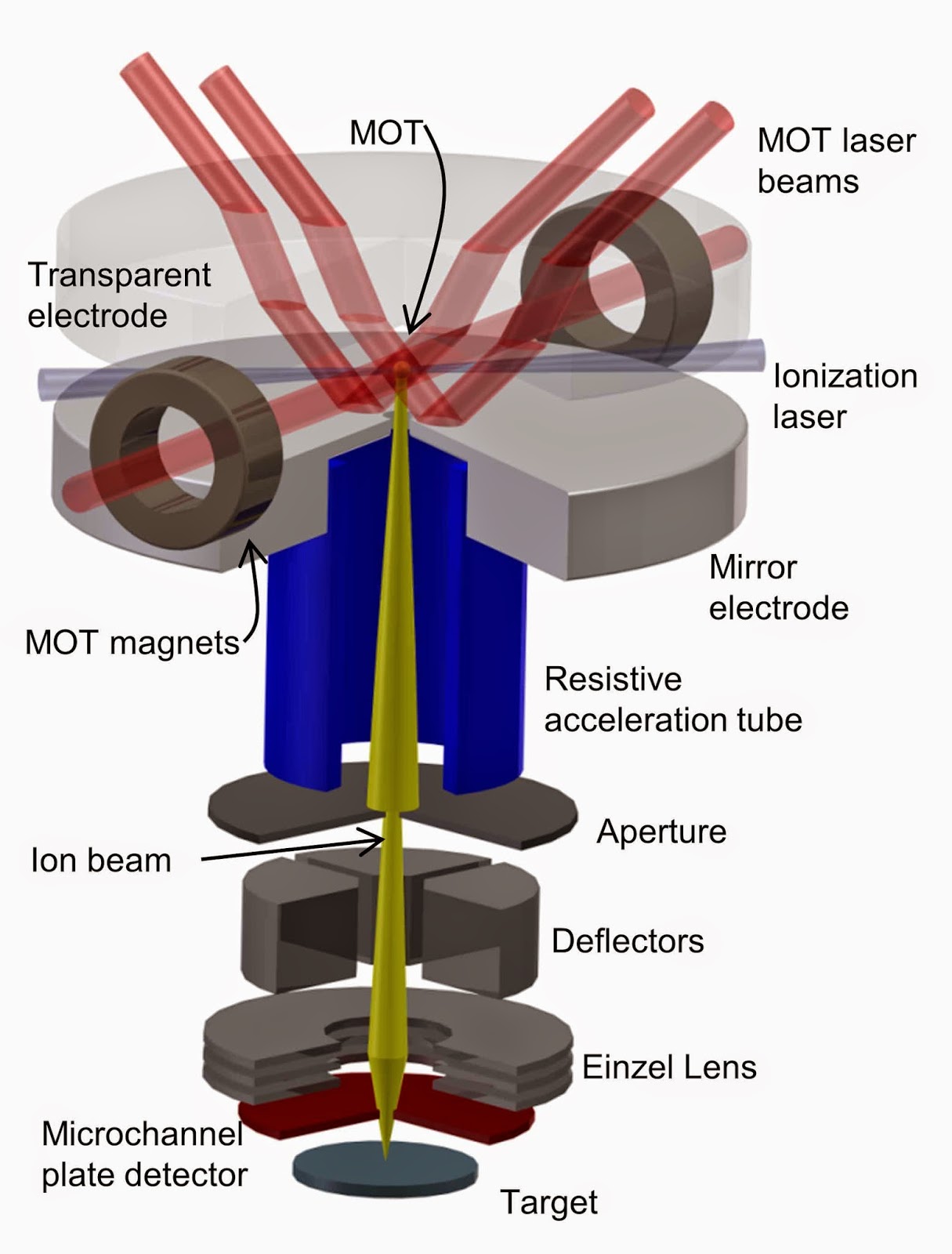
This FIB Doesn’t Lie: New NIST Microscope Sees What Others Can’t
Microscopes don't exactly lie, but their limitations affect
the truths they can tell. For example, scanning electron microscopes (SEMs)
simply can't see materials that don't conduct electricity very well, and their
high energies can actually damage some types of samples.
In an effort to extract a little more truth from the world
of nanomaterials and nanostructures, researchers at the National Institute of
Standards and Technology (NIST) have built the first low-energy focused ion
beam (FIB) microscope that uses a lithium ion source.
Unlocking Global Warming Gridlock
Professor at School of International Relations and Pacific
Studies develops strategies for policymakers to help mitigate climate change
David Victor, an internationally recognized leader in
research on energy and climate change policy, has a message to policymakers
around the globe: time is running out.
“The problem of climate change is getting worse, quickly,”
said Victor, a professor at the UC San Diego School of International Relations
and Pacific Studies. “There are lots of reasons for this—political gridlock
central among them. Luckily, new policy strategies here in the U.S. and
internationally can help to fix this.”
Beetles that taste like mustard
Flea beetles outwit their host plant’s mustard oil bomb and
use it for their own purposes
Almost all herbivorous insects are specialized to feed on
specific host plants and have adapted to their chemical defenses. Flea beetles
are important pests of cabbage and other cruciferous plants, such as mustard,
horseradish and rapeseed. These plants use a sophisticated defense system,
known as the mustard oil bomb, to get rid of their enemies : If plant tissues
are wounded, glucosinolates and an enzyme known as myrosinase come into
contact, and, as a result, toxic metabolites are formed which deter most
insects. This defensive mechanism, however, has no negative effect on flea
beetles, according to scientists from the Max Planck Institute for Chemical
Ecology in Jena, Germany. Flea beetles are even able to sequester
glucosinolates without the mustard oil bomb being set off by the plant’s
enzyme. Moreover, the insects use their own myrosinase and can utilize the
plants’ defensive chemicals for their own purposes. The beetles’ mustard oil
bomb is likely to fend off predators.
STONY BROOK RESEARCHER DEVELOPS NEW TOOL TO MEASURE THE SPEED OF AGING
A physical test for measuring age shows wide differences
between the rates of aging among different population groups, according to new
research by demographers at Stony Brook University and the IIASA
A strong handshake can say a lot about a person—it can
indicate power, confidence, health, or aggression. Now scientists at Stony
Brook University and the Institute for Applied Systems Analysis (IIASA) say that the strength of a person’s grasp may
also be one of the most useful ways to measure people’s true age.
A Lab in Your Pocket
When you get sick, your physician may take a sample of your
blood, send it to the lab and wait for results. In the near future, however,
doctors may be able to run those tests almost instantly on a piece of plastic
about the size of credit card.
Berkeley Lab Develops Nanoscope to Probe Chemistry on the Molecular Scale
For years, scientists have had an itch they couldn’t
scratch. Even with the best microscopes and spectrometers, it’s been difficult
to study and identify molecules at the so-called mesoscale, a region of matter
that ranges from 10 to 1000 nanometers in size. Now, with the help of broadband
infrared light from the Advanced Light Source (ALS) synchrotron at the U.S.
Department of Energy’s Lawrence Berkeley National Laboratory (Berkeley Lab),
researchers have developed a broadband imaging technique that looks inside this
realm with unprecedented sensitivity and range.
May 7, 2014
Astronomers Create First Realistic Virtual Universe
Move over, Matrix - astronomers have done you one better.
They have created the first realistic virtual universe using a computer simulation
called "Illustris." Illustris can recreate 13 billion years of cosmic
evolution in a cube 350 million light-years on a side with unprecedented
resolution.
"Until now, no single simulation was able to reproduce
the universe on both large and small scales simultaneously," says lead
author Mark Vogelsberger (MIT/Harvard-Smithsonian Center for Astrophysics), who
conducted the work in collaboration with researchers at several institutions,
including the Heidelberg Institute for Theoretical Studies in Germany.
How businesses can maximize revenue when introducing new products
Companies should use existing brand names and add new, sub-brand
names to maximize revenue when introducing new products to market, according to
a new study from the University at Buffalo School of Management.
Spider genomes provide insight into composition and evolution of venom and silk
Spiders are ecologically important predators with complex
venom and extraordinarily tough silk that enables capture of large prey. Here
we present the assembled genome of the social velvet spider and a draft assembly
of the tarantula genome that represent two major taxonomic groups of spiders.
The spider genomes are large with short exons and long introns, reminiscent of
mammalian genomes. Phylogenetic analyses place spiders and ticks as sister
groups supporting polyphyly of the Acari. Complex sets of venom and silk
genes/proteins are identified. We find that venom genes evolved by sequential
duplication, and that the toxic effect of venom is most likely activated by
proteases present in the venom.
A hydrogel that knows when to go
Rice University bioscaffold material degrades as bone grows
to replace it
Rice University bioengineers have created a hydrogel that
instantly turns from liquid to semisolid at close to body temperature – and
then degrades at precisely the right pace.
The gel shows potential as a bioscaffold to support the
regrowth of bone and other three-dimensional tissues in a patient’s body using
the patient’s own cells to seed the process.
Biomass changes and trophic amplification of plankton in a warmer ocean
Phytoplankton and zooplankton biomass are expected to
decrease by 6% and 11% respectively by the end of century due to climate change
It is estimated that ocean temperature warming will cause
phytoplankton and zooplankton biomass to decrease by 6% and 11% respectively by
the end of the century. A lower amount of these two main elements in the marine
food web could reduce fish biomass in certain regions. These are some of the
main conclusions drawn by research led by Azti-Tecnalia within the European
MEECE project and recently published in the prestigious Global Change Biology
Journal.
Psilocybin inhibits the processing of negative emotions in the brain
When emotions are processed in a negatively biased manner in
the brain, an individual is at risk to develop depression. Psilocybin, the
bioactive component of the Mexican magic mushroom, seems to intervene
positively in the emotion-processing mechanism. Even a small amount of the natural
substance attenuates the processing of negative emotions and brightens mood as
shown by UZH researchers using imaging methods.
Math Makes Mobile Maps Meaningful
KIT in the Science Year “The Digital Society:” Mathematics
and Theoretical Computer Science Help Optimally Represent Information on
Navigation Systems
Due to the success of navigation devices and smartphones,
digital maps are used widely in everyday life. They guide us safely along
motorways or to the next bakery as long as the map is good and clear. However,
representation of many information items on small, mobile screens is not
trivial. At the Karlsruhe Institute of Technology (KIT), computer scientists
have now developed a method to ensure mathematically optimal adaptation of the
labeling to the perspective and driving direction.
Epson Moverio BT-200 augmented reality smart glasses now available for order
Epson has announced today the availability of their
second-generation Moverio BT-200 smart glasses. The connected eyewear offering
from Epson sells for $699.99, making it a cheaper alternative for those not
wanting to make the $1500 jump to Google Glass. The BT-200 has various sensors
including a gyroscope, accelerometer and magnetic compass, as well as a
front-facing camera for photos, video and augmented-reality applications.
Empa mass spectrometer aboard the Rosetta space probe
Empa mission in space
In March 2004, the Rosetta orbiter was launched into space
to analyse and observe the nucleus and environment of the comet 67P/Churyumov-Gerasimenko.
Among the equipment on board were highly complex metal ceramic sensors from
Empa – integrated into two mass spectrometers. The devices were specially
developed for the mission to measure gas particles in the vicinity of the
comet.
Biodiversity in decline
How environmental stress endangers life in flowing waters
In the past decades, humans have been interfering with the
Earth’s ecosystems more strongly than ever before and have thus triggered a new
wave of mass extinction. A report published as part of the "Millennium
Ecosystem Assessment" in 2005 states that species have been going extinct
up to one thousand times more quickly in the last 50 years, compared to the
normal pace observed in the history of our planet. It's high time to do
something for the preservation of biodiversity, says Dr Florian Leese, Group
Leader of the "GeneStream" project (fig. 1). This is because
biodiversity has more than just ethical value; it also fulfils specific
functions for humans. Animals and plants are not just food; organisms in
streams, rivers and lakes filter, for example, suspended sediments and
pollutants from the water. "We have the technology to take care of many of
those functions reasonably well – but not for free," says Florian Leese.
"Why, then, should we destroy an ecosystem that provides us with drinking
and non-potable water free of charge?"
May 6, 2014
Small investors often make poor investments
Inexperienced investors often fail to make wise investments
because they are too influenced by psychological and sociological “biases”
rather than economic fundamentals. So called “mum and dad investors” mistakenly
think they are doing the right thing by selecting a wide range of shares from
famous firms and by following media tips.
Shedding Light On Inefficiency
Berlin at night
Even if lightbulbs consume less electricity, we may not
achieve energy savings or reductions in greenhouse gas emissions. The reason is
simple: when light becomes cheaper, many users will increase illumination, and
some previously unlit areas may become lit. In a recently published article in
the journal “Energy & Environmental Science”, scientists from the
Leibniz-Institute of Freshwater Ecology and Inland Fisheries in Berlin (IGB)
and the Museum am Schölerberg in Osnabrück, Germany have presented three policy
recommendations, which they say could greatly reduce energy consumption and
light pollution – without leaving cities in the dark.
IU computer scientists develop tool for uncovering bot-controlled Twitter accounts
NSF, Defense-funded research designed to counter
misinformation campaigns
Complex networks researchers at Indiana University have
developed a tool that helps anyone determine whether a Twitter account is
operated by a human or an automated software application known as a social bot.
The new analysis tool stems from research at the IU Bloomington School of
Informatics and Computing funded by the U.S. Department of Defense to counter
technology-based misinformation and deception campaigns.
Small Birds Capitalize on Weather Patterns During Epic Migrations
Concept of migration flyways gets an update for small
terrestrial birds
In one of the greatest feats of endurance in the biological
world, millions of tiny songbirds — many weighing less than an ounce — migrate
thousands of miles to Central and South America each year. Now scientists are
finding out how these featherweights do it: using elliptical routes that take
advantage of prevailing wind patterns to save calories.
Graphene for Real-World Devices
New research in phonon scattering sheds more light on
graphene as a replacement for silicon
Graphene, a one-atom-thick form of the carbon material
graphite, has been hailed as a wonder material — strong, light, nearly
transparent, and an excellent conductor of electricity and heat. But a number
of practical challenges must be overcome before it can emerge as a replacement
for silicon and other materials in microprocessors and next-generation energy
devices.
Astronomers harness the galaxy’s biggest telescope to make most precise measurement of spinning star
An international team of astronomers has made a measurement
of a distant neutron star that is one million times more precise than the
previous world’s best.
The researchers were able to use the interstellar medium,
the ‘empty’ space between stars and galaxies that is made up of sparsely spread
charged particles, as a giant lens to magnify and look closely at the radio
wave emission from a small rotating neutron star.
Tufts University Licenses Silk Biomaterials Technology to Akeso Biomedical
Tufts University today announced that it has licensed a
novel silk technology for the treatment of chronic skin wounds to Akeso
Biomedical, Inc., an early stage medical device company. The technology was
invented by David L. Kaplan, Ph.D., Stern Family Professor of Engineering at
Tufts University, and his team of researchers at Tufts’ School of Engineering.
Evolution in Species May Reverse Predator-Prey Population Cycles
Populations of predators and their prey usually follow
predictable cycles. When the number of prey increases, perhaps as their food
supply becomes more abundant, predator populations also grow.
When the predator population becomes too large, however, the
prey population often plummets, leaving too little food for the predators,
whose population also then crashes. This canonical view of predator-prey
relationships was first identified by mathematical biologists Alfred Lotka and
Vito Volterra in the 1920s and 1930s.
May 5, 2014
Researchers Develop New Mathematical Framework to Characterize Shape of Graphene
Interdisciplinary team uses discrete differential geometry
Scientists studying graphene’s properties are using a new
mathematical framework to make extremely accurate characterizations of the
two-dimensional material’s shape.
Graphene, discovered in 2004, is a one-atom-thick sheet of
graphite.
Is Self-Fumigation for the Birds?
SAVE THREATENED SPECIES BY GIVING THEM TREATED COTTON FOR
NESTS
When University of Utah biologists set out cotton balls
treated with a mild pesticide, wild finches in the Galapagos Islands used the
cotton to help build their nests, killing parasitic fly maggots to protect baby
birds. The researchers say the self-fumigation method may help endangered birds
and even some mammals.
Terahertz imaging on the cheap
New theory could reduce number of sensors required for
high-resolution imaging systems.
Terahertz imaging, which is already familiar from airport
security checkpoints, has a number of other promising applications — from
explosives detection to collision avoidance in cars. Like sonar or radar,
terahertz imaging produces an image by comparing measurements across an array
of sensors. Those arrays have to be very dense, since the distance between
sensors is proportional to wavelength.
ORNL paper examines clues for superconductivity in an iron-based material
For the first time, scientists have a clearer understanding
of how to control the appearance of a superconducting phase in a material,
adding crucial fundamental knowledge and perhaps setting the stage for advances
in the field of superconductivity.
New technique tracks proteins in single HIV particle
An interdisciplinary team of scientists from KU Leuven in
Belgium has developed a new technique to examine how proteins interact with
each other at the level of a single HIV viral particle. The technique allows
scientists to study the life-threatening virus in detail and makes screening
potential anti-HIV drugs quicker and more efficient. The technique can also be
used to study other diseases.
May 2, 2014
Three Trends That Are Changing the Internet
The digital revolution has profoundly impacted nearly every
aspect of our lives. Despite the
enormity of these changes, the Internet continues to grow and develop. Three
trends are transforming the Net and challenging the digital infrastructure that
supports it.
One- The Explosive Growth of Video
The biggest growth area is video streaming. People now watch
movies on-demand and view video content on every platform: television, desktops, laptops, smartphones,
and tablets.
New atom-scale knowledge on the function of biological photosensors
The research groups of Janne Ihalainen (University of
Jyväskylä) and Sebastian Westenhoff (University of Gothenburg) have clarified
how the atom structure of bacterial red light photosensors changes when sensing
light. The research reveals structural changes in phytochrome protein when
illuminated.
May 1, 2014
Stem cells from teeth can make brain-like cells
University of Adelaide researchers have discovered that stem
cells taken from teeth can grow to resemble brain cells, suggesting they could
one day be used in the brain as a therapy for stroke.
In the University's Centre for Stem Cell Research,
laboratory studies have shown that stem cells from teeth can develop and form
complex networks of brain-like cells. Although these cells haven't developed
into fully fledged neurons, researchers believe it's just a matter of time and
the right conditions for it to happen.
Crocodile tears have a butterfly all a-flutter
Humans might not like the shedding of crocodile tears.
Butterflies, it seems, aren’t so choosy. Because a scientific journal has
recorded lachryphagous behaviour, or tear drinking, between insects and a
crocodile.
Subscribe to:
Posts (Atom)