SONY 2012 DÜNYA FOTOĞRAF YARIŞMASI ÖDÜLLERİ - RESİMLER
February 8, 2012
February 3, 2012
2 Billion Jobs to Disappear by 2030
A picture of me
speaking at yesterday's TEDxReset in Istanbul.
(February 3, 2012) Yesterday I was honored to be one of the
featured speakers at the TEDxReset Conference in Istanbul, Turkey where I
predicted that over 2 billion jobs will disappear by 2030. Since my 18-minute
talk was about the rapidly shifting nature of colleges and higher education, I
didn’t have time to explain how and why so many jobs would be going away.
Because of all of the questions I received afterwards, I will do that here.
If you haven’t been to a TEDx
event, it is hard to confer the life-changing nature of something like this.
Ali Ustundag and his team pulled off a wonderful event.
The day was filled with an
energizing mix of musicians, inspiration, and big thinkers. During the breaks,
audience members were eager to hear more and peppered the speakers with countless
questions. They were also extremely eager to hear more about the future.
When I brought up the idea of 2
billion jobs disappearing (roughly 50% of all the jobs on the planet) it wasn’t
intended as a doom and gloom outlook. Rather, it was intended as a wakeup call,
letting the world know how quickly things are about to change, and letting
academia know that much of the battle ahead will be taking place at their
doorstep.
Here is a brief overview of five
industries - where the jobs will be going away and the jobs that will likely
replace at least some of them - over the coming decades.
January 31, 2012
Scientists decode brain waves to eavesdrop on what we hear
(January 31, 2012) Neuroscientists may one day be able to hear
the imagined speech of a patient unable to speak due to stroke or paralysis,
according to University of California, Berkeley, researchers.
These scientists have succeeded
in decoding electrical activity in the brain’s temporal lobe – the seat of the
auditory system – as a person listens to normal conversation. Based on this
correlation between sound and brain activity, they then were able to predict
the words the person had heard solely from the temporal lobe activity.
“This research is based on sounds
a person actually hears, but to use it for reconstructing imagined
conversations, these principles would have to apply to someone’s internal verbalizations,”
cautioned first author Brian N. Pasley, a post-doctoral researcher in the
center. “There is some evidence that hearing the sound and imagining the sound
activate similar areas of the brain. If you can understand the relationship
well enough between the brain recordings and sound, you could either synthesize
the actual sound a person is thinking, or just write out the words with a type
of interface device.”
journal reference >>
December 22, 2011
MIND READING: ENGINEERS HELP REVEAL MEANING IN BRAIN SCANS
(December 22, 2011) Princeton
engineers are working closely with neuroscientists to understand how visual
information and words are encoded in the brain.
In a five-year collaboration, a team led by Princeton’s
Peter Ramadge, chair and the Gordon Y.S. Wu Professor of electrical
engineering, and James Haxby, a neuroscientist at Dartmouth College, have found
common patterns in data from brain scans, called fMRI, that reveal brain
activity as people perform tasks. The researchers are solving a long-standing
challenge of comparing one person’s brain activity to another, which until now
has been difficult because both the anatomy and functional processes of each
person’s brain are different.
In one recent result, published in the journal Neuron, the
researchers had subjects watch the entire movie “Raiders of the Lost Ark” while
undergoing fMRI scans and used the data to derive a “common neural code” for
how the brain recognizes complex visual images. Based on data from the first
half of the movie, the researchers were able to predict, using only a person’s
fMRI results, what scene he or she was watching in the second half of the
movie.
December 19, 2011
IBM 5 in 5: Mind Reading is no longer science fiction
(December 19, 2011) One of the many great things about working
with the Emerging Technology Services team is that I am always focused on
“what’s next.” For a long time speech
recognition fitted into this category as the computing industry looked to make
technology more pervasive to free our finger tips from typing and to help us
become more productive.
We are benefitting from this today
with voice recognition for our cars, smartphones and even automated phone
services for banks and travel reservations.
Now that speech recognition is
becoming mainstream, and many other forms of human computer interaction have
come along, like touch, gesture recognition, etc., we are thinking about what’s
next - or in the case of the IBM 5 in 5 - what's next by 2017. In my view there
will be huge leaps made in bioinformatics - this is a large topic, so I am more
specifically referring to the use of sensors to understand our thoughts.
IBM Reveals Five Innovations That Will Change Our Lives within Five Years
(December 19, 2011)
Today IBM formally unveiled the sixth annual “IBM 5 in 5"
(#ibm5in5) – a list of innovations that have the potential to change the way
people work, live and interact during the next five years:
* People power will
come to life
* You will never need
a password again
* Mind reading is no
longer science fiction
* The digital divide
will cease to exist
* Junk mail will
become priority mail
The next IBM 5 in 5 is based on market and societal trends
as well as emerging technologies from IBM’s research labs around the world that
can make these transformations possible.
At IBM, we’re bridging the gap between science fiction and
science fact on a daily basis. Here are how five technologies will define the
future:
December 7, 2011
Brain Energy Metabolism: Focus on Astrocyte-Neuron Metabolic Cooperation
(December 7, 2011) The
energy requirements of the brain are very high, and tight regulatory mechanisms
operate to ensure adequate spatial and temporal delivery of energy substrates
in register with neuronal activity. Astrocytes—a type of glial cell—have
emerged as active players in brain energy delivery, production, utilization,
and storage. Our understanding of neuroenergetics is rapidly evolving from a
“neurocentric” view to a more integrated picture involving an intense
cooperativity between astrocytes and neurons. This review focuses on the
cellular aspects of brain energy metabolism, with a particular emphasis on the
metabolic interactions between neurons and astrocytes.
December 2, 2011
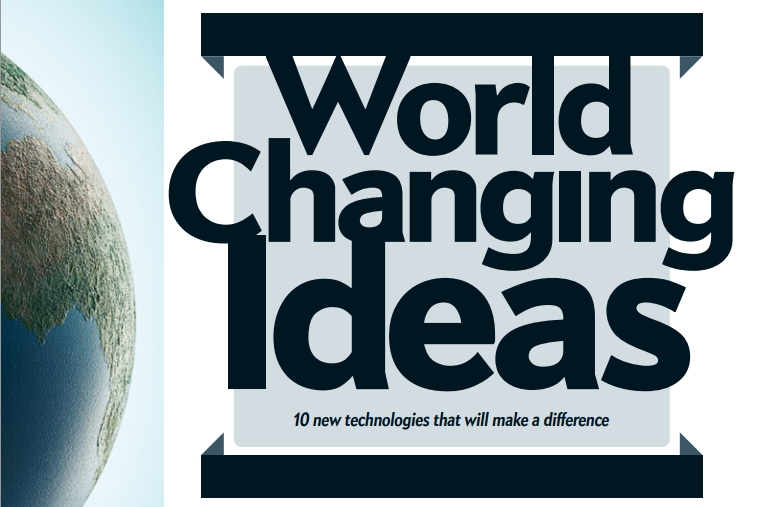
Changing Ideas
10 new technologies that will
make a difference
(December 2, 2011) Revolutions often spring from the simplest of
ideas. When a young inventor named Steve Jobs wanted to provide computing power
to “people who have no computer experience and don’t particularly care to gain
any,” he ushered us from the cumbersome technology of mainframes and
command-line
prompts to the breezy advances of
the Macintosh and iPhone. His idea helped to forever change our relationship
with technology. What other simple but revolutionary ideas are out there in the
labs, waiting for the right moment to make it big? We have found 10, and in the
following pages we explain what they are and how they might shake things up:
Computers that work like minds. Batteries you can top off at the pump. A
crystal ball made from data (the focus of a feature on page 52). Consider
this collection our salute to the
power of a simple idea.
November 15, 2011
Mimicking the brain, in silicon
New computer chip models how
neurons communicate with each other at synapses.
(November 15, 2011) For decades, scientists have dreamed of
building computer systems that could replicate the human brain’s talent for
learning new tasks.
MIT researchers have now taken a
major step toward that goal by designing a computer chip that mimics how the
brain’s neurons adapt in response to new information. This phenomenon, known as
plasticity, is believed to underlie many brain functions, including learning
and memory.
With about 400 transistors, the
silicon chip can simulate the activity of a single brain synapse — a connection
between two neurons that allows information to flow from one to the other. The
researchers anticipate this chip will help neuroscientists learn much more
about how the brain works, and could also be used in neural prosthetic devices
such as artificial retinas, says Chi-Sang Poon, a principal research scientist
in the Harvard-MIT Division of Health Sciences and Technology.
November 2, 2011
The Mind Reader
How Frank Guenther turns thoughts
into words
(November 2, 2011) For thousands of years humans have spoken.
Noam Chomsky and many other linguists argue that speech is what sets Homo
sapiens apart in the animal kingdom. “Speech,” wrote Aristotle, “is the
representation of the mind.”
It is a complex process, the
series of lightning-quick steps by which your thoughts form themselves into
words and travel from your brain, via the tongue, lips, vocal folds, and jaw
(together known as the articulators), to your listeners’ ears—and into their
own brains.
Complex, but mappable. Over the
course of two decades and countless experiments using functional magnetic
resonance imaging (fMRI) and other methods of data collection, neuroscientist
Frank Guenther has built a computer model describing just how your brain pulls
off the trick of speaking.
And the information isn’t merely
fascinating. Guenther (GRS’93), a Sargent College professor of speech, language
and hearing sciences, believes his model will help patients suffering from
apraxia (where the desire to speak is intact, but speech production is
damaged), stuttering, Lou Gehrig’s disease, throat cancer, even paralysis.
November 1, 2011
TMC Shows New Nursing and Healthcare Robots in Tokyo
Four New Types of Robots Aimed
for Commercialization from 2013
(November 1, 2011) Toyota Motor Corporation (TMC) held an event
today here at its vehicle display space and theme park Mega Web to display a
number of new robots developed to provide support in nursing and
healthcare. The robots form part of the
Toyota Partner Robot series, which is being developed to assist humans in their
everyday activities.
TMC considers Partner Robots to
be useful in four fields: nursing and healthcare, short-distance personal
transport, manufacturing and domestic duties.
TMC is developing technology that cooperates with humans, including
devices that assist in the loading and moving of heavy components in factories,
in addition to automated technology that enables autonomous tool operation.
TMC endeavors to provide the
freedom of mobility to all people, and understands from its tie-ups with the
Toyota Memorial Hospital and other medical facilities that there is a strong
need for robots in the field of nursing and healthcare. TMC aims to support independent living for
people incapacitated through sickness or injury, while also assisting in their
return to health and reducing the physical burden on caregivers.
Each robot incorporates the
latest in advanced technologies developed by TMC, including high-speed,
high-precision motor control technology, highly stable walking-control
technology advanced through development of two-legged robots, and sensor
technology that detects the user's posture as well as their grasping and
holding strength.
Hippocampus Plays Bigger Memory Role Than Previously Thought
(November 1, 2011) Human memory has historically defied precise
scientific description, its biological functions broadly but imperfectly
defined in psychological terms. In a pair of papers published in the November 2
issue of The Journal of Neuroscience, researchers at the University of
California, San Diego report a new methodology that more deeply parses how and
where certain types of memories are processed in the brain, and challenges
earlier assumptions about the role of the hippocampus.
Specifically, Larry R. Squire,
PhD, a Research Career scientist at the VA Medical Center, San Diego and
professor of psychiatry, neurosciences, and psychology at UC San Diego, and
Christine N. Smith, PhD, a project scientist, say that contrary to current
thinking the hippocampus (a small seahorse-shaped structure located deep in the
center of the brain and long associated with memory function) supports both
recollection and familiarity memories when these memories are strong.
Recollection and familiarity
memory are two components of recognition memory – the ability to identify an
item as having been previously encountered. Recollection memory involves
remembering specific details about a learning episode, such as where and when
the episode occurred. Familiarity memory refers to remembering an item as
previously encountered, but without any recall of specific details, such as
recognizing someone’s face but recalling nothing else about that person (For
example, where you met the person.).
October 17, 2011
NJIT Researcher Testing Micro-Electronic Stimulators for Spinal Cord Injuries
Implant location of
the micro electrode array shown on the rubrospinal tract (RST)
at the C5 level of the
rat spinal cord.
(October 17, 2011) A new wireless device to help victims of
spinal cord injury is receiving attention in the research community. Mesut
Sahin, PhD, associate professor in the department of biomedical engineering at
NJIT, recently has published and presented news of his findings to develop
micro-electrical stimulators for individuals with spinal cord injuries.
The work, now in its third year
of support from a four-year, $1.4 million National Institutes of Health (NIH)
grant, has resulted in the development and testing of a technology known by its
acronym, FLAMES (floating light activated micro-electrical stimulators). The
technology, really a tiny semiconductor device, will eventually enable people
with spinal cord injuries to restore some of the motor functions that are lost
due to injury. Energized by an infrared light beam through an optical fiber
located just outside the spinal cord these micro-stimulators will activate the
nerves in the spinal cord below the point of injury and thus allow the use of
the muscles that were once paralyzed.
Man With Spinal Cord Injury Uses Brain-Computer Interface to Move Prosthetic Arm With His Thoughts
(October 17, 2011) Seven years after a motorcycle accident
damaged his spinal cord and left him paralyzed, 30-year-old Tim Hemmes reached
up to touch hands with his girlfriend in a painstaking and tender high-five
Hemmes, of Evans City, Pa., is
the first to participate in a new trial assessing whether the thoughts of a
person with spinal-cord injury can be used to control the movement of an
external device, such as a computer cursor or a sophisticated prosthetic arm.
The project, one of two brain-computer interface (BCI) studies under way at the
University of Pittsburgh School of Medicine and UPMC Rehabilitation Institute,
used a grid of electrodes placed on the surface of the brain to control the
arm.
It was a unique robotic arm and
hand, designed by the Johns Hopkins University Applied Physics Laboratory, that
Hemmes willed to extend first toward the palm of a researcher on the team and,
a few minutes later, to his girlfriend’s hand.
October 11, 2011
Large study shows females are equal to males in math skills
(October 11, 2010) The
mathematical skills of boys and girls, as well as men and women, are
substantially equal, according to a new examination of existing studies in the
current online edition of journal Psychological Bulletin.
One portion of the new study
looked systematically at 242 articles that assessed the math skills of
1,286,350 people, says chief author Janet Hyde, a professor of psychology and women's
studies at the University of Wisconsin-Madison.
These studies, all published in
English between 1990 and 2007, looked at people from grade school to college
and beyond. A second portion of the new study examined the results of several
large, long-term scientific studies, including the National Assessment of
Educational Progress.
October 5, 2011
Monkeys "Move and Feel" Virtual Objects Using Only Their Brains
(October 5, 2011) In a first-ever demonstration of a two-way
interaction between a primate brain and a virtual body, two monkeys trained at
the Duke University Center for Neuroengineering learned to employ brain
activity alone to move an avatar hand and identify the texture of virtual
objects.
"Someday in the near future,
quadriplegic patients will take advantage of this technology not only to move
their arms and hands and to walk again, but also to sense the texture of
objects placed in their hands, or experience the nuances of the terrain on
which they stroll with the help of a wearable robotic exoskeleton," said
study leader Miguel Nicolelis, MD, PhD, professor of neurobiology at Duke
University Medical Center and co-director of the Duke Center for
Neuroengineering.
Without moving any part of their
real bodies, the monkeys used their electrical brain activity to direct the
virtual hands of an avatar to the surface of virtual objects and, upon contact,
were able to differentiate their textures.
September 28, 2011
Tech Industry Visionaries Foresee "Internet of Everything" at Marconi Symposium
(September 28, 2011) The "Internet of
everything" has arrived, and according to a panel of prominent experts who
assembled at the University of California, San Diego earlier this month for the
2011 Marconi Society Symposium, surfboards, dog collars and even tube socks
will one day cross the digital divide and make for an increasingly
Internet-enabled world.
This year's symposium, which was
co-sponsored by the Center for Magnetic Recording Research and the UC San Diego
division of the California Institute for Telecommunications and Information
Technology (Calit2), explored the role that hardware (infrastructure) and
software (applications) will play as the Internet evolves over the next several
decades. The Marconi Society hosted the symposium in advance of its awards
ceremony to recognize two scientists who–like radio inventor Guglielmo
Marconi–pursued advances in communications and information technology for the
social, economic and cultural development of all humanity. This year's winners
of the Marconi Prize were former UCSD professors of electrical and computer
engineering Jack Wolf and Irwin Mark Jacobs (Jacobs is also the co-founder of
Qualcomm, Inc.). Speakers at this year's symposium included Jacobs and Google's
Chief Internet Evangelist Vint Cerf, as well as Calit2 Senior Research
Scientist Thomas A. DeFanti, Calit2 Research Scientist Albert Yu-Min Lin and
several representatives from Bell Labs, Alcatel-Lucent and the University of
Texas at Austin.
September 22, 2011
Scientists use brain imaging to reveal the movies in our mind
(September 22, 2011) Imagine tapping into the mind of a coma
patient, or watching one’s own dream on YouTube. With a cutting-edge blend of
brain imaging and computer simulation, scientists at the University of
California, Berkeley, are bringing these futuristic scenarios within reach.
Using functional Magnetic
Resonance Imaging (fMRI) and computational models, UC Berkeley researchers have
succeeded in decoding and reconstructing people’s dynamic visual experiences –
in this case, watching Hollywood movie trailers.
As yet, the technology can only
reconstruct movie clips people have already viewed. However, the breakthrough
paves the way for reproducing the movies inside our heads that no one else
sees, such as dreams and memories, according to researchers.
September 21, 2011
Ultrasound for Mind Reading
HEARING THOUGHTS:
University of Toronto graduate student Sarah Power
models ultrasound
headgear that could see the difference between two brain tasks.
Ultrasound transducers could make
a better brain-computer interface
(September 21, 2011) Ultrasound is good for more than monitoring
fetuses and identifying heart defects. According to engineers in Canada, it can
help tell what people are thinking as well. Their research suggests that
ultrasound-based devices could lead to a new kind of brain-computer interface.
Brain-computer interface
technology allows users to control devices with brain activity alone.
Researchers have focused primarily on clinical applications for people with
severe disabilities who would otherwise have difficulty interacting with the
outside world.
In addition to brain-computer interfaces
that involve electronics inserted directly into a patient’s head, researchers
are also developing a number of noninvasive methods. For instance,
electroencephalography (EEG) relies on electrodes attached to a person’s head;
functional magnetic resonance imaging (fMRI) uses powerful magnetic fields to
measure blood flow in the brain that telegraphs brain activity;
magnetoencephalography (MEG) detects the magnetic fields generated by clusters
of thousands of neurons; and near-infrared spectroscopy (NIRS) uses light to
scan for changes in blood hemoglobin concentrations.
Yet practical use of these
methods has so far been limited due to a number of drawbacks. For instance, EEG
faces "noise" from electrical signals sent by the muscles and eyes;
fMRI and MEG are very expensive and require large equipment; and NIRS, while
still early in development as a brain-computer interface technology, has a low
data-transmission rate.
Now biomedical engineer Tom Chau
and his colleagues at the University of Toronto reveal that ultrasound can also
monitor brain activity, suggesting that it could be used for brain-computer
interfaces.
September 20, 2011
Proton-based transistor could let machines communicate with living things
(September 20, 2011) Human devices, from light bulbs to iPods,
send information using electrons. Human bodies and all other living things, on
the other hand, send signals and perform work using ions or protons.
Materials scientists at the
University of Washington have built a novel transistor that uses protons,
creating a key piece for devices that can communicate directly with living
things. The study is published online this week in the interdisciplinary journal
Nature Communications.
Devices that connect with the
human bodys processes are being explored for biological sensing or for
prosthetics, but they typically communicate using electrons, which are
negatively charged particles, rather than protons, which are positively charged
hydrogen atoms, or ions, which are atoms with positive or negative charge.
September 2, 2011
Autonomous Wheelchair
Computer Scientists from Freie
Universität Berlin Present Novelty at IFA
(September 2, 2011) Computer scientists from Freie Universität
Berlin demonstrated a new type of wheelchair at IFA, an international trade
fair for home electronics. The wheelchair, on loan from the Otto Bock company,
makes it significantly easier to navigate inside buildings. It is equipped with
laser and camera sensors and a computer under the seat. Laser sensors detect
the position of walls and obstacles and prevent collisions. A so-called Kinect,
developed for Microsoft Xbox 360 game consoles, is also mounted on the
wheelchair. The sensor detects the three-dimensional structure of the
environment and can, for example, prevent the collision of the wheelchair with
people. Demonstrations and explanations are available in videos on YouTube.
A camera is installed for
steering using eye movements. To cause the wheelchair go to the right or left,
the user needs only to glance toward the right or left. Accelerating and
braking are triggered by looking upward or downward. For steering by thought,
the wheelchair user wears a cap with 16 sensors that continuously measure brain
activation. The system is trained to distinguish four brain patterns: drive
left, drive right, accelerate, and brake. After a training period, the user
should be able to steer the wheelchair just by thinking. A great deal of
concentration is required, as ideally the user should think of only the four
practiced patterns the entire time. Since obstacles automatically cause the
wheelchair to stop, the person remains accident-free in any case. Previously,
the group had demonstrated steering a car using only brain power.
The Mind Reader
How Frank Guenther turns thoughts
into words
(September 2, 2011) For thousands of years humans have spoken.
Noam Chomsky and many other linguists argue that speech is what sets Homo
sapiens apart in the animal kingdom. “Speech,” wrote Aristotle, “is the
representation of the mind.”
It is a complex process, the
series of lightning-quick steps by which your thoughts form themselves into
words and travel from your brain, via the tongue, lips, vocal folds, and jaw
(together known as the articulators), to your listeners’ ears—and into their
own brains.
August 18, 2011
IBM Unveils Cognitive Computing Chips
SyNAPSE technical
project manager Bill Risk next to the "brain wall."
Each of the
yellow boxes represents one of the cognitive computing chips (256 neurons),
and
close up you'll see them blinking - these are neurons firing.
(August 18, 2011) Today, IBM (NYSE: IBM) researchers unveiled a
new generation of experimental computer chips designed to emulate the brain’s
abilities for perception, action and cognition. The technology could yield many
orders of magnitude less power consumption and space than used in today’s
computers.
In a sharp departure from
traditional concepts in designing and building computers, IBM’s first
neurosynaptic computing chips recreate the phenomena between spiking neurons
and synapses in biological systems, such as the brain, through advanced
algorithms and silicon circuitry. Its first two prototype chips have already
been fabricated and are currently undergoing testing.
Called cognitive computers, systems
built with these chips won’t be programmed the same way traditional computers
are today. Rather, cognitive computers are expected to learn through
experiences, find correlations, create hypotheses, and remember – and learn
from – the outcomes, mimicking the brains structural and synaptic plasticity.
To do this, IBM is combining
principles from nanoscience, neuroscience and supercomputing as part of a
multi-year cognitive computing initiative. The company and its university
collaborators also announced they have been awarded approximately $21 million
in new funding from the Defense Advanced Research Projects Agency (DARPA) for
Phase 2 of the Systems of Neuromorphic Adaptive Plastic Scalable Electronics
(SyNAPSE) project.
July 15, 2011
The Internet of Things [INFOGRAPHIC]
(July 15, 2011) When we think of being connected to the
Internet, our minds immediately shift to our computers, phones, and most
recently tablets. This week at Cisco live, I shared that in 2008, the number of
devices connected to the Internet exceeded the number of people on Earth.
That’s right. There are more
devices tapping into the Internet than people on Earth to use them. How is this
possible?
The infographic below provides a
visual representation of the increase in “things” connected to the Internet.
With this increase, how will you prepare your network for the future?
July 14, 2011
Your Brain on Androids
(July 14, 2011) Ever get the heebie-jeebies at a wax museum?
Feel uneasy with an anthropomorphic robot? What about playing a video game or
watching an animated movie, where the human characters are pretty realistic but
just not quite right and maybe a bit creepy? If yes, then you’ve probably been
a visitor to what’s called the “uncanny valley.”
The phenomenon has been described
anecdotally for years, but how and why this happens is still a subject of
debate in robotics, computer graphics and neuroscience. Now an international
team of researchers, led by Ayse Pinar Saygin of the University of California,
San Diego, has taken a peek inside the brains of people viewing videos of an
uncanny android (compared to videos of a human and a robot-looking robot).
Published in the Oxford
University Press journal Social Cognitive and Affective Neuroscience, the
functional MRI study suggests that what may be going on is due to a perceptual
mismatch between appearance and motion.
June 29, 2011
Brain research predicts premeditated actions
(June 29, 2011) Bringing the real world into the brain
scanner, researchers at The University of Western Ontario from The Centre for
Brain and Mind can now determine the action a person was planning, mere moments
before that action is actually executed.
The findings were published this
week in the prestigious Journal of Neuroscience, in the paper, “Decoding Action
Intentions from Preparatory Brain Activity in Human Parieto-Frontal Networks.”
“This is a considerable step
forward in our understanding of how the human brain plans actions,” says Jason
Gallivan, a Western Neuroscience PhD student, who was the first author on the
paper.
Over the course of the one-year
study, human subjects had their brain activity scanned using functional
magnetic resonance imaging (fMRI) while they performed one of three hand
movements: grasping the top of an object, grasping the bottom of the object, or
simply reaching out and touching the object. The team found that by using the
signals from many brain regions, they could predict, better than chance, which
of the actions the volunteer was merely intending to do, seconds later.
June 23, 2011
A First Step Toward a Prosthesis for Memory
A neural implant helps rats with
short-term recall.
(June 23, 2011) Researchers have developed the first memory
prosthetic device—a neural implant that, in rats, restored lost brain function
and improved short-term memory retention. While human testing is still a
distant goal, the implant provides evidence that the brain’s complex neural
code can be interpreted and reproduced to enhance cognitive function.
The device, which consists of a
tiny chip and a set of 32 electrodes, marries math and neuroscience. At its
heart is an algorithm that deciphers and replicates the neural code that one
layer of the brain sends to another. The function restored by the implant is
limited—rats were able to remember which of two levers they had pressed. But
its creators believe that a device on the same principle could one day be used
to improve recall in people suffering from stroke, dementia, or other brain
damage.
Wake Forest University
neurophysiologist Samuel Deadwyler first trained the rats to press two
different levers in succession. The animals learned to press one lever as it
was presented to them and then, after a delay, remember which they’d pressed
and choose the other one the second time around. While the rats performed the
task, two sets of minute electrodes recorded the activity of individual neurons
on the right and left sides of the hippocampus, an area of the brain that
consolidates short-term memory by processing information as it passes through
multiple layers. A set of 16 electrodes—eight on the right, eight on the
left—monitored signals being sent from neurons in an area of the hippocampus
called the CA3 layer, and another 16 monitored the processed signals received
by neurons in the CA1 layer.
June 20, 2011
Caltech Researchers Create the First Artificial Neural Network Out of DNA
(June 20, 2011) Artificial intelligence has been the inspiration
for countless books and movies, as well as the aspiration of countless
scientists and engineers. Researchers at the California Institute of Technology
(Caltech) have now taken a major step toward creating artificial
intelligence—not in a robot or a silicon chip, but in a test tube. The
researchers are the first to have made an artificial neural network out of DNA,
creating a circuit of interacting molecules that can recall memories based on
incomplete patterns, just as a brain can.
"The brain is
incredible," says Lulu Qian, a Caltech senior postdoctoral scholar in
bioengineering and lead author on the paper describing this work, published in
the July 21 issue of the journal Nature. "It allows us to recognize
patterns of events, form memories, make decisions, and take actions. So we
asked, instead of having a physically connected network of neural cells, can a
soup of interacting molecules exhibit brainlike behavior?"
June 17, 2011
RESTORING MEMORY, REPAIRING DAMAGED BRAINS
(June 17, 2011) USC Viterbi School of Engineering scientists
have developed a way to turn memories on and off—literally with the flip of a
switch.
Using an electronic system that
duplicates the neural signals associated with memory, they managed to replicate
the brain function in rats associated with long-term learned behavior, even
when the rats had been drugged to forget.
"Flip the switch on, and the
rats remember. Flip it off, and the rats forget," said Theodore Berger of
the USC Viterbi School of Engineering's Department of Biomedical Engineering.
Berger is the lead author of an
article that will be published in the Journal of Neural Engineering. His team
worked with scientists from Wake Forest University in the study, building on
recent advances in our understanding of the brain area known as the hippocampus
and its role in learning.
In the experiment, the
researchers had rats learn a task, pressing one lever rather than another to
receive a reward. Using embedded electrical probes, the experimental research
team, led by Sam A. Deadwyler of the Wake Forest Department of Physiology and
Pharmacology, recorded changes in the rat's brain activity between the two
major internal divisions of the hippocampus, known as subregions CA3 and CA1.
During the learning process, the hippocampus converts short-term memory into
long-term memory, the researchers prior work has shown.
May 18, 2011
Decoding brainwaves lets scientists read minds
(May 18, 2011) While currently in the realm of sci-fi
fantasy, the ability to read people’s minds has taken a step closer to reality
thanks to neuroscientists at the University of Glasgow.
Researchers at the Institute of
Neuroscience & Psychology have been able to identify the type of
information contained within certain brainwaves related to vision.
Brainwaves – the patterns of
electrical activity created in the brain when it is engaged in different
activities – can easily be measured using electroencephalography (EEG).
However, knowing exactly what
information is encoded within them, and how that encoding takes place, is a
mystery.
Professor Philippe Schyns,
Director of the Institute of Neurosciences & Psychology and the Centre for
Cognitive Neuroimaging, who led the pioneering study, said: “It’s a bit like
unlocking a scrambled television channel. Before, we could detect the signal
but couldn’t watch the content; now we can.
'Mind reading' brain scans reveal secrets of human vision
"Mind reading" scans
show that, to our brains, a sparse line drawing of a street scene is almost as
recognizable as a detailed color photograph.
(May 18, 2011) Researchers call it mind reading. One at a
time, they show a volunteer – who's resting in an MRI scanner – a series of
photos of beaches, city streets, forests, highways, mountains and offices. The
subject looks at the photos, but says nothing.
The researchers, however, can
usually tell which photo the volunteer is watching at any given moment, aided
by sophisticated software that interprets the signals coming from the scan.
They glean clues not only by noting what part of the brain is especially
active, but also by analyzing the patterns created by the firing neurons. They
call it decoding.
Now, psychologists and computer
scientists at Stanford, Ohio State University and the University of Illinois at
Urbana–Champaign have taken mind reading a step further, with potential impact
on how both computers and the visually impaired make sense of the world they
see.
May 5, 2011
The benefits of meditation
MIT and Harvard neuroscientists
explain why the practice helps tune out distractions and relieve pain.
(May 5, 2011) Studies have shown that meditating regularly
can help relieve symptoms in people who suffer from chronic pain, but the
neural mechanisms underlying the relief were unclear. Now, MIT and Harvard
researchers have found a possible explanation for this phenomenon.
In a study published online April
21 in the journal Brain Research Bulletin, the researchers found that people
trained to meditate over an eight-week period were better able to control a
specific type of brain waves called alpha rhythms.
“These activity patterns are
thought to minimize distractions, to diminish the likelihood stimuli will grab
your attention,” says Christopher Moore, an MIT neuroscientist and senior
author of the paper. “Our data indicate that meditation training makes you
better at focusing, in part by allowing you to better regulate how things that
arise will impact you.”
There are several different types
of brain waves that help regulate the flow of information between brain cells,
similar to the way that radio stations broadcast at specific frequencies. Alpha
waves, the focus of this study, flow through cells in the brain’s cortex, where
sensory information is processed. The alpha waves help suppress irrelevant or
distracting sensory information.
April 20, 2011
Brains that switch between active areas more often learn faster
(April 20, 2011) The “flexibility” of a person’s brain — how
much different areas of the brain link up in different combinations — can be
used to predict how fast someone will learn, according to research by an
international team from Oxford University, UC Santa Barbara, and UNC Chapel
Hill.
The team ran an experiment over 3
sessions in which 18 volunteers had to push a series of buttons as fast as
possible. They then divided functional MRI images of each volunteer’s brain
into 112 different regions and analyzed how these different areas were active
together while they performed the task.
They found that people with more
“flexible” brains, whose brain regions switched active areas more often, were
faster at learning the motor tasks.
“It’s the first time that anyone
has defined this concept of ‘flexibility’ in the brain: how brain regions
‘light up’ together in different combinations. We’ve been able to show that how
much these areas ‘swap partners’ in one session can predict how fast people
will perform a task in a later session,” said Dr Mason Porter of Oxford
University’s Mathematical Institute, an author of the report. “It suggests that
in order to learn, the networks of our brains have to be flexible.”
April 11, 2011
UCSF Study on Multitasking Reveals Switching Glitch in Aging Brain
(April 11, 2011) Scientists at the University of California,
San Francisco (UCSF) have pinpointed a reason older adults have a harder time
multitasking than younger adults: they have more difficulty switching between
tasks at the level of brain networks.
Researchers know that
multitasking negatively affects short-term, or “working,” memory in both young
and older adults. Working memory is the capacity to hold and manipulate
information in the mind for a period of time. It is the basis of all mental
operations, from learning a friend’s telephone number, and then entering it
into a smart phone, to following the train of a conversation, to conducting
complex tasks such as reasoning, comprehension and learning.
However, anecdotal accounts of “senior
moments” – such as forgetting what one wanted to retrieve from the refrigerator
after leaving the couch – combined with scientific studies conducted at UCSF
and elsewhere indicate that the impact is greater in older people.
The current study offers insights
into what is occurring in the brain in older adults. “Our findings suggest that
the negative impact of multitasking on working memory is not necessarily a
memory problem, per se, but the result of an interaction between attention and
memory,” said the senior author of the study, Adam Gazzaley, MD, PhD, UCSF
associate professor of neurology, physiology and psychiatry and director of the
UCSF Neuroscience Imaging Center.
March 30, 2011
UT Southwestern researchers discover how brain's memory center repairs damage from head injury
(March 30, 2011) Researchers from UT Southwestern Medical
Center have described for the first time how the brain’s memory center repairs
itself following severe trauma – a process that may explain why it is harder to
bounce back after multiple head injuries.
The study, published in The
Journal of Neuroscience, reports significant learning and memory problems in
mice who were unable to create new nerve cells in the brain’s memory area, the
hippocampus, following brain trauma. The study’s senior author, Dr. Steven G.
Kernie, associate professor of pediatrics and developmental biology at UT
Southwestern, said the hippocampus contains a well of neural stem cells that
become neurons in response to injury; those stem cells must grow into functioning
nerve cells to mend the damage.
“Traumatic brain injury (TBI) has
received a lot of attention recently because of the recognition that both
military personnel and football players suffer from debilitating brain
injuries,” Dr. Kernie said, adding that memory and learning problems are common
after repeated severe head injuries.
“We have discovered that neural
stem cells in the brain’s memory area become activated by injury and remodel
the area with newly generated nerve cells,” Dr. Kernie said. “We also found
that the activation of these stem cells is required for recovery.”
Subscribe to:
Posts (Atom)