November 23, 2015

Detecting Cancer Cells before They Form Metastases


Target cells (green) stick to the microarray platform (red). (Photo: Michael Hirtz / KIT)

(November 23, 2015)  KIT Researchers Develop a New Method to Detect Cancer Cells in the Blood before They Settle in the Tissue and Form a New Tumor.

Many tumors spread: Single cancer cells migrate with blood flow through the body before they settle in new tissue. In this way, metastases may be formed, even after the main tumor was treated successfully. It is difficult to detect cancer cells in the blood at an early stage: About one malignant cell is encountered per billion of healthy cells. Researchers of KIT and the Center for Nanotechnology (CeNTech), Münster, have now developed a clinical method to reliably detect and isolate single cancer cells in blood samples in cooperation with the University Hospital of Hamburg-Eppendorf (UKE).

“Detection of cancer cells in blood in the early stage of a disease is difficult, because concentrations of the cancer cells are extremely small,” Harald Fuchs, Section Head of the KIT Institute of Nanotechnology (INT), holder of a chair at the Physical Institute of the University of Münster (WWU), and Scientific Director of the Center for NanoTechnology (CeNTech), Münster, explains. “We are searching for the needles in the haystack.” The number of extracted tumor cells allows conclusions to be drawn with respect to the success of therapy and the future course of the disease. Genetic analysis of cells allows therapies to be adapted to the type of cancer to be treated.

“With our method, we reach a very high hit rate: More than 85 percent of the extracted cells really are cancer cells,” Michael Hirtz says. His young investigators group of INT is largely involved in the development work. “In addition, we can sample suspicious cells undamaged and study them in more detail.” Medical tests of patient blood samples were carried out by the team of Klaus Pantel of the University Hospital of Hamburg-Eppendorf. Moreover, the newly developed method can be transferred to all applications, where rare cells in blood or other body liquids have to be isolated.


journal reference >>

The traditional way of running a project with a beginning and an end will soon be history. The scientists have a smarter solution.


Instead of a straight line between the beginning and the end, some ideas can escalate,
some can be split into two new concepts, and others can be terminated quickly.
Photo: ThinkStock.

(November 23, 2015)  The traditional way of running a project with a beginning and an end will soon be history. The scientists have a smarter solution.

Digital services like payment systems and notification services need to be developed quickly if they’re to get onto the market before they’re outdated.

“Previously, companies needed 18 months to deliver new ideas. Now they have to do it in nine months, and soon they’ll have to manage it in four. This means that it has now become essential to call a halt to non-viable project ideas”, say SINTEF researchers Nils Brede Moe and Eva Seim.

Help for Norwegian companies

The new concept regarding innovation and project execution comes from the USA. But the Norwegian government has also said that we need to rethink how we approach innovation – and that input must come from the people involved. SINTEF researchers have translated American ideas into a Norwegian context, and already have some thoughts about how these ideas can be applied in Norwegian companies.

The reason behind this is that the big Norwegian digital services companies are currently facing extra challenges. Apple, Google and Facebook have suddenly appeared as aggressive competitors to DNB, Telenor, Storebrand and the Sparebank Group. Apple is competing with the banks to deliver payment systems such as Apple Pay. Facebook wants to make it possible to send money through Messenger, and Google is looking into selling insurance. Services like e-SIM and WhatzApp are challenging the telecom industry.

read entire news >>

Peatland Code could significantly cut greenhouse gas emissions


Image credit: Professor Joseph Holden

(November 23, 2015)  A new Government-backed code has been launched that could slash UK carbon dioxide emissions by 220 million tonnes and protect rare wildlife by restoring moors, bogs and mires.

The Peatland Code is unveiled at the World Forum for Natural Capital in Edinburgh on 23 November following a successful two-year trial, which has seen businesses fund peatland restoration projects in southwest England, the Lake District and Wales.

The Code is based on research by academics at the University of Leeds and Birmingham City University, which revealed that sustainable business investment could reverse the degradation of peatlands and significantly cut greenhouse gas emissions.

Professor Joseph Holden, from the School of Geography, who led research, said: “The peatlands of the UK are our own version of the Amazon rainforest. They need to be protected. They are home to some of our rare and endangered wildlife.

“They also act as a huge store of carbon, with perhaps as much as 3.2 billion tonnes, greater than the amount of carbon soaked up every year by all of the world’s oceans combined. The UK’s peatlands are also important source areas for the provision of clean drinking water while protection of many of our peatlands may reduce flood risk."

Electric Fields Remove Nanoparticles From Blood With Ease


An artist's representation of the nanoparticle removal chip developed by researchers in
Professor Michael Heller's lab at the UC San Diego Jacobs School of Engineering.
An oscillating electric field (purple arcs) separates drug-delivery nanoparticles (yellow spheres)
from blood (red spheres) and pulls them towards rings surrounding the chip's electrodes.
The image is featured as the inside cover of the Oct. 14 issue of the journal Small.
Image credit: Stuart Ibsen and Steven Ibsen.

(November 23, 2015)  Engineers at the University of California, San Diego developed a new technology that uses an oscillating electric field to easily and quickly isolate drug-delivery nanoparticles from blood. The technology could serve as a general tool to separate and recover nanoparticles from other complex fluids for medical, environmental, and industrial applications.

Nanoparticles, which are generally one thousand times smaller than the width of a human hair, are difficult to separate from plasma, the liquid component of blood, due to their small size and low density. Traditional methods to remove nanoparticles from plasma samples typically involve diluting the plasma, adding a high concentration sugar solution to the plasma and spinning it in a centrifuge, or attaching a targeting agent to the surface of the nanoparticles. These methods either alter the normal behavior of the nanoparticles or cannot be applied to some of the most common nanoparticle types.

“This is the first example of isolating a wide range of nanoparticles out of plasma with a minimum amount of manipulation,” said Stuart Ibsen, a postdoctoral fellow in the Department of NanoEngineering at UC San Diego and first author of the study published October in the journal Small. “We’ve designed a very versatile technique that can be used to recover nanoparticles in a lot of different processes.”

read entire press  release >>

November 22, 2015

The Perfect Blanket for Your Bed


(November22, 2015) Inspired by your favorite hoodie— warm, cozy, water resistant, and antimicrobial.

The Super Fleece is a cozy, modern, and high performance blanket for your bed. It’s designed to feel plush and familiar like your favorite hoodie, with all the performance benefits of technical apparel.

It comes in several beautiful colors, and available exclusively on Kickstarter, is the ability to design a color combination that suits your style.

Traditional comforters are completely out-dated. Most use cotton duvets and down feathers, which aren't washable, and hold odor. A spill usually means a permanent stain, and patterns are generally restricted to basic diamonds and squares.

The Super Fleece is a modern, high performance comforter.  It features beautiful organic patterns, and is made with the same materials found in technical Activewear. These materials are specifically designed to keep you dry and comfortable when you're active, and the Super Fleece offers the same benefits when you're sleeping.


source >> 


Shooz: The World's First Modular-Tech TRAVEL SHOE


(November 22, 2015) MODULAR-TECH patented footwear to Travel lighter, Customize and Reduce your carbon footprint.

Shooz are highly innovative patented footwear that are made for traveling and allow you to mix-and-match your favorite designs, customizing your shoes for any occasion.

Shooz are made of a "Skin" and a "Sole which are detachable and interchangeable and allow you to create a style that’s perfect for you and perfect for any occasion. Whether you’re traveling, biking, running, working or just going out for a night on the town, you can carry around your flat-packed skins and customize Shooz to fit any occasion. Just choose your styles of Skin and Sole, zip them together and get going!

source >>

November 21, 2015

Space Glass Pendant


(November 21, 2015) Become Master of Your Own Little Cosmos With a Space Glass Pendant 

That’s thanks to Japanese artist Satoshi Tomizu, whose gorgeous Space Glass ornaments are like miniaturized planetary systems within colorful nebulas. Each one unique, these cosmic bubbles (which conveniently fix to a chain so you can wear ‘em) contain flecks of gold that shimmer like brilliant stars. At the center of the ornament lies an iridescent, black or white opal—your very own celestial body.


November 20, 2015

Half of all Amazonian tree species may be globally threatened


Mato Grosso cattle ranch (photo: William Milliken)

(November 20, 2015)  More than half of all tree species in the world’s most diverse forest—the Amazon—may be globally threatened, according to a new study. But the study also suggests that Amazonian parks, reserves, and indigenous territories, if properly managed, will protect most of the threatened species. The findings were announced by a research team comprising 158 researchers from 21 countries, led by Utrecht researcher Hans ter Steege (Biology, also employed by Naturalis Biodiversity Center) and Nigel Pitman (Field Museum, USA).

Forests in the Amazon have been declining since the 1950s, but scientists still have a poor understanding of how this has affected populations of individual species. The new study, published this week in the journal Science Advances, compared data from forest surveys across the Amazon with maps of current and projected deforestation to estimate how many tree species have been lost, and where. The authors concluded that the Amazon could harbor more than 15,000 tree species, of which 36 to 57 percent likely qualify as being globally threatened under IUCN Red List of Threatened Species criteria. “We aren’t saying that the situation in the Amazon has suddenly gotten worse for tree species,” said Pitman. “We’re just offering a new estimate of how tree species have been affected by historical deforestation, and how they’ll be affected by forest loss in the future.”

MAJOR STRIDES

The research team had previously reported in Science that the Amazon may harbor more than 15,000 tree species. The new study estimates that up to 8,690 of those species may face extinction. Because the same trends observed in Amazonia apply throughout the tropics, the researchers argue that most of the world's >40,000 tropical tree species likely face the same risk. Fortunately, the authors say, protected areas and indigenous territories now cover over half of the basin, and likely contain sizable populations of most threatened species. “This is good news from the Amazon that you don’t hear enough of,” said ter Steege. “In recent decades Amazon countries have made major strides in expanding parks and strengthening indigenous land rights,” he said. “And our study shows this has big benefits for biodiversity.”

read entire press  release >>

Earth’s oxygen-rich atmosphere began in fits-and-starts


(November 20, 2015)  ASU scientist Ariel Anbar helped lead research team solving the puzzle of Earth’s Great Oxidation Event

Earth's oxygen-rich atmosphere emerged as transient “whiffs” in shallow oceans around 2.5 billion years ago, according to new research from Canadian and US scientists.

These whiffs of oxygen likely happened in the following 100 million years, changing the levels of oxygen in Earth’s atmosphere until enough accumulated to create a permanently oxygenated atmosphere around 2.4 billion years ago – a transition widely known as the Great Oxidation Event.

“One of the questions we ask is: ‘Did the evolution of photosynthesis lead directly to an oxygen-rich atmosphere? Or did the transition to today's world happen in fits-and-starts?" said Ariel Anbar, President's Professor in Arizona State University’s School of Earth and Space Exploration (SESE) and the School of Molecular Sciences (SMS). “How and why Earth developed an oxygenated atmosphere is one of the most profound puzzles in understanding the history of our planet.”

The findings are presented in a paper published this month in Science Advances from researchers at University of Waterloo, University of Alberta, Arizona State University, University of California Riverside, and Georgia Institute of Technology. The team presents new isotopic data showing that a burst of oxygen production by photosynthetic cyanobacteria temporarily increased oxygen concentrations in Earth's atmosphere.

“The onset of Earth's surface oxygenation was likely a complex process characterized by multiple whiffs of oxygen until a tipping point was crossed,” said Brian Kendall, a professor of Earth and Environmental Sciences at the University of Waterloo, who led the study. “Until now, we haven’t been able to tell whether oxygen concentrations 2.5 billion years ago were stable or not. These new data provide a much more conclusive answer to that question.”

Kendall was a visiting student, postdoctoral fellow, and faculty research associate at Arizona State University from 2006-2012, where he worked with Anbar.

The new data support a hypothesis proposed by Anbar, Kendall, and other collaborators in 2007. In Western Australia, they found preliminary evidence of these oxygen whiffs in black shales deposited on the seafloor of an ancient ocean.

read entire press  release >>

November 19, 2015

Patients Improve Speech by Watching 3-D Tongue Images


Technology recently allowed researchers to switch from 2-D to the Opti-Speech technology,
which shows the 3-D images of the tongue.

(November 19, 2015)  A new study done by UT Dallas researchers indicates that watching 3-D images of tongue movements can help individuals learn speech sounds.

According to Dr. William Katz, co-author of the study and professor at the Callier Center for Communication Disorders, the findings could be especially helpful for stroke patients seeking to improve their speech articulation.

“These results show that individuals can be taught consonant sounds in part by watching 3-D tongue images,” said Katz, who teaches in the School of Behavioral and Brain Sciences. “But we also are seeking to use visual feedback to get at the underlying nature of apraxia and other related disorders.”

The study, which appears in the journal Frontiers in Human Neuroscience, was small but showed that participants became more accurate in learning new sounds when they were exposed to visual feedback training.


journal reference >>

November 18, 2015

A new way to monitor vital signs


This ingestible electronic device invented at MIT can measure heart rate and
respiratory rate from inside the gastrointestinal tract.
Image: Albert Swiston/MIT Lincoln Laboratory

(November 18, 2015)  Ingestible sensor measures heart and breathing rates from within the digestive tract.

Using technology invented at MIT, doctors may one day be able to monitor patients’ vital signs by having them swallow an ingestible electronic device that measures heart rate and breathing rate from within the gastrointestinal tract.

This type of sensor could make it easier to assess trauma patients, monitor soldiers in battle, perform long-term evaluation of patients with chronic illnesses, or improve training for professional and amateur athletes, the researchers say.

The new sensor calculates heart and breathing rates from the distinctive sound waves produced by the beating of the heart and the inhalation and exhalation of the lungs.

Researchers explain how their technology could be used to monitor vital signs from
within the GI tract. Video: Melanie Gonick/MIT (animation and additional imagery courtesy of
Diana Saville, Albert Swiston, and Giovanni Traverso)

“Through characterization of the acoustic wave, recorded from different parts of the GI tract, we found that we could measure both heart rate and respiratory rate with good accuracy,” says Giovanni Traverso, a research affiliate at MIT’s Koch Institute for Integrative Cancer Research, a gastroenterologist at Massachusetts General Hospital, and one of the lead authors of a paper describing the device in the Nov. 18 issue of the journal PLOS One.

The paper’s other lead author is Gregory Ciccarelli, an associate staff member at MIT’s Lincoln Laboratory. Senior authors are Robert Langer, the David H. Koch Institute Professor at MIT and a member of the Koch Institute, and Albert Swiston, a technical staff member at Lincoln Laboratory.

read entire press  release >>

STRATEGY BASED ON HUMAN REFLEXES MAY KEEP LEGGED ROBOTS, PROSTHETIC LEGS FROM TRIPPING


Lower-leg Amputees Will Test Carnegie Mellon’s Balance Recovery Technology

(November 18, 2015)  Trips and stumbles too often lead to falls for amputees using leg prosthetics, but a robotic leg prosthesis being developed at Carnegie Mellon University promises to help users recover their balance by using techniques based on the way human legs are controlled.

Hartmut Geyer, assistant professor of robotics, said a control strategy devised by studying human reflexes and other neuromuscular control systems has shown promise in simulation and in laboratory testing, producing stable walking gaits over uneven terrain and better recovery from trips and shoves.

Over the next three years, as part of a $900,000 National Robotics Initiative study funded through the National Science Foundation, this technology will be further developed and tested using volunteers with above-the-knee amputations.

Joining Geyer on the research team are Steve Collins, associate professor of mechanical engineering and robotics, and Santiago Munoz, a certified prosthetist orthotist and instructor in the Department of Rehabilitation Science and Technology at the University of Pittsburgh.

“Powered prostheses can help compensate for missing leg muscles, but if amputees are afraid of falling down, they won’t use them,” Geyer said. “Today’s prosthetics try to mimic natural leg motion, yet they can’t respond like a healthy human leg would to trips, stumbles and pushes. Our work is motivated by the idea that if we understand how humans control their limbs, we can use those principles to control robotic limbs.”

read entire press  release >>

Researchers create cheaper, high performance LED


(November 18, 2015)  A team of Florida State University materials researchers has developed a new type of light-emitting diode, or LED, using an organic-inorganic hybrid that could lead to cheaper, brighter and mass produced lights and displays in the future.

Assistant Professor of Physics Hanwei Gao and Associate Professor of Chemical Engineering Biwu Ma are using a class of materials called organometal halide perovskites to build a highly functioning LED. They lay out their findings in the journal Advanced Materials.

“Early work suggested perovskites could be a promising material to build LEDs,” Gao said. “But, the performance was not up to their potential. We believed there was significant room for improvement.”

Perovskites are any materials with the same type of crystal structure as calcium titanium oxide. Other researchers experimented with perovskites to build LEDs in the past but could not build particularly effective ones. Gao and Ma believed this organic-inorganic hybrid could perform better, if the formula could be appropriately tweaked.

“When we thought about this class of material, we knew it should perform better than this,” Ma said. “We came up with our novel approach to solve some critical problems and get a high-performance LED.”


journal reference >>

Chemists create adaptable metallic-cage gels


MIT chemists have created a new type of gel by linking metal organic cages with
long polymer strands (blue). The red polymer strands, which loop back to the cages,
can be used to further customize the gels by adding other molecules.
Image courtesy of the researchers.

(November 18, 2015)

New materials could be tuned for applications including drug delivery and water filtration.

MIT chemists have created a new material that combines the flexibility of polymer gels with the rigid structure provided by metal-based clusters. The new gels could be well-suited for a range of possible functions, including drug release, gas storage, or water filtration, the researchers say.

These new gels, known as polyMOCs, are a hybrid of two materials called metallogels and metal organic cages. Metallogels, which consist of metals bound to polymer chains, are similar to regular polymer gels in that they are soft and viscoelastic. Metal organic cages (MOCs), on the other hand, have a rigid structure and tend to form crystalline materials.

“One can imagine a class of materials that borrows from both of those, and so has the well-defined, self-assembled structures of the MOCs, but also has the viscoelastic properties of a polymer gel. That’s what we’ve tried to make,” says Jeremiah Johnson, the Roger and Georges Firmenich Assistant Professor of Natural Product Chemistry and the senior author of a paper describing the gels in Nature Chemistry.

The paper’s lead author is Aleksandr Zhukhovitskiy, a graduate student in MIT’s Department of Chemistry.

Self-assembly

To create these gels, Johnson and colleagues built on a technique known as metallo-supramolecular assembly. This strategy allows chemists to generate three-dimensional shapes, such as spheres, paddlewheels, or pyramids, by mixing polymers that are attached to molecules called ligands. These ligands are organic compounds that can bind to a metal atom.

read entire press  release >>

November 17, 2015

Quantum computer coding in silicon now possible


The UNSW Engineering team, part of the Centre for Quantum Computation & Communication
Technology, that recently proved it was possible to write a quantum version of computer code in
silicon. Project leader Andrea Morello (left) and lead authors Stephanie Simmons and
Juan Pablo Dehollain. Photo: Paul Henderson-Kelly

(November 17, 2015)  Australian engineers have proven – with the highest score ever obtained – that a quantum version of computer code can be written and manipulated using two quantum bits in a silicon microchip, removing any doubt silicon can be the foundation for a powerful quantum computer.

A team of Australian engineers has proven – with the highest score ever obtained – that a quantum version of computer code can be written and manipulated using two quantum bits in a silicon microchip. The advance removes lingering doubts that such operations can be made reliably enough to allow powerful quantum computers to become a reality.

The result, obtained by a team at UNSW, appears today in the international journal, Nature Nanotechnology
  

 A team of Australian engineers has proven – with the highest score ever obtained
– that a quantum version of computer code can be written using two quantum bits
in a silicon microchip.

The quantum code written at UNSW is built upon a class of phenomena called quantum entanglement, which allows for seemingly counterintuitive phenomena such as the measurement of one particle instantly affecting another – even if they are at opposite ends of the universe.

"We have succeeded in passing the test, and we have done so with
the highest ‘score’ ever recorded in an experiment.”

“This effect is famous for puzzling some of the deepest thinkers in the field, including Albert Einstein, who called it ‘spooky action at a distance’,” said Professor Andrea Morello, of the School of Electrical Engineering & Telecommunications at UNSW and Program Manager in the Centre for Quantum Computation & Communication Technology, who led the research. “Einstein was sceptical about entanglement, because it appears to contradict the principles of ‘locality’, which means that objects cannot be instantly influenced from a distance.”

False-colour electron microscope image of the silicon nanoelectronic device which
contains the phosphorus atom used for the demonstration of quantum entanglement.

Physicists have since struggled to establish a clear boundary between our everyday world – which is governed by classical physics – and this strangeness of the quantum world. For the past 50 years, the best guide to that boundary has been a theorem called Bell’s Inequality, which states that no local description of the world can reproduce all of the predictions of quantum mechanics.


journal reference >>

A new symmetry underlies the search for new materials


Each diffusion path for an oxygen atom (red) moving across a graphene ring composed of carbon
atoms (gray ) is considered a “distortion” and is indexed by a unique “distortion symmetry group”
indicated below each image. The symmetry group contains all the essential information about the
properties of the material system as the diffusion occurs, including the ability to help determine the
minimum energy pathway. In this case, the minimum energy pathway is when oxygen moves
around the ring (right image) rather than across it (left image). Image: Penn State

(November 17, 2015)  A new symmetry operation developed by Penn State researchers has the potential to speed up the search for new advanced materials that range from tougher steels to new types of electronic, magnetic, and thermal materials. With further developments, this technique could also impact the field of computational materials design.

"In the physical sciences, making measurements can be time consuming and so you don't want to make unnecessary ones," said Venkat Gopalan, professor of materials science and engineering. "This is true for any material property -- mechanical, electrical, optical, magnetic, thermal or any other. Knowing the symmetry group of a material can greatly reduce the number of measurements you have to make. "

Symmetry is pervasive throughout the physical universe and underlies the basic laws of physics. Gopalan gives a simple but scientifically accurate definition. "Symmetry is when doing something looks like doing nothing."

A circle has perfect symmetry, because if you rotate it by any number of degrees, it will look the same. Similarly, rotating a hexagon by sixty degrees leaves it exactly the same, but rotating it by a different amount does not. Anything that can be done that leaves an object looking the same is a symmetry operation.

In crystals, atoms are arranged in symmetrical patterns, like a cube of salt or a crystal of sugar or quartz. Symmetry groups tell scientists in how many different ways atoms can arrange in repeating patterns. If they know which symmetry group a material falls into, they already know a great deal about the properties -- mechanical, thermal, electrical and so forth – that material will have. There are precisely 230 groups that explain how atoms can be arranged in space. These are symmetry "boxes" a material will fit into. If scientists are looking for a material with a certain property, such as the ability to be electrically polarized, they can look at materials only in that symmetry box and ignore all the boxes that cannot possibly contain polar materials.

read entire press  release >>

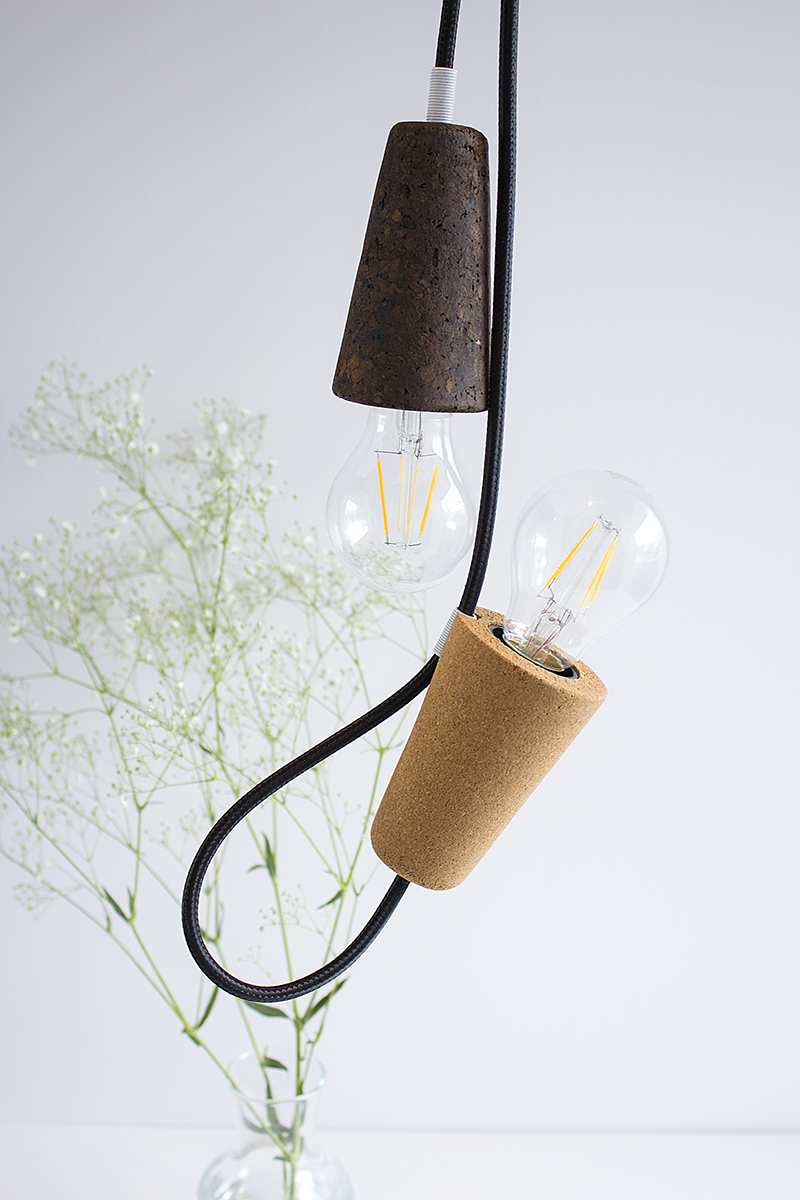
S I N I N H O L A M P


click on images


(November17, 2015) Design | Mendes'Macedo for Galula

'Sininho' is a ceiling lamp made of cork that gives both ways, the light spot can be directed up or down. With a minimalist and versatile form that can be used alone or together with others and thus form a chandelier.

source >>

SELF-HEALING SENSOR BRINGS ‘ELECTRONIC SKIN’ CLOSER TO REALITY


(November 17, 2015)  Flexible sensors have been developed for use in consumer electronics, robotics, health care, and space flight. Future possible applications could include the creation of ‘electronic skin’ and prosthetic limbs that allow wearers to ‘feel’ changes in their environments.

One problem with current flexible sensors, however, is that they can be easily scratched and otherwise damaged, potentially destroying their functionality. Researchers in the Department of Chemical Engineering at the Technion – Israel Institute of Technology in Haifa (Israel), who were inspired by the healing properties in human skin, have developed materials that can be integrated into flexible devices to “heal” incidental scratches or damaging cuts that might compromise device functionality. The advancement, using a new kind of synthetic polymer (a polymer is a large molecule composed of many repeated smaller molecules) has self-healing properties that mimic human skin, which means that e-skin “wounds” can quickly “heal” themselves in remarkably short time – less than a day.

“The vulnerability of flexible sensors used in real-world applications calls for the development of self-healing properties similar to how human skins heals,” said self-healing sensor co-developer Professor Hossam Haick. “Accordingly, we have developed a complete, self-healing device in the form of a bendable and stretchable chemiresistor where every part – no matter where the device is cut or scratched – is self-healing.”

The new sensor is comprised of a self-healing substrate, high conductivity electrodes, and molecularly modified gold nanoparticles. “The gold particles on top of the substrate and between the self-healing electrodes are able to “heal” cracks that could completely disconnect electrical connectivity,” said Prof. Haick.


journal reference >>

Bright prospects: Repairing Neurons with light


Zebrafish neurons projecting to the brain (green). One neuron expresses
a light-activatable enzyme (red). Scientist were able to stimulate the
regeneration of injured neurons using optogenetics.
Source: Helmholtz Zentrum München

(November 17, 2015)  Scientists at Helmholtz Zentrum München have succeeded in stimulating the regeneration of injured neurons in living fish by the use of light. To this end, they employed so-called Optogenetics, i.e. light inducible protein activation. The results have recently been published in the journal ‘Current Biology’.

The nervous system is built to last a lifetime, but diverse diseases or environmental insults can overpower the capacity of neurons to maintain function or to repair after trauma. A team led by Dr. Hernán López-Schier, head of the Research Unit Sensory Biology and Organogenesis at Helmholtz Zentrum München, now succeeded in promoting the repair of an injured neural circuit in zebrafish.

Key for the researchers’ success was the messenger molecule cAMP, which is produced by an enzyme called adenylyl cyclase. For their experiment, the scientist used a special form of this enzyme which is inducible by blue light. Therefore, the scientists are able to specifically modulate the production of cAMP in cells expressing this enzyme by the use of blue light.*


journal reference >>

Neutrons explain aging process in lithium ion batteries


Dr. Stefan Seidlmayer and Dr. Petra Kudejová at the PGAA instrument
at FRM II – Photo: Claudia Niiranen / TUM

Perpetual youth for batteries?

(November 17, 2015)  A key issue with lithium ion batteries is aging. It significantly reduces their potential storage capacity. To date, very little is known about the causes of the aging effects. Scientists from the Department of Technical Electrochemistry and the Research Neutron Source FRM II at the Technical University of Munich (TUM) have now come a step closer to identifying the causes in their latest experiments.

Lithium ion batteries with graphite anodes are a relatively new development. They were patented only in 1989 and have been deployed in electrical devices since 1991. Since then, they have been a success worldwide and do their service not only in small electrical devices but also in electric cars, airplanes and even locomotives. In the future they will also serve as intermediate storage with up to megawatt capacities.


Irmgard Buchberger at the X-ray diffractometer
Photo: Andreas Battenberg / TUM

Batteries with graphite anodes suffer their first significant loss of capacity during the initial charging cycle, the formation step. A battery loses up to ten percent of its capacity in the process. Each additional charge-discharge cycle reduces storage capacity further, if only insignificantly. Capacity is also lost through the mere storage of batteries – especially above room temperature.

Physics has come up with a number of ideas about the nature of these aging effects, but no one has yet found the definitive explanation for them. TUM scientists at the Chair of Technical Electrochemistry and from the FRM II have now come a good deal closer to closing this knowledge gap in their latest experiments.

Detective work using X-rays and neutrons

In order to understand the aging mechanism and to uncover the reasons behind them, TUM scientists combined electrochemical investigations with measurement methodologies as diverse as X-ray diffraction, impedance measurements and prompt gamma activation analysis (PGAA).

Material samples of anode (grey) and cathode (black)
Photo: Andreas Battenberg / TUM

They deployed these methodologies to analyze the behavior of batteries with graphite anodes and nickel-manganese-cobalt cathodes, so-called NMC cells, at various temperatures. NMC cells are popular in electromobility since they have a large capacity and can theoretically handle charging voltages up to just under five volts. However, above 4.4 volts aging effects increase strongly.

Using X-ray diffraction, the scientists investigated the loss of active lithium over multiple charging cycles. They used impedance measurements to register the increasing resistance in the battery cells. Neutron activation analysis ultimately facilitated the accurate determination of extremely minute quantities of transition metals on the graphite electrodes.

Deposits of decomposed electrolyte on the graphite particles
of the anode of a NMC-lithium ion battery, charged with high voltage (4,6 V)
Image: Irmgard Buchberger / TUM

Mechanisms of capacity reduction

The significant capacity loss in the formation step is caused by the build-up of a pacifying layer on the anode. This consumes active lithium, but also protects the electrolyte from decomposition at the anode.

read entire press  release >>

November 16, 2015

X-ray Microscope Reveals 'Solitons,' a Special Type of Magnetic Wave


X-rays at SSRL (purple) measure a special type of magnetic wave, called a spin wave soliton,
that has the ability to hold its shape as it moves across a magnetic material. The arrows,
like reorienting compass needles, represent localized changes in the material's
magnetic orientation. (SLAC National Accelerator Laboratory)

Scientists Hope to Control its Properties to Create a New Form of Electronics

(November 16, 2015)  Researchers used a powerful, custom-built X-ray microscope at the Department of Energy's SLAC National Accelerator Laboratory to directly observe the magnetic version of a soliton, a type of wave that can travel without resistance. Scientists are exploring whether such magnetic waves can be used to carry and store information in a new, more efficient form of computer memory that requires less energy and generates less heat.

Magnetic solitons are remarkably stable and hold their shape and strength as they travel across a magnetic material, just as tsunamis maintain their strength and form while traversing the ocean. This offers an advantage over materials used in modern electronics, which require more energy to move data due to resistance, which causes them to heat up.

In experiments at SLAC’s Stanford Synchrotron Radiation Lightsource, a DOE Office of Science User Facility, researchers captured the first X-ray images of solitons and a mini-movie of solitons that were generated by hitting a magnetic material with electric current to excite rippling magnetic effects. Results from two independent experiments were published Nov. 16 in Nature Communications and Sept. 17 in Physical Review Letters.

“Magnetism has been used for navigation for thousands of years and more recently to build generators, motors and data storage devices,” said co-author Hendrik Ohldag, a scientist at SSRL. “However, magnetic elements were mostly viewed as static and uniform. To push the limits of energy efficiency in the future we need to understand better how magnetic devices behave on fast timescales at the nanoscale, which is why we are using this dedicated ultrafast X-ray microscope.”

An ultrafast camera coupled to a custom-built X-ray microscope at SLAC's
Stanford Synchrotron Radiation Lightsource allowed researchers to produce a six-frame “movie”
of the soliton’s motion. It took about 12 hours to record enough X-ray data
to produce the movie. (Stefano Bonetti/Stockholm University)

“This is an exciting observation because it shows that small magnetic waves – known as spin-waves – can add up to a large one in a magnet,” explains Andrew Kent, a professor of physics at New York University and a senior author for one of the studies.. “A specialized X-ray method that can focus on particular magnetic elements with very high resolution enabled this discovery and should enable many more insights into this behavior.”

Solitons are a form of spin waves, which are disturbances that propagate in a magnetic material as a patterned, rippling response in the material’s electrons. This response is related to the spin of electrons, a fundamental particle property that can be thought of as either “up” or “down” – like the head or tail sides of a coin.

read entire press  release >>

GLOBE - Swivel cedarwood armchair


(November 16, 2015) Swivel cedarwood armchair
Design By  Paolo Nava

Globe is a comfortable and distinctive armchair made of solid scented cedarwood, an expression of the originality and creativity of its designers, Paolo and Jonathan Nava. It has an ergonomic seat and a natural iron revolving base. Available on request with Globe Poufs also in solid cedarwood.

They are products made of solid wood and are completely natural and hand-finished, without other treatments; further movements, cracks or changing of the wood are unique characteristics of the furniture and are due to the natural settlement and to the different environmental conditions.

source >>

Study finds surprising links between bullies and eating disorders


(November 16, 2015)  Being bullied in childhood has been associated with increased risk for anxiety, depression and even eating disorders. But according to new research, it’s not only the victims who could be at risk psychologically, but also the bullies themselves.

Researchers at Duke Medicine and the University of North Carolina School of Medicine were surprised to find that in a study of 1,420 children, those who bullied others were twice as likely to display symptoms of bulimia, such as bingeing and purging, when compared to children who are not involved in bullying. The findings are published in the December issue of International Journal of Eating Disorders.

“For a long time, there’s been this story about bullies that they’re a little more hale and hearty,” said lead author William Copeland, Ph.D., associate professor of psychiatry and behavioral sciences at Duke University School of Medicine. “Maybe they’re good at manipulating social situations or getting out of trouble, but in this one area it seems that’s not the case at all. Maybe teasing others may sensitize them to their own body image issues, or afterward, they have regret for their actions that results in these symptoms like binge eating followed by purging or excess exercise.”

The findings come from an analysis of interviews from the Great Smoky Mountains Study, a database with more than two decades of health information on participants who enrolled at age 9. The data is considered a community sample and not representative of the U.S. population, but offers clues to how children ages 9 to 16 could be affected.

Participants were divided into four categories – children who were not at all involved in bullying; victims of bullying; children who sometimes were victims and sometimes were instigators; and children who were solely bullies, repeatedly abusing other children verbally and physically, socially excluding others, and rumor mongering, without ever becoming a victim themselves.

The researchers were not surprised to find that victims of peer abuse were generally at increased risk for eating disorders.

read entire press  release >>

Rice makes light-driven nanosubmarines


Rice University scientists have created light-driven, single-molecule submersibles that
contain just 244 atoms. (Illustration by Loïc Samuel/Rice University)

(November 16, 2015)  Speedy single-molecule submersibles are a first

Though they’re not quite ready for boarding a lá “Fantastic Voyage,” nanoscale submarines created at Rice University are proving themselves seaworthy.

Each of the single-molecule, 244-atom submersibles built in the Rice lab of chemist James Tour has a motor powered by ultraviolet light. With each full revolution, the motor’s tail-like propeller moves the sub forward 18 nanometers.

And with the motors running at more than a million RPM, that translates into speed. Though the sub’s top speed amounts to less than 1 inch per second, Tour said that’s a breakneck pace on the molecular scale.

A chemical schematic shows the design of single-molecule nanosubmersibles created
at Rice University. The sub’s fluorescent pontoons are blue; the motor is red.
(Illustration by Victor García-López/Rice University)

“These are the fastest-moving molecules ever seen in solution,” he said.

Expressed in a different way, the researchers reported this month in the American Chemical Society journal Nano Letters that their light-driven nanosubmersibles show an “enhancement in diffusion” of 26 percent. That means the subs diffuse, or spread out, much faster than they already do due to Brownian motion, the random way particles spread in a solution.

While they can’t be steered yet, the study proves molecular motors are powerful enough to drive the sub-10-nanometer subs through solutions of moving molecules of about the same size.

“This is akin to a person walking across a basketball court with 1,000 people throwing basketballs at him,” Tour said.

Rice graduate student Victor García-López holds a vial with millions of single-molecule
nanosubmersibles. The nanosubs consist of 244 atoms and have motors that turn
when activated by ultraviolet light. (Credit: Jeff Fitlow/Rice University)

Tour’s group has extensive experience with molecular machines. A decade ago, his lab introduced the world to nanocars, single-molecule cars with four wheels, axles and independent suspensions that could be “driven” across a surface.

Tour said many scientists have created microscopic machines with motors over the years, but most have either used or generated toxic chemicals. He said a motor that was conceived in the last decade by a group in the Netherlands proved suitable for Rice’s submersibles, which were produced in a 20-step chemical synthesis.

“These motors are well-known and used for different things,” said lead author and Rice graduate student Victor García-López. “But we were the first ones to propose they can be used to propel nanocars and now submersibles.”

The motors, which operate more like a bacteria’s flagellum than a propeller, complete each revolution in four steps. When excited by light, the double bond that holds the rotor to the body becomes a single bond, allowing it to rotate a quarter step. As the motor seeks to return to a lower energy state, it jumps adjacent atoms for another quarter turn. The process repeats as long as the light is on.

read entire press  release >>