August 24, 2015

Mayo Clinic researchers find new code that makes reprogramming of cancer cells possible


August 24, 2015)  Cancer researchers dream of the day they can force tumor cells to morph back to the normal cells they once were. Now, researchers on Mayo Clinic’s Florida campus have discovered a way to potentially reprogram cancer cells back to normalcy.

The finding, published in Nature Cell Biology, represents “an unexpected new biology that provides the code, the software for turning off cancer,” says the study’s senior investigator, Panos Anastasiadis, Ph.D., chair of the Department of Cancer Biology on Mayo Clinic’s Florida campus.

That code was unraveled by the discovery that adhesion proteins — the glue that keeps cells together — interact with the microprocessor, a key player in the production of molecules called microRNAs (miRNAs). The miRNAs orchestrate whole cellular programs by simultaneously regulating expression of a group of genes. The investigators found that when normal cells come in contact with each other, a specific subset of miRNAs suppresses genes that promote cell growth. However, when adhesion is disrupted in cancer cells, these miRNAs are misregulated and cells grow out of control. The investigators showed, in laboratory experiments, that restoring the normal miRNA levels in cancer cells can reverse that aberrant cell growth.

Lead authors Panos Anastasiadis, Ph.D., and Antonis Kourtidis, Ph.D.

“The study brings together two so-far unrelated research fields — cell-to-cell adhesion and miRNA biology — to resolve a long-standing problem about the role of adhesion proteins in cell behavior that was baffling scientists,” says the study’s lead author Antonis Kourtidis, Ph.D., a research associate in Dr. Anastasiadis’ lab. “Most significantly, it uncovers a new strategy for cancer therapy,” he adds.

That problem arose from conflicting reports about E-cadherin and p120 catenin — adhesion proteins that are essential for normal epithelial tissues to form, and which have long been considered to be tumor suppressors. “However, we and other researchers had found that this hypothesis didn’t seem to be true, since both E-cadherin and p120 are still present in tumor cells and required for their progression,” Dr. Anastasiadis says. “That led us to believe that these molecules have two faces — a good one, maintaining the normal behavior of the cells, and a bad one that drives tumorigenesis.”

Researchers on Mayo Clinic’s Florida campus have discovered a way
to potentially reprogram cancer cells back to normalcy.

Their theory turned out to be true, but what was regulating this behavior was still unknown. To answer this, the researchers studied a new protein called PLEKHA7, which associates with E-cadherin and p120 only at the top, or the “apical” part of normal polarized epithelial cells. The investigators discovered that PLEKHA7 maintains the normal state of the cells, via a set of miRNAs, by tethering the microprocessor to E-cadherin and p120. In this state, E-cadherin and p120 exert their good tumor suppressor sides.

However, “when this apical adhesion complex was disrupted after loss of PLEKHA7, this set of miRNAs was misregulated, and the E-cadherin and p120 switched sides to become oncogenic,” Dr. Anastasiadis says.

read entire press  release >>

Argonne pushing boundaries of computing in engine simulations


Argonne principal mechanical engineer Sibendu Som (left) and computational scientist
aymond Bair discuss combustion engine simulations conducted by the Virtual Engine
Research Institute and Fuels Initiative (VERIFI). The initiative will be running massive
simulations on Argonne’s Mira supercomputer to gain further insight into the
inner workings of combustion engines.

(August 24, 2015)  When you’re trying to understand the complex inner workings of a virtual engine, with its millions of variables and untold number of uncertainties, the most important horsepower number isn’t the one under the hood; it’s the one in the computer rack next door.

Researchers at the U.S. Department of Energy’s Argonne National Laboratory will be testing the limits of computing horsepower this year with a new simulation project from the Virtual Engine Research Institute and Fuels Initiative (VERIFI) that will harness 60 million computer core hours to dispel those uncertainties and pave the way to more effective engine simulations.

The work will be conducted on MIRA, which is currently the fifth-fastest supercomputer in the world and serves as the epicenter of the Argonne Leadership Computing Facility (ALCF), a DOE Office of Science User Facility. VERIFI has been working for two years to gain a deeper understanding of the complex dynamics at work in engine combustion. While VERIFI has used powerful computers before, it has never accessed a computer with the horsepower of MIRA and the abilities to unlock the deepest secrets of combustion.

read entire press  release >>

JASWIG: Height-adjustable, wooden standing desk for everyone


(August 24, 2015) Why are children still sitting down all day in class, especially when standing feels so much better? Here at JASWIG, we create health-promoting furniture to make you feel better both mentally and physically. This is why we created the StandUp, the first height-adjustable wooden standing desk made for both kids and adults.

It seems that everywhere we go, we have a place to sit: in public spaces, at the office, in our cars, on public transit, at home (you get the picture). For most of us, the default option is to recline, and our furniture and infrastructure make it the easiest choice. This occurs in schools as well, where most children spend their day in ill-fitted sitting desks. Even with afterschool activities, most modern-day kids spend up to 85% of their waking hours in sedentary activities. Adults are no better, spending 8-12 hours a day in a seated position.

This is where JASWIG comes in. We want to change our sitting culture by introducing the first height-adjustable wooden standing desk for both children and adults. We call it the StandUp. Its sleek design is made from sustainably sourced wood, and is easily adjusted by even the youngest of users.
The StandUp is the first height-adjustable wooden standing desk. Its lightweight and simple design allows for safe and easy height adjustments in seconds, even for a young child. No person is the same size, and using a standardized sitting desk or table for hours can compromise your posture circulation, and musculature. When it comes to furniture, there really is no “one size fits all.”
Our desk displays a beautiful balance between simplicity, functionality, sustainability and familiarity. The design is based on the vintage 60’s school desks but the edges and material are reflective of recent technological innovations.

Climate’s profound impact on marine biodiversity


Warming oceans will have a significant impact on
marine biodiversity. Image: Nick Graham

(August 24, 2015)  New research into the impact of climate change has found that warming oceans will cause profound changes in the global distribution of marine biodiversity.

In a study published in the journal Nature Climate Change an international research team modelled the impacts of a changing climate on the distribution of almost 13 thousand marine species, more than twelve times as many species as previously studied.

The study found that a rapidly warming climate would cause many species to expand into new regions, which would impact on native species, while others with restricted ranges, particularly those around the tropics, are more likely to face extinction.

Extinctions will be more likely in tropical areas as
ocean temperatures rise. Image: Simon Foale

Professor John Pandolfi from the ARC Centre of Excellence for Coral Reef Studies at the University of Queensland says global patterns of species richness will change significantly, with considerable regional variability.

“This study was particularly useful because it not only gave us hope that species have the potential to track and follow changing climates but it also gave us cause for concern, particularly in the tropics, where strong biodiversity losses were predicted,” says Professor Pandolfi.

“This is especially worrying, and highly germane to Australia’s coral reefs, because complementary studies have shown high levels of extinction risk in tropical biotas, where localized human impacts as well as climate change have resulted in substantial degradation.”

read entire press  release >>

Berkeley Lab Releases Most Comprehensive Analysis of Electricity Reliability Trends


New report finds that increasingly severe weather is linked to longer lasting power outages

(August 24, 2015)  In the most comprehensive analysis of electricity reliability trends in the United States, researchers at Lawrence Berkeley National Laboratory (Berkeley Lab) and Stanford University have found that, while, on average, the frequency of power outages has not changed in recent years, the total number of minutes customers are without power each year has been increasing over time.

The researchers pinpointed what utilities and their regulators refer to as “major events,” or events generally related to severe weather, as the principal driver for this trend. “This finding suggests that increasingly severe weather events are linked to a 5-10% increase in the total number of minutes customers are without power each year,” said Berkeley Lab Research Scientist and Stanford PhD candidate, Peter Larsen, the lead author.

The researchers analyzed reports for a large cross-section of utilities representing nearly 70 percent of U.S. electricity customers spanning 13 years from 2000 to 2012. Their report, “Assessing Changes in the Reliability of the U.S. Electric Power System,” is available here.

read entire press  release >>

Smooth robot movements reduce energy consumption by up to 40 percent


By minimizing the acceleration of industrial robots, energy consumption can be reduced by up to 40 percent – while retaining the given production time. This is the result of a new optimization algorithm that was developed by researchers at Chalmers University of Technology.

(August 24, 2015)  Optimization of the robot's movements reduces acceleration and deceleration, as well as the time the robot is at a standstill since being at a standstill also consumes energy.

“We simply let the robot move slower instead of waiting for other robots and machines to catch up before carrying out the next sequence. The optimization also determines the order in which the various operations are carried out to minimize energy consumption – without reducing the total execution time”, says Professor Bengt Lennartson who initiated the research together with, among others, General Motors.

The optimization never changes the robot’s operation path, only the speed and sequence.

“Thus, we can go into an existing robot cell and perform a quick optimization without impacting production or the current cycle”, says Bengt Lennartson.

To achieve safe optimization, several robots moving in the same area need to be coordinated. The optimization tool will therefore initially identify where robots may collide, and the entry and exit positions for each collision zone, and for each robot path.

“The first test results have shown a significant improvement, such as a 15 to 40 percent energy reduction, but the results are still preliminary. In order to estimate the actual energy savings, further testing in industry is required”, says Kristofer Bengtsson, who is responsible for the implementation of the new optimization strategy.

read entire press  release >>

Let your phone be naked


(August 24, 2015)   Lil Grit: A subtle but effective anti-slip accessory for beautiful phones.
(iPhone 6, Galaxy S6, HTC One, and more...)

Lil Grit makes your phone less slippery without ruining its premium look and feel. If that sounds like something you can dig, you're in the right place.

First I turned to Google, as one does, and quickly found that there are tons of options to make phones less slippery. There are rubbery cases, grippy silicone skins, stick-on handles, elastic straps, and if you're feeling DIY you can even wrap your phone in skateboard griptape. All of these options work I suppose but they also fundamentally change the look and feel of your phone. And most of them are total overkill. I wasn't looking to use my phone as a hammer or a sanding block, I just wanted it to be less slippery in my hand, that's all. Forsaken by Google, I was discouraged but not yet defeated. There was still hope. I dusted off my engineering degree and headed to the lab... 


Louisiana Tech researchers discover synthesis of a new nanomaterial


Dr. Mark DeCoster

— Interdisciplinary team creates biocomposite for first time using physiological conditions —

(August 24, 2015)  Faculty at Louisiana Tech University have discovered, for the first time, a new nanocomposite formed by the self-assembly of copper and a biological component that occurs under physiological conditions, which are similar to those found in the human body and could be used in targeted drug delivery for fighting diseases such as cancer.

The team, led by Dr. Mark DeCoster, the James E. Wyche III Endowed Associate Professor in Biomedical Engineering at Louisiana Tech, has also discovered a way for this synthesis to be carried out in liquid form. This would allow for controlling the scale of the synthesis up or down, and to grow structures with larger features, so they can be observed.

The discovery was published last month in the journal JoVE (Journal of Visualized Experiments) – a highly-visible, peer-reviewed international journal. Since its publication, the article titled, “Generation of Scalable, Metallic High-Aspect Ratio Nanocomposites in a Biological Liquid Medium” has been viewed hundreds of times by dozens of universities around the world.

“We are currently investigating how this new material interacts with cells,” said DeCoster. “It may be used, for example for drug delivery, which could be used in theory for fighting diseases such as cancer. Also, as a result of the copper component that we used, there could be some interesting electronics, energy, or optics applications that could impact consumer products. In addition, copper has some interesting and useful antimicrobial features.

read entire press  release >>

August 23, 2015

Still Life


(August 23, 2015)   Still life explores the relationship between human and object.

With this cabinet, I want to explore the distance between an object and a person and how we can affect our physical surroundings.

How does a person bond with an object? Is it possible to fashion an object that creates a bond between itself and its user without any prior memories or attachments? An object that lives. The Still life cabinet is my attempt to bring a piece of furniture to life, to create a sensation of presence through form and function. An object that challenges our usual way of thinking, an object that forces us to rethink. It turns the observer into a small child grasping for the unknown.

Still life consists of many laths which can be pushed from side to side to create different shapes.

source >>

Gyro Stool Table


(August 23, 2015)   The mechanical principles of a gyroscope, planetarium or of an astrolabe served as an influence to conceive an unexpectedly comfortable Gyrostool: a new experience for your… eyes.

source >>

August 22, 2015

Self-healing landscape: landslides after earthquake


Large ground cracks on a small ridge and landslide in the background after the Nepal quake
of April 2015, upper Bhote Koshi river valley, photo: O. Marc, GFZ

(August 22, 2015)  In mountainous regions earthquakes often cause strong landslides, which can be exacerbated by heavy rain. However, after an initial increase, the frequency of these mass wasting events, often enormous and dangerous, declines, in fact independently of meteorological events and aftershocks.

These new findings are presented by a German-Franco-Japanese team of geoscientists in the current issue of the journal Geology, under the lead of the GFZ German Research Centre for Geosciences. Even after strong earthquake the activity of landslides returns back over the course of one to four years to the background level before the earthquake.

The interactions over time between earthquakes and processing shaping the landscape are still not well understood. The geoscientists have investigated areas affected by landslides related to four moderate to severe earthquakes (6.6 to 7.6 on Richter scale). "The main difficulty was that one must distinguish between the meteorological and the seismic causes of landsliding. Heavy rain can also produce landslides and can enhance landsliding after an earthquake", says GFZ scientists Marc Odin, the lead author of the study. Two processes are interacting here. A strong earthquake shakes soil layer loose from the underlying bedrock and also damages the rock below the top soil. Water seeps into the resulting the cracks and crevices and acts like a lubricating film on which a mountain slope slides into the valley.

read entire press  release >>

The Future of Forecasting


Figure 1. The IFS alternative dynamical core option: Left, an example of an unstructured
mesh for a low-resolution model. Right, the domain decomposition used in IFS;
each patch represents the grid area owned by an MPI task.

Leading weather agency turns to Titan to advance science of prediction

Knowing how the weather will behave in the near future is indispensable for countless human endeavors.

(August 22, 2015)  According to the National Oceanic and Atmospheric Administration (NOAA), extreme weather events have caused more than $1 trillion in devastation since 1980 in the United States alone. It’s a staggering figure, but not nearly as staggering as the death toll associated with these events—approximately 10,000 lives.

The prediction of low-probability, high-impact events such as hurricanes, droughts, and tornadoes, etc., has proven to have profound economic and social impacts when it comes to limiting or preventing mass property damages and saving human lives. But regardless of the aim, predicting weather has always been a tricky business.

However, thanks to one of the world’s most powerful computers, it’s becoming less tricky and more accurate. Researchers from the European Centre for Medium-Range Weather Forecasts (ECMWF) have used the Titan supercomputer, located at the US Department of Energy’s (DOE’s) Oak Ridge National Laboratory, to refine their highly lauded weather prediction model, the Integrated Forecasting System (IFS), in hopes of further understanding their future computational needs for more localized weather forecasts.

ECMWF is both a research institute and a 24/7 operational service, supported by 34 European countries. In the US, the IFS is perhaps best known as the weather model that gave the earliest indication of Hurricane Sandy’s path in 2012. Sandy is the second costliest hurricane in US history and the most powerful of the 2012 season. “Our ensemble forecasting system predicted the landfall of superstorm Sandy on the US East Coast more than 7 days in advance,” said Erland Källén, director of research at ECMWF.

read entire press  release >>

Weak Doses of Radiation Prolong Life of Female Flies, Scientists Find


(August 22, 2015)  Scientists at MIPT have revealed that weak doses of gamma radiation prolong the life of drosophila flies (fruit flies), and that the effect is stronger in females than in males. These findings could reveal the genes that enable the prolongation of life and in the future lead to the creation of a means to prevent aging in humans. The results of their study can be found in an article recently published in the prestigious scientific journal PLOS ONE

A group of scientists from the Laboratory of the Genetics of Aging and Longevity at MIPT, the Engelhardt Institute of Molecular Biology at the Russian Academy of Sciences, the Komi Research Center and Syktyvkar University under the leadership of Alexey Moskalev is studying the mechanism of radiation hormesis, the effect by which moderate stress has a stimulating effect on an organism and enables the prolongation of life. This effect was first observed at the end of the XIX century by the German pharmacologist Hugo Shulz who discovered that small doses of poison speed up the growth of yeast cells. The effect was later found in many other organisms, in particular in peppermint and roundworms.  

“Small doses of poison or the moderate influence of other stress factors affect the organism in such a way that the stimulation effect overcomes the harm. As a consequence, this can lead to an increase in life expectancy,” explains Svetlana Zhikrivetskaya, lead author of the article. 


In recent years scientists have been actively studying the influence of radiation hormesis, observing beneficial effects of weak doses of ionizing radiation. It is a commonly accepted view that there can be no safe doses of radiation, as any radiation will damage the molecules of DNA. An acceptable background is considered to be that at which the risk of cancer is negligibly small.

However, a number of experiments have demonstrated an improvement “under radiation” of indicators of life expectancy in mice and cell cultures. Indirect confirmation of radiation hormesis can be seen in cases of accidental irradiation of large groups of people over extended periods of time.

In particular, in 1982 in Taiwan, during smelting, 20 tonnes of steel were accidentally contaminated with cobalt-60. This steel was then used as construction material and, for about 20 years, about 10 thousand people were subjected to the effects of irradiation at a level of approximately one thousand times that of the natural background. Scientists who have investigated these people have drawn the conclusion that the number of cases of cancer in this group of unwilling experimental subjects is lower than normal. This conclusion has, however, been criticized and the very idea of radiation hormesis has remained debatable.


journal reference (Open Access)  >>

New drug protects against the deadly effects of nuclear radiation 24 hours after exposure


(August 22, 2015)  An interdisciplinary research team led by The University of Texas Medical Branch at Galveston reports a new breakthrough in countering the deadly effects of radiation exposure. A single injection of a regenerative peptide was shown to significantly increase survival in mice when given 24 hours after nuclear radiation exposure. The study currently appears in Laboratory Investigation, a journal in the Nature Publishing group.

UTMB lead author Carla Kantara, postdoctoral fellow in biochemistry and molecular biology, said that a single injection of the investigative peptide drug TP508 given 24 hours after a potentially-lethal exposure to radiation appears to significantly increase survival and delay mortality in mice by counteracting damage to the gastrointestinal system.

The threat of a nuclear incident, with the potential to kill or injure thousands of people, has raised global awareness about the need for medical countermeasures that can prevent radiation-induced bodily damage and keep people alive, even if given a day or more after contact with nuclear radiation.

Exposure to high doses of radiation triggers a number of potentially lethal effects. Among the most severe of these effects is the gastrointestinal, or GI, toxicity syndrome that is caused by radiation-induced destruction of the intestinal lining. This type of GI damage decreases the ability of the body to absorb water and causes electrolyte imbalances, bacterial infection, intestinal leakage, sepsis and death.

The GI toxicity syndrome is triggered by radiation-induced damage to crypt cells in the small intestines and colon that must continuously replenish in order for the GI tract to work properly. Crypt cells are especially susceptible to radiation damage and serve as an indicator of whether someone will survive after total body radiation exposure.

read entire press  release >>

August 21, 2015

iSkin Body Sensor


Flexible, Stretchable and Visually Customizable On-Body Touch Sensors for Mobile Computing

(August 21, 2015)   We propose iSkin, a novel class of skin-worn sensors for touch input on the body. iSkin is a very thin sensor overlay, made of biocompatible materials, and is flexible and stretchable. It can be produced in different shapes and sizes to suit various locations of the body such as the finger, forearm, or ear. Integrating capacitive and resistive touch sensing, the sensor is capable of detecting touch input with two levels of pressure, even when stretched by 30% or when bent with a radius of 0.5 cm. 

Furthermore, iSkin supports single or multiple touch areas of custom shape and arrangement, as well as more complex widgets, such as sliders and click wheels. Recognizing the social importance of skin, we show visual design patterns to customize functional touch sensors and allow for a visually aesthetic appearance. Taken together, these contributions enable new types of on-body devices. This includes finger-worn devices, extensions to conventional wearable devices, and touch input stickers, all fostering direct, quick, and discreet input for mobile computing.


Superlattice Design Realizes Elusive Multiferroic Properties


Süperlattice structure of lithium osmate and lithium niobate

New design sandwiches a polar metallic oxide between an insulating material

(August 21, 2015)  From the spinning disc of a computer’s hard drive to the varying current in a transformer, many technological devices work by merging electricity and magnetism. But the search to find a single material that combines both electric polarizations and magnetizations remains challenging.

This elusive class of materials is called multiferroics, which combine two or more primary ferroic properties. Northwestern Engineering’s James Rondinelli and his research team are interested in combining ferromagnetism and ferroelectricity, which rarely coexist in one material at room temperature.

“Researchers have spent the past decade or more trying to find materials that exhibit these properties,” said Rondinelli, assistant professor of materials science and engineering at the McCormick School of Engineering. “If such materials can be found, they are both interesting from a fundamental perspective and yet even more attractive for technological applications.”

In order for ferroelectricity to exist, the material must be insulating. For this reason, nearly every approach to date has focused on searching for multiferroics in insulating magnetic oxides. Rondinelli’s team started with a different approach. They instead used quantum mechanical calculations to study a metallic oxide, lithium osmate, with a structural disposition to ferroelectricity and sandwiched it between an insulating material, lithium niobate.

While lithium osmate is a non-magnetic and non-insulating metal, lithium niobate is insulating and ferroelectric but also non-magnetic. By alternating the two materials, Rondinelli created a superlattice that — at the quantum scale — became insulating, ferromagnetic, and ferroelectric at room temperature.

read entire press  release >>

CONES unfolded sculptures


(August 21, 2015)   Cones is a series of folded seats.

Due to the flexible folding structure, the shape of the furniture accommodates every seated position.
Depending on the volume, the appearance of the seats changes. They are comprised of pure woolen felt, shaped into three-dimensional form through heated steam.

The plush seats echo the round form of a boulder and are dyed a variety of earthy colors. Ornamental and comfortable, the designs have a natural, striking presence and contour to the user’s body. The collection celebrates the fusion of geometry, transformation and aesthetics.


Sony SmartBand 2 – SmartWear with advanced heart rate tracking


Find your balance in life

(August 21, 2015)  Track today, for a greater tomorrow

Keep track of it all. Your heart rate, movements, sleep, even your moments of calm and excitement. Then SmartBand 2 will measure your pulse and stress level, so you can decide if today is a day to take it easy or go for it.

SmartBand 2 keeps an eye on your pulse and stress level, checking how your energy rises and falls. Then you can see what keeps you calm, what makes you excited and everything in between. So you can start doing more of what makes you, you.

With an inbuilt heart rate monitor, the SmartBand 2 constantly checks your pulse, whether you’re on the move or sitting at a desk. See what activities raise your heart rate, and how your heart returns to its normal resting rate.

Check SmartBand 2 data from the past week, month, year and beyond on the Lifelog app. View on the timeline alongside other Lifelog entries, including events, photos and music. See how different activities, like a holiday or listening to your favourite tune, can alter your pulse and stress levels and learn how to balance your life.

Messages and calls, without a sound

The SmartBand 2’s gentle vibrating alert and optional coloured LEDs let you know when a call or message is coming in on your phone. The LED lights change depending on the notification type, so you get to decide if you should reach for your phone.


Scientists pave the way for understanding the role of non-coding DNA in common genetic diseases


Genetic variants can ‘switch’ regulatory elements on or off. Credit: EMBL/P.Riedinger

In a nutshell:

*  Scientists integrate ‘omics’ techniques to understand genetic mechanisms controlling gene expression.
*  Integrative computational strategy makes it possible to chart interactions between genetic switches.
*  ‘Switches’ controlling gene expression might be far apart on DNA strand, but close in 3D space.
*  Map of genetic ‘switches’ will pave the way for understanding the molecular basis of complex genetic diseases.

(August 21, 2015)  Scientists at the European Molecular Biology Laboratory (EMBL) in Heidelberg, Germany, and Stanford University in the USA, have shed new light on how the variations in our molecular make-up, such as gene expression, are controlled within our DNA. The research, published today in Cell, leads to a greater understanding of how certain genetic variants can ‘switch’ on or off the regulatory elements which control the expression of genes and ultimately the manifestation of an individual’s characteristics and disease predispositions.

These variants are found in regions of the genome which are not directly responsible for coding genes, but which instead have a regulatory function. Not much is yet known about these regions, however, research into how the variants work could eventually lead to new clues about how human diseases might be understood at a genetic level and, ultimately, controlled.

“We know many genetic variants are associated with different diseases, but since most of them lie in the non-coding part of the genome, we often don’t know what the precise mechanisms underlying these associations are,” explains Judith Zaugg, who led the study at EMBL. “Our results, and the computational approaches we have developed mean it will now be possible to take these variants and link them back to the regulatory network within the DNA to identify the specific gene that is associated with them. This might enable us to unravel the causal mechanisms behind certain inherited diseases.”


journal reference >>

Researchers developing next generation of high power lasers


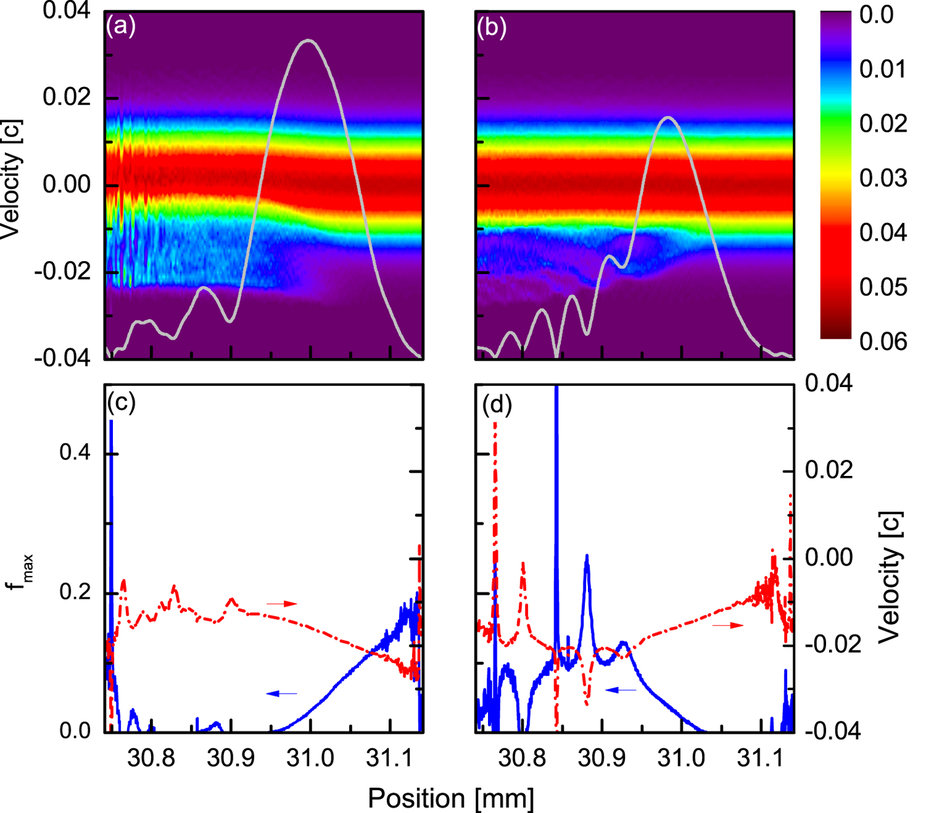
Figure 4: Electron thermal velocity distribution maps with superimposition of the seed
amplitude (solid line) for (a) positive chirp, (b) negative chirp
The color scale indicates the ratio of electrons at a given position and velocity. Also presented, the
calculation of the plasma wave velocity (dashed-dotted line) and maximum amplitude derived from
equation (2) (solid line) for (c) positive chirp, (d) negative chirp. (Nature.com)

(August 21, 2015)  Researchers at the University of Strathclyde are developing groundbreaking plasma based light amplifiers that could replace traditional high power laser amplifiers.

The research group at the Glasgow-based University are leading efforts to take advantage of plasma, the ubiquitous medium that makes up most of the universe, to make the significant scientific breakthrough.

The next generation of high power lasers should be able to crack the vacuum to produce real particles from the sea of virtual particles. Example of these types of lasers can be found at the Extreme Light Infrastructure in Bucharest, Prague and Szeged, which are pushing the boundaries of what can be done with high intensity light.

Professor Dino Jaroszynski and Dr Gregory Vieux from Strathclyde’s Faculty of Science hope that the developments can produce a very compact and robust light amplifier.

Professor Jaroszynski said: “The lasers currently being used are huge and expensive devices, requiring optical elements that can be more than a metre in diameter. Large laser beams are required because traditional optical materials are easily damaged by high intensity laser beams.


journal reference (Open Access)  >>

CFD modeling confirms improved blood flow with new stent design


This stent graft developed by Sanford Health vascular surgeon Pat Kelly can be deployed
inside blood vessels to help patients with thoracoabdominal aneurysms.

(August 21, 2015)  Vascular surgeon Pat Kelly of Sanford Health knew his patients were doing better with the stent graft he designed, but he wanted a better understanding of the mechanics before testing the device more widely in a clinical trial. For that, he reached out to SDSU.

Associate professor Stephen Gent in mechanical engineering had done computational fluid dynamics modeling for more than 10 years, but this was his first experience simulating blood flow.

Their research partnership has been a successful one.

The Sanford Health team began a Food and Drug Administration clinic trial on the device in March with the support of data from the computational fluid dynamics simulation and the patients Kelly has treated. In April, Sanford Health signed a licensing deal with Medtronic that will bring this life-saving device closer to commercialization. The research was supported by a grant from Sanford Frontiers.

Setting up model
"This is not a trivial problem," Gent said, noting that blood is a pulsed flow. He and graduate student Taylor Suess used a commercially available computational fluid dynamics solver, Star CCM+®, and wrote additional code to model blood flow through five stents. Three were commercially available, while two, including Kelly's, were new designs.

Stephen Gent

First, the researchers had to learn the medical terminology and then link the engineering results with what mattered to the medical professionals."The language overlapped about 60 percent," Gent said, "but it helped that Kelly was a structural engineer before becoming a surgeon."

To compare the devices, Suess had to create a geometrically correct model of each graft relative to the same aorta coordinates and positioning in the body trunk and the arteries that feed the organs and extend into the legs.

read entire press  release >>

August 20, 2015

Scientists turn oily soil into fertile ground


Rice University researchers pyrolyzed oil-contaminated soil to reduce total petroleum hydrocarbons
(TPH) below federal standards, while leaving beneficial carbons in the soil. The lab grew lettuce in
samples of reclaimed soil to test its viability. (Credit: Julia Vidonish/Rice University)

Rice University discovery uses less energy while reclaiming soil at oil spills

(August 20, 2015)  Rice University scientists are cleaning soil contaminated by oil spills in a way that saves energy and reclaims the soil’s fertility.

They use a process known as pyrolysis, which involves heating contaminated soils in the absence of oxygen. This approach is much better for the environment than standard incineration techniques for fast remediation, said Rice environmental engineer Pedro Alvarez.

“Our original goal was to speed the response to oil spills, but our aspiration was to turn contaminated soil into fertile soil,” said Alvarez, the George R. Brown Professor and chair of Rice’s Civil and Environmental Engineering Department.

The new paper by Alvarez and his Rice colleagues in the American Chemical Society journal Environmental Science and Technology demonstrates how they’ve done just that.

Off-shore oil spills tend to get the most attention, Alvarez said, but 98 percent of spills – more than 25,000 per year — occur on land. Industry and governments worldwide spend more than $10 billion annually to clean up oil spills.

Rice University researchers have discovered that pyrolysis of oil-contaminated soil
reduces hydrocarbon levels to below regulatory mandates and leaves behind char that
enhances the soil’s fertility. From left: Graduate student Julia Vidonish and
Professors Caroline Masiello, Kyriacos Zygourakis and Pedro Alvarez. (Credit: Rice University)

The Rice team found that pyrolyzing contaminated soil for three hours not only reduced the amount of petroleum hydrocarbons left to well below regulatory standards (typically less than 0.1 percent by weight), but also enhanced the soil’s fertility by turning the remaining carbon into beneficial char.

“We initially thought we could turn the hydrocarbons into biochar,” Alvarez said. “We turned out to be partly wrong: We didn’t get biochar, but [we got] a carbonaceous material that we call char and resembles coke.

“But we were correct in thinking that by removing toxic pollutants and the hydrophobicity that repels water that plants need, and by retaining some of the carbon and perhaps some of the nutrients, we would enhance plant growth,” he said.

The researchers proved that by successfully growing lettuce in reclaimed soil in the lab. “There’s no one plant officially accepted as the standard for testing petroleum toxicity, but lettuce has been accepted by the community as very sensitive to toxins, especially petroleum,” said Rice graduate student Julia Vidonish, the paper’s lead author.

“Reclaimed soil may not necessarily be used to grow food, but it certainly could be used for re-greening: planting grass to minimize erosion and to restore vegetation,” Alvarez said.

“Our process is part thermal desorption, but it takes advantage of petroleum chemistry,” said Rice chemical engineer and co-author Kyriacos Zygourakis. “By heating the contaminated soils to about 420 degrees Celsius in the absence of oxygen, we first drive out the lighter hydrocarbons. That’s the desorption part. But when the temperature gets above 350 degrees, the high-molecular-weight hydrocarbons, the resins and asphaltenes, undergo a series of cracking and condensation reactions to form solid char, similar to the petroleum coke produced in refineries.

read entire press  release >>

UCLA physicist tests theories of dark energy by mimicking the vacuum of space


Courtesy of Holger Müller
The researchers conducted tests inside a sophisticated vacuum chamber.
An aluminum sphere (center), helped suppress dark energy fields called “chameleon fields.”

Scientist uses cold atoms to probe dark energy, which is responsible for the acceleration of the universe

(August 20, 2015)  Besides the atoms that make up our bodies and all of the objects we encounter in everyday life, the universe also contains mysterious dark matter and dark energy. The latter, which causes galaxies to accelerate away from one another, constitutes the majority of the universe’s energy and mass.

Ever since dark energy was discovered in 1998, scientists have been proposing theories to explain it — one is that dark energy produces a force that can be measured only where space has a very low density, like the regions between galaxies.

Enar de Dios Rodriguez
Paul Hamilton (foreground), now a UCLA professor,
in the lab with his UC Berkeley colleagues.

Paul Hamilton, a UCLA assistant professor of physics and astronomy, reproduced the low-density conditions of space to precisely measure this force. His findings, which helped to reveal how strongly dark energy interacts with normal matter, appear today in the online edition of the journal Science.

Hamilton’s research focuses on the search for specific types of dark energy fields known as “chameleon fields,” which exhibit a force whose strength depends on the density of their surrounding environment. This force, if it were proven to exist, would be an example of a so-called “fifth force” beyond the four known forces of gravity, electromagnetism, and the strong and weak forces acting within atoms.

But this fifth force has never been detected in laboratory experiments, which prompted physicists to propose that when chameleon fields are in dense regions of space — for example, the Earth’s atmosphere — they shrink so dramatically that they become immeasurable.

read entire press  release >>

Making Hydrogen Fuel from Water and Visible Light Highly Efficient


Yun Hang Hu and his doctoral student Bing Han have developed an
efficient method to split water into hydrogen molecules using visible light.

(August 20, 2015)  Mimicking photosynthesis is not easy. The bottleneck of artificial photosynthesis is visible light, because converting it into other forms of energy is not efficient. Researchers at Michigan Technological University have found a way to solve this issue, leading to an efficient technique to produce hydrogen fuel. Last week, the Journal of Physical Chemistry published their work.

The technique was developed by Yun Hang Hu, the Charles and Carroll McArthur professor of Materials Science and Engineer, and his PhD student, Bing Han, at Michigan Tech.

“Hydrogen is the future of cars,” says Hu. “And if you want to power hydrogen cars, you have to make hydrogen fuels.”

In this new hydrogen production process, the key is the interactions of a catalyst, light and a sacrificial molecule.

Playbook of Black Titanium Dioxide, Methanol and Light
As if in a complex sports game, the exchanges and counters between the materials used to split water look like a chemistry playbook. The players are black titanium dioxide (TiO2) and methanol (CH3OH) pitted against electron-hole recombination.


The goal of the game is to produce hydrogen molecules. Basically, that’s done by moving an electron from one place to another, like kicking a football to get a field goal. To make that score, a water molecule captures an electron excited within a material. When excited, electrons move up and down in different bands; the lower one here is the valence band and the higher one is the conduction band. The valence band and the conduction band are like goal posts, and between them is the band gap, which is like the playing field. The excited electron is the ball being passed around.

Solar energy, with both ultraviolet (UV) and visible light energy, is what gets this ball rolling. Light energy bounces off the first player, titanium dioxide, which is the material where the valence band and conduction band are in play. That excites an electron, making it a photo-excited charge that shoots up towards the conduction band. For UV light, the playing field is pretty big, and the band gap stretches 3.2 electron volts wide.

read entire press  release >>

Harvard’s Wyss Institute improves its sepsis therapeutic device


This video explains how sepsis induced by an overload of blood pathogens can be
treated with the Wyss Institute’s improved pathogen-extracting, spleen-mimicking device.
Blood is flown through a cartridge filled with hollow fibers that are coated with a genetically
engineered blood protein inspired by a naturally occurring human molecule called
Mannose Binding Lectin (MBL). MBL is activating our innate immune system when
bound to toxic invaders, marking them for capture by immune cells in the spleen.
Credit: Wyss Institute at Harvard University

The Institute's blood-cleansing device, enabled by a genetically engineered pathogen-capturing protein, has been simplified to accelerate its clinical translation

(August 20, 2015)  Last year, a Wyss Institute team of scientists described the development of a new device to treat sepsis that works by mimicking our spleen. It cleanses pathogens and toxins from blood circulating through a dialysis-like circuit. Now, the Wyss Institute team has developed an improved device that synergizes with conventional antibiotic therapies and that has been streamlined to better position it for near-term translation to the clinic. The improved design is described in the October volume 67 of Biomaterials.

Sepsis is a common and frequently fatal medical complication that can occur when a person's body attempts to fight off serious infection. Resulting widespread inflammation can cause organs to shut down, blood pressure to drop, and the heart to weaken. This can lead to septic shock, and more than 30 percent of septic patients in the United States eventually die. In most cases, the pathogen responsible for triggering the septic condition is never pinpointed, so clinicians blindly prescribe an antibiotic course in a blanket attempt to stave off infectious bacteria and halt the body's dangerous inflammatory response.

But sepsis can be caused by a wide-ranging variety of pathogens that are not susceptible to antibiotics, including viruses, fungi and parasites. What's more, even when antibiotics are effective at killing invading bacteria, the dead pathogens fragment and release toxins into the patient's bloodstream.

The blood-cleansing device connected to a dialysis-like circuit is harboring
a dense pack of parallel running hollow fibers whose inner surfaces are covered
with the Wyss Institute’s genetically engineered Mannose-binding lectin (MBL) protein,
called FcMBL. When septic blood is streamed through the device, FcMBL effectively
extracts viruses, fungi and parasites as well as toxins and dead pathogen fragments
released into the bloodstream by antibiotic killing. Credit: Wyss Institute at Harvard University

"The inflammatory cascade that leads to sepsis is triggered by pathogens, and specifically by the toxins they release," said Wyss Institute Founding Director Donald Ingber, M.D., Ph.D., who leads the Wyss team developing the device and is the Judah Folkman Professor of Vascular Biology at Boston Children's Hospital and Harvard Medical School and Professor of Bioengineering at the Harvard John A. Paulson School of Engineering and Applied Science. "Thus, the most effective strategy is to treat with the best antibiotics you can muster, while also removing the toxins and remaining pathogens from the patient's blood as quickly as possible."

The Wyss team's blood-cleansing approach can be administered quickly, even without identifying the infectious agent. This is because it uses the Wyss Institute's proprietary pathogen-capturing agent, FcMBL, that binds all types of live and dead infectious microbes, including bacteria, fungi, viruses, as well as toxins they release. FcMBL is a genetically engineered blood protein inspired by a naturally-occurring human molecule called Mannose Binding Lectin (MBL), which is found in the innate immune system and binds to toxic invaders, marking them for capture by immune cells in the spleen.

read entire press  release >>