December 22, 2012

Forget solid, liquid, and gas: there are in fact more than 500 phases of matter


Condensed matter physics – the branch of physics responsible for discovering and describing most of these phases – has traditionally classified phases by the way their fundamental building blocks – usually atoms – are arranged. The key is something called symmetry.

To understand symmetry, imagine flying through liquid water in an impossibly tiny ship: the atoms would swirl randomly around you and every direction – whether up, down, or sideways – would be the same. The technical term for this is "symmetry" – and liquids are highly symmetric. Crystal ice, another phase of water, is less symmetric. If you flew through ice in the same way, you would see the straight rows of crystalline structures passing as regularly as the girders of an unfinished skyscraper. Certain angles would give you different views. Certain paths would be blocked, others wide open. Ice has many symmetries – every "floor" and every "room" would look the same, for instance – but physicists would say that the high symmetry of liquid water is broken.


December 21, 2012

Boosting Galactan Sugars Could Boost Biofuel Production


Collaboration at JBEI Identifies the First Enzyme Linked to Galactan Synthesis

Galactan is a polymer of galactose, a six-carbon sugar that can be readily fermented by yeast into ethanol and is a target of interest for researchers in advanced biofuels produced from cellulosic biomass. Now an international collaboration led by scientists at the U.S. Department of Energy (DOE)’s Joint BioEnergy Institute (JBEI) has identified the first enzyme capable of substantially boosting the amount of galactan in plant cell walls.


Human cloning could start within 50 years


Human cloning could start within 50 years insists a leading scientist whose work led to the creation of Dolly the Sheep

Heartache of losing a child could be eased, says Nobel prize-winner

Cloning of Dolly the Sheep was followed by a succession of other mammals

Parents who lose children in tragic accidents may be able to clone replacements within the next 50 years, a Nobel Prize-winning scientist has claimed

Sir John Gurdon, the British scientist whose work cloning frogs in the 1950s and 60s led to the creation of Dolly the sheep by Edinburgh scientists in 1996, said human cloning could happen within half a century.

The biologist who won this year’s Nobel prize thinks that while any attempt to clone a human would raise complex ethical issues, people would soon overcome their concerns if the technique became medically useful.


Can Observations of a Hardy Weed Help Feed the World?


As the human population increases, so too do the demands and stresses on agriculture. In the January 2013 issue of International Journal of Plant Sciences, Penn State University Waller Professor of Plant Biology Dr. Sarah Assmann explores how the responses to environmental stresses by one small, genetically diverse plant species might illuminate possible approaches to addressing growing human demand for crop products amid decreasing resources.

In the article, Dr. Assmann describes how human population growth presents new challenges to twenty-first-century agriculture, especially since such abiotic stresses as climate change and poor-quality soils can disrupt the ability of many crops to flourish and provide sufficient calories, nutrients, and other resources. According to the U.N.’s Food and Agriculture Organization, the Earth's population will reach nine billion people by the year 2050. To meet the needs of this population, Dr. Assmann says, plant biologists must study how and why some plants are heartier and more capable than others of tolerating these stresses.


Pair of proteins gets brain cells into shape


Scientists at the German Center for Neurodegenerative Diseases (DZNE) in Bonn have gained new insights into the early phase of the brain’s development. In cooperation with researchers of the Max Planck Institute of Neurobiology, the University of Bonn and other German and international colleagues they identified two proteins that control the formation of cell protuberances. The typical ramifications through which nerve cells receive and forward signals ultimately originate from these outgrowths. The study conducted by Prof. Frank Bradke’s team provides indications on brain development and about the causes of diseases of the nervous system. The results have now been published in “Neuron”.


Aldrich Materials Science Discovers Liquid-Free Preparation of Metal Organic Frameworks


Researchers at Aldrich Materials Science, a strategic technology initiative of Sigma-Aldrich Corporation (NASDAQ:SIAL) have discovered an innovative way to design an important class of three-dimensional (3D) hybrid structures, Metal Organic Frameworks (MOFs), under completely liquid-free conditions. High purity MOF products prepared by the liquid-free process may be ideally suited as rare earth containing materials for sensors and detectors, electronic or magnetic materials. 

The discovery also extends liquid-free preparation techniques to a large new class of 3D-structured
materials and is expected to lead to new products with unique properties and suitability for applications
heretofore unknown.


Discovery May Pave Way to Genetically Enhanced Biofuel Crops


Plants engineered to have increased levels of β-1,4-galactan may enhance biofuel production

Best known for its ability to transform simmering pots of sugared fruit into marmalades and jams, pectin is a major constituent of plant cell walls and the middle lamella, the sticky layer that glues neighboring plant cells together. Pectin imparts strength and elasticity to the plant and forms a protective barrier against the environment. Several different kinds of pectic compounds combine to form pectin. The relative proportion of each of these depends on the plant species, location within the plant, and environment.


U of T researchers uncover major source of evolutionary differences among species


University of Toronto Faculty of Medicine researchers have uncovered a genetic basis for fundamental differences between humans and other vertebrates that could also help explain why humans are susceptible to diseases not found in other species.

Scientists have wondered why vertebrate species, which look and behave very differently from one another, nevertheless share very similar repertoires of genes.


U.Va. Professor Aiding Quest to Find New Uses for Abundant Natural Gas


Little more than a decade ago, the United States imported much of its natural gas. Today, the nation is tapping into its own natural gas reserves and producing enough to support most of its current needs for heating and power generation, and is beginning to export natural gas to other countries.

The trend is expected to continue, as new methods are developed to extract natural gas from vast unrecovered reserves embedded in shale. Natural gas can be used to generate electricity, and it burns cleaner than coal.


December 20, 2012

Environmental performance affected by ethnic and religious diversity


Ethnically or religiously diverse countries underinvest in measures to improve their environmental performance, according to new research by an academic at the University of East Anglia.

Dr Elissaios Papyrakis also found that religious diversity has a more detrimental impact on environmental performance than ethnic differences. These social differences, if they cannot be overcome, may lower collective action and reduce public spending on environmental protection and performance.

The study, Environmental Performance in Socially Fragmented Countries, is published online in the journal Environmental and Resource Economics.


Scientists construct first map of how the brain organizes everything we see


Our eyes may be our window to the world, but how do we make sense of the thousands of images that flood our retinas each day? Scientists at the University of California, Berkeley, have found that the brain is wired to put in order all the categories of objects and actions that we see. They have created the first interactive map of how the brain organizes these groupings.

The result — achieved through computational models of brain imaging data collected while the subjects watched hours of movie clips — is what researchers call “a continuous semantic space.”


Super-fine sound beam could one day be an invisible scalpel


A carbon-nanotube-coated lens that converts light to sound can focus high-pressure sound waves to finer points than ever before. The University of Michigan engineering researchers who developed the new therapeutic ultrasound approach say it could lead to an invisible knife for noninvasive surgery.

Today's ultrasound technology enables far more than glimpses into the womb. Doctors routinely use focused sound waves to blast apart kidney stones and prostate tumors, for example. The tools work primarily by focusing sound waves tightly enough to generate heat, says Jay Guo, a professor of electrical engineering and computer science, mechanical engineering, and macromolecular science and engineering. Guo is a co-author of a paper on the new technique published in the current issue of Nature's journal Scientific Reports.


December 19, 2012

Small, Portable Sensors Allow Users to Monitor Exposure to Pollution on Their Smart Phones


Computer scientists at the University of California, San Diego have built a small fleet of portable pollution sensors that allow users to monitor air quality in real time on their smart phones. The sensors could be particularly useful to people suffering from chronic conditions, such as asthma, who need to avoid exposure to pollutants.

CitiSense is the only air-quality monitoring system capable of delivering real-time data to users’ cell phones and home computers—at any time. Data from the sensors can also be used to estimate air quality throughout the area where the devices are deployed, providing information to everyone—not just those carrying sensors. 


December 18, 2012

Researchers Use Liquid Metal to Create Wires That Stretch Eight Times Their Original Length


Researchers from North Carolina State University have created conductive wires that can be stretched up to eight times their original length while still functioning. The wires can be used for everything from headphones to phone chargers, and hold potential for use in electronic textiles.

To make the wires, researchers start with a thin tube made of an extremely elastic polymer and then fill the tube with a liquid metal alloy of gallium and indium, which is an efficient conductor of electricity.


Chemists Synthesize a New Breed of Anti-Aromatic Compounds


By synthesizing a stable “antiaromatic” compound, as well as a never before seen intermediate version of that compound, chemists at The University of Texas at Austin have written an important new chapter in the story of modern chemistry.

The research was done in collaboration with an international roster of colleagues from Yonsei University in Korea, the University of Hyderbad in India, and Osaka University in Japan. The results were published this week in Nature Chemistry.


Video: Paralyzed Woman Controls Robotic Arm With Her Thoughts


A 53-year-old woman paralyzed from the neck down by a genetic neurodegenerative condition has learned to manipulate a robotic arm with her thoughts, researchers report today in The Lancet. In the video above, she uses the arm to remove plastic cones stacked on a base and restack them one by one on another base. Surgeons had implanted two 4x4-millimeter grids of hair-thin electrodes in her brain to capture signals from regions involved in planning hand and arm movements. A computer translated those signals into commands to move the robotic arm, which has nearly the same movement capabilities as the real thing.


Big NSF grant funds research into training robots to work with humans


What if robots and humans, working together, were able to perform tasks in surgery and manufacturing that neither can do alone?

That’s the question driving new research by UC Berkeley robotics experts Ken Goldberg and Pieter Abbeel and colleagues from four other universities, who were awarded a $3.5 million grant from the National Science Foundation.

Their work is part of the first $50 million in funding for the National Robotics Initiative, announced in 2011 with the goal of exploring how robots can enhance the work of humans rather than replacing them,


The IBM Next 5 in 5: Our 2012 For Inventions that Will Change the World Within Five Years


It’s amazing when you look back over the 60+ years of the computing revolution and see how far we have come in such a relatively short time. The first electronic programmable computers, built in the 1940s, were essentially really fast electronic calculators. Then came the mainframe, the PC, the Internet and social networking. Today, we’re entering the era of cognitive computing–machines that help us think.


Mayan Prophecy 2012: Solar Flare, Planetary Alignment Scenarios


In three days, the world will know if the Mayan Calendar prophecy is just a prediction gone wrong or there is an actual truth about an Armageddon tied to the end of their calendar cycle.

NASA is sure that there will be no end-of-the-world on Dec 21 and the Mayan Calendar calculation is wrong. The majority believe that the date only marks as a new cycle of time, and they believe Mayan does not actually qualify as an apocalypse.

There are two scenarios on the effect of an end of the world event on technology.


Rising Carbon Dioxide Levels Make Forests Work Overtime


Harvard Forest's response to CO2 reveals past and future for the New England landscape
You might never know it, but the seemingly quiet Harvard Forest in Massachusetts is actually hard at work. Like other forests, it's busy doing some serious global housekeeping, which is being monitored by scientists at Harvard University.

"There's this enormous sucking sound, metaphorically speaking, that is happening across the New England landscape and the eastern U.S. It's the carbon being brought down out of the atmosphere, into our forests, which is reducing the amount that is up in the atmosphere," says David Foster, who is director of the Harvard Forest, which stretches for 3,000 acres near Petersham, Mass., about 60 miles west of Boston.


December 17, 2012

IBM Reveals Five Innovations That Will Change Our Lives within Five Years


Breakthroughs will mark the era of cognitive systems when computers will, in their own way, see, smell, touch, taste and hear

(December 17, 2012)  Today IBM unveiled the seventh annual  "IBM 5 in 5" (#ibm5in5) – a list of innovations that have the potential to change the way people work, live and interact during the next five years.
*  Touch: You will be able to touch through your phone
*  Sight: A pixel will be worth a thousands words
*  Hearing: Computers will hear what matters
*  Taste: Digital taste buds will help you to eat smarter
*  Smell: Computers will have a sense of smell

The IBM 5 in 5 is based on market and societal trends as well as emerging technologies from IBM’s R&D labs around the world that can make these transformations possible.

This year’s IBM 5 in 5 explores innovations that will be the underpinnings of the next era of computing, which IBM describes as the era of cognitive systems. This new generation of machines will learn, adapt, sense and begin to experience the world as it really is. This year’s predictions focus on one element of the new era, the ability of computers to mimic the human senses—in their own way, to see, smell, touch, taste and hear.

These sensing capabilities will help us become more aware, productive and help us think – but not think for us. Cognitive computing systems will help us see through complexity, keep up with the speed of information, make more informed decisions, improve our health and standard of living, enrich our lives and break down all kinds of barriers—including geographic distance, language, cost and inaccessibility.

read entire press release

Cats pick and mix to achieve consistent intake of protein, fat and carbohydrate similar to diet of wild ancestors


New research has found that cats will select and combine wet and dry foods to achieve a consistent intake of protein, fat and carbohydrate, i.e. macronutrient intake. Even when offered complex combinations of different foods, cats will regularly target an intake of protein, fat and carbohydrate that is similar to that of wild cats. The findings indicate that domestic cats have retained the capacity to regulate macronutrient intake to closely match the “natural” diet of their wild ancestors.

The research was conducted by scientists from the WALTHAM® Centre for Pet Nutrition – the science centre underpinning Mars Petcare brands such as WHISKAS®, NUTRO® and ROYAL CANIN. It was undertaken in collaboration with scientists from the University of Sydney (Australia) and the Institute of Natural Sciences at Massey University (New Zealand).


Math formula gives new glimpse into the magical mind of Ramanujan


December 22 marks the 125th anniversary of the birth of Srinivasa Ramanujan, an Indian mathematician renowned for somehow intuiting extraordinary numerical patterns and connections without the use of proofs or modern mathematical tools. A devout Hindu, Ramanujan said that his findings were divine, revealed to him in dreams by the goddess Namagiri.

“I wanted to do something special, in the spirit of Ramanujan, to mark the anniversary,” says Emory mathematician Ken Ono. “It’s fascinating to me to explore his writings and imagine how his brain may have worked. It’s like being a mathematical anthropologist.”


December 16, 2012

Woman Guides Robot Arm With Thoughts


(December 16, 2012)  Reaching out to “high five” someone, grasping and moving objects of different shapes and sizes, feeding herself dark chocolate. For Jan Scheuermann and a team of researchers from the University of Pittsburgh School of Medicine and UPMC, accomplishing these seemingly ordinary tasks demonstrated for the first time that a person with longstanding quadriplegia can maneuver a mind-controlled, human-like robot arm in seven dimensions (7D) to consistently perform many of the natural and complex motions of everyday life.

In a study published in the online version of The Lancet, the researchers described the brain-computer interface (BCI) technology and training programs that allowed Ms. Scheuermann, 53, of Whitehall Borough in Pittsburgh, Pa. to intentionally move an arm, turn and bend a wrist, and close a hand for the first time in nine years.

Less than a year after she told the research team, “I’m going to feed myself chocolate before this is over,” Ms. Scheuermann savored its taste and announced as they applauded her feat, “One small nibble for a woman, one giant bite for BCI.”

read entire press news >>

Rallying: Dakar rapped over 20 million year fossil damage


Palaeontologists have warned that the Dakar Rally, which will thunder through Peru and Chile next month, poses a serious risk to whale and dolphin fossils dating back more than 20 million years.

Scientists issued their warning to highlight claims that the 2012 edition of the gruelling 8,400 kilometre endurance event had caused irreparable damage to ancient Miocene era sites in the Ica region of southern Peru.


December 15, 2012

Aerobic Exercise Trumps Resistance Training for Weight and Fat Loss


Aerobic training is the best mode of exercise for burning fat, according to Duke researchers who compared aerobic training, resistance training, and a combination of the two.

The study, which appears Dec. 15, 2012, in the Journal of Applied Physiology, is the largest randomized trial to analyze changes in body composition from the three modes of exercise in overweight or obese adults without diabetes.


December 14, 2012

NC State Study Offers Insight Into Converting Wood to Bio-Oil


New research from North Carolina State University provides molecular-level insights into how cellulose – the most common organic compound on Earth and the main structural component of plant cell walls – breaks down in wood to create “bio-oils” which can be refined into any number of useful products, including liquid transportation fuels to power a car or an airplane.

Using a supercomputer that can perform functions thousands of times faster than a standard desktop computer, NC State chemical and biomolecular engineer Dr. Phillip Westmoreland and doctoral student Vikram Seshadri calculate what’s occurring at the molecular level when wood is rapidly heated to high temperatures in the absence of oxygen, a decomposition process known as pyrolysis.


CU-Boulder team develops swarm of pingpong ball-sized robots


University of Colorado Boulder Assistant Professor Nikolaus Correll likes to think in multiples. If one robot can accomplish a singular task, think how much more could be accomplished if you had hundreds of them.

Correll and his computer science research team, including research associate Dustin Reishus and professional research assistant Nick Farrow, have developed a basic robotic building block, which he hopes to reproduce in large quantities to develop increasingly complex systems.


December 13, 2012

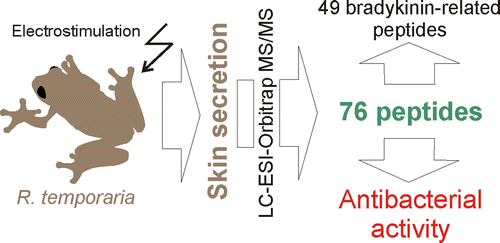
Frog-in-bucket-of-milk folklore leads to potential new antibiotics


Following up on an ancient Russian way of keeping milk from going sour — by putting a frog in the bucket of milk — scientists have identified a wealth of new antibiotic substances in the skin of the Russian Brown frog. The study appears in ACS’ Journal of Proteome Research.

A.T.Lebedev and colleagues explain that amphibians secrete antimicrobial substances called peptides through their skin. These compounds make up the majority of their skin secretions and act as a first line of defense against bacteria and other microorganisms that thrive in the wet places frogs, toads, salamanders and other amphibians live. A previous study identified on the skin of the Russian Brown frog 21 substances with antibiotic and other potential medical activity. Lebedev’s team set out to find more of these potential medical treasures.


New twist on using biomass for perfume, cosmetic, personal care products


In a new approach for tapping biomass as a sustainable raw material, scientists are reporting use of a Nobel-Prize-winning technology to transform plant “essential oils” — substances with the characteristic fragrance of the plant — into high-value ingredients for sunscreens, perfumes and other personal care products. The report on the approach, which could open up new economic opportunities for tropical countries that grow such plants, appears in the Journal of the American Chemical Society.

Deryn Fogg, Eduardo dos Santos and colleagues explain that breaking down plant material into ingredients for making commercial products is getting much attention as a sustainable substitute for raw materials now obtained from petroleum.


How Low Will Photovoltaic Prices Go?


Prices for photovoltaic modules—the part of solar panels that turn sunlight into electricity—are expected to continue falling, in line with the long-term trend that has persisted since 1980, according to Near Zero's survey of experts. On average, global installations per year are not expected to increase much from the record level in 2011, but the total installed solar capacity is expected to soar to 300 gigawatts by 2018, and 600 GW by 2025.


Too Big or Just Right? Optimal Circle of Friends Depends on Socioeconomic Conditions


Some people like to have a few close friends, while others prefer a wider social circle that is perhaps less deep. These preferences reflect people’s personalities and individual circumstances — but is one approach to social networks “better” than the other? New research suggests that the optimal social networking strategy depends on socioeconomic conditions.

Researchers Shigehiro Oishi of the University of Virginia and Selin Kesebir of the London Business School explore the benefits of social networking strategies in two studies published in Psychological Science, a journal of the Association for Psychological Science.

“In the age of Facebook, many Americans seem to opt for a broad, shallow networking strategy. Yet, cross-cultural research has shown that having many friends is not always viewed positively outside the United States,” Oishi and Kesebir write.


Mercyhurst study probes impact of climate change on ectotherms


A new study by biologists at Mercyhurst University focuses on the influence of climate change, particularly warmer winters, on the survival and potential fecundity of cold-blooded animals.

Cold blooded animals, or ectotherms, do not have an internal mechanism for regulating body temperature. Instead, they rely on solar energy captured by the environment.

The purpose of the Mercyhurst study, a collaboration of Michael Elnitsky, Ph.D., assistant professor of biology; and students Drew Spacht and Seth Pezar, is to assess the current and future impacts of climate change on the overwintering energetics and microenvironmental conditions of the goldenrod gall fly (Eurosta solidaginis). Larvae of the goldenrod gall fly have long served as model organisms for studying the strategies used by freeze-tolerant animals for winter survival.


PROTEIN STRONGEST JUST BEFORE DEATH


Researchers at Michigan State University have discovered a protein that does its best work with one foot in the grave.

The study, which appears in the current issue of the Journal of Biological Chemistry, focuses on the nontraditional lifestyle of Retinoblastoma tumor suppressor proteins, which could lead to new ways to treat cancer.

“Retinoblastoma proteins are unique in that they use controlled destruction to do their jobs in a timely but restrained fashion,” said Liang Zhang, a lead author and MSU cell and molecular biology graduate student. “This is an unusual way for proteins to act.”


Study Reveals New Factor that could Limit the Life of Hybrid and Electric Car Batteries


A new study of the batteries commonly used in hybrid and electric-only cars has revealed an unexpected factor that could limit the performance of batteries currently on the road.

Researchers led by Ohio State University engineers examined used car batteries and discovered that over time lithium accumulates beyond the battery electrodes – in the “current collector,” a sheet of copper which facilitates electron transfer between the electrodes and the car’s electrical system.


X-ray laser takes aim at cosmic mystery


An international collaboration including researchers from Lawrence Livermore National Laboratory has refined a key process in understanding extreme plasmas such as those found in the sun, stars, at the rims of black holes and galaxy clusters.

In short, the team identified a new solution to an astrophysical phenomenon through a series of laser experiments.

In the new research, appearing in the Dec. 13 edition of the journal Nature, scientists looked at highly charged iron using the Linac Coherent Light Source (LCLS) free-electron laser. Highly charged iron produces some of the brightest X-ray emission lines from hot astrophysical objects, including galaxy clusters, stellar cornea and the emission of the sun.


ASU researchers propose new way to look at the dawn of life


One of the great mysteries of life is how it began. What physical process transformed a nonliving mix of chemicals into something as complex as a living cell?

For more than a century, scientists have struggled to reconstruct the key first steps on the road to life. Until recently, their focus has been trained on how the simple building blocks of life might have been synthesized on the early Earth, or perhaps in space. But because it happened so long ago, all chemical traces have long been obliterated, leaving plenty of scope for speculation and disagreement.


Got food allergies? Thanks to UCLA, you can test your meal on the spot using a cell phone


Are you allergic to peanuts and worried there might be some in that cookie? Now you can find out using a rather unlikely source: your cell phone.

A team of researchers from the UCLA Henry Samueli School of Engineering and Applied Science has developed a lightweight device called the iTube, which attaches to a common cell phone to detect allergens in food samples. The iTube attachment uses the cell phone's built-in camera, along with an accompanying smart-phone application that runs a test with the same high level of sensitivity a laboratory would.


December 12, 2012

Ultra-short laser pulses control chemical processes


How can molecules be split in a controlled manner? A new experiment at the TU Vienna shows how research into ultra-short laser pulses can be combined with chemistry

Chemical reactions occur so quickly that it is completely impossible to observe their progress or to control them using conventional methods. However, new developments in electrical engineering and quantum technology enable us to achieve a more exact understanding and improved control of the behaviour of atoms and molecules. At the TU Vienna, scientists have succeeded in influencing the splitting of large molecules with up to ten atoms using ultra-short laser pulses.


Can Algae-Derived Oils Support Large-Scale, Low-Cost Biofuels Production?


ExxonMobil and many other energy companies are investing hundreds of millions of dollars to develop transportation biofuels from renewable resources such as the oil or hydrocarbons produced by microalgae. As global supplies of fossil fuels continue to shrink, biofuels derived from algae represent one promising source of low-cost, scalable renewable energy. The feasibility and economic projections for large-scale biofuels production from microalgae are examined in a Review article and accompanying Commentary published in Disruptive Science and Technology, a peer-reviewed journal from Mary Ann Liebert, Inc., publishers. The articles are available on the Disruptive Science and Technology website.

Microalgae are single-celled organisms that can be grown in open ponds, tubes, or bags, with just sunlight and carbon dioxide, or in the dark and fed sugars or starches. They can be genetically modified to optimize their productivity.


Fish have enormous nutrient impacts on marine ecosystems, study finds


Fish play a far more important role as contributors of nutrients to marine ecosystems than previously thought, according to researchers at the University of Georgia and Florida International University. In a pair of papers in the journal Ecology, they show that fish contribute more nutrients to their local ecosystems than any other source-enough to cause changes in the growth rates of the organisms at the base of the food web.


Mussel goo inspires blood vessel glue


A University of British Columbia researcher has helped create a gel – based on the mussel’s knack for clinging to rocks, piers and boat hulls – that can be painted onto the walls of blood vessels and stay put, forming a protective barrier with potentially life-saving implications.

Co-invented by Assistant Professor Christian Kastrup while a postdoctoral student at the Massachusetts Institute of Technology, the gel is similar to the amino acid that enables mussels to resist the power of churning water. The variant that Kastrup and his collaborators created, described in the current issue of the online journal PNAS Early Edition, can withstand the flow of blood through arteries and veins.


December 11, 2012

DEVICE HELPS CHILDREN WITH DISABILITIES ACCESS TABLETS


Imagine not being able to touch a touch-screen device. Tablets and smartphones—with all their educational, entertaining and social benefits—would be useless.

Researchers at Georgia Tech are trying to open the world of tablets to children whose limited mobility makes it difficult for them to perform the common pinch and swipe gestures required to control the devices.

Ayanna Howard, professor of electrical and computer engineering, and graduate student Hae Won Park have created Access4Kids, a wireless input device that uses a sensor system to translate physical movements into fine-motor gestures to control a tablet.


Conservatives can be persuaded to care more about the environment, study finds


When it comes to climate change, deforestation and toxic waste, the assumption has been that conservative views on these topics are intractable. But new research from the University of California, Berkeley, suggests that such viewpoints can be changed after all, when the messages about the need to be better stewards of the land are couched in terms of fending off threats to the “purity” and “sanctity” of Earth and our bodies.

A UC Berkeley study has found that while people who identified themselves as conservatives tend to be less concerned about the environment than their liberal counterparts, their motivation increased significantly when they read articles that stressed the need to “protect the purity of the environment” and were shown such repellant images as a person drinking dirty water, a forest filled with garbage, and a city under a cloud of smog.


December 10, 2012

Poorer quality wheat when carbon dioxide levels in the air rise


Rising levels of atmospheric carbon dioxide have a negative impact on the protein content of wheat grain and thus its nutritional quality. This is the finding of researchers at the University of Gothenburg, Sweden, in a recently published study in the journal Global Change Biology.

Elevated levels of atmospheric carbon dioxide stimulate the photosynthesis and growth of most plants. However, unless plants increase their uptake of nutrients to a corresponding degree, their yields will have a lower nutritional value. A lower level of the nutrient nitrogen results in a lower protein content, and thus poorer nutritional quality.


December 9, 2012

After climate talks, eyes on US for next round


DOHA, Qatar (AP) — Even as international climate talks ended this weekend with no new commitments on carbon emissions or climate aid from the United States, some were relieved America didn't make a weak deal even weaker.

Other countries are now watching to see if the Obama administration will back up post-election comments about climate change with renewed efforts to cut emissions at home, and pave the way for more ambitious targets as work proceeds to adopt a new global climate pact in 2015.


December 8, 2012

Fears over Indonesia's thirst for palm oil


The roar of chainsaws has replaced birdsong, the once-lush, green jungle scorched to a barren grey. The equivalent of six football pitches of forest is lost every minute in Indonesia.

The disappearance of the trees has pushed thousands of animals -- from the birds they harbour and sustain to orangutans, gibbons and black panthers -- out of their natural homes and habitats.


New gene found that turns carbs into fat, could be target for future drugs


A gene that helps the body convert that big plate of holiday cookies you just polished off into fat could provide a new target for potential treatments for fatty liver disease, diabetes and obesity.

Researchers at the University of California, Berkeley, are unlocking the molecular mechanisms of how our body converts dietary carbohydrates into fat, and as part of that research, they found that a gene with the catchy name BAF60c contributes to fatty liver, or steatosis.

In the study, to be published online Dec. 6 in the journal Molecular Cell, the researchers found that mice that have had the BAF60c gene disabled did not convert carbohydrates to fat, despite eating a high-carb diet.


WHAT A UAV CAN DO WITH DEPTH PERCEPTION


DARPA-funded effort demonstrates preciseautonomous payload placement with UAV.

When a person reaches out to place an object in just the right place, their mind makes a series of judgments requiring vision, stability and careful movement. Trying to do the same thing robotically from a hovering unmanned aerial vehicle (UAV) requires several technology advances. A DARPA-funded technology demonstration recently finished a successful testing of vision-driven robotic-arm payload emplacement using MLB Company’s (Santa Clara, California) tail-sitter UAV, V-Bat. This UAV is capable of both hover and wing-borne flight, making the delivery and precision emplacement of a payload possible. A special robotic arm was designed with the capability of carrying up to 1 pound.


December 7, 2012

Point of Light


Caltech engineers invent light-focusing device that may lead to applications in computing, communications, and imaging

As technology advances, it tends to shrink. From cell phones to laptops—powered by increasingly faster and tinier processors—everything is getting thinner and sleeker. And now light beams are getting smaller, too.

Engineers at the California Institute of Technology (Caltech) have created a device that can focus light into a point just a few nanometers (billionths of a meter) across—an achievement they say may lead to next-generation applications in computing, communications, and imaging.